

Blog
Cloud-Native Insights & Expertise

Discover our latest articles about cloud-native technologies, Kubernetes, DevOps, and modern software development. From practical tutorials to in-depth analyses.

Latest Blog Posts

Stay up to date with our latest articles about cloud-native technologies, Kubernetes, and DevOps.

1219 posts

Test Data Management: How to Always Provide Up-to-Date and Relevant Scenarios in Your Demos

Test Data Management: How to Always Provide Up-to-Date and Relevant Scenarios in Your Demos

Imagine presenting a state-of-the-art production planning software to a potential customer. You click on the dashboard, and what the customer sees are empty tables or cryptic test entries like "Test 123" and "John Doe." The focus is immediately lost. The customer has to laboriously imagine how the system would look with *their* data instead of experiencing the benefits directly.

"Try Now" Buttons That Actually Work: Automated Lead Gen on Your Website

"Try Now" Buttons That Actually Work: Automated Lead Gen on Your Website

Every SaaS marketing manager dreams of it: A prospect lands on the website, clicks "Free Trial," and can start immediately. But in the reality of complex business software (like ERP or PLM), this click often leads to a dead end. Instead of a trial version, the user sees a form with the note: "Thank you, our sales team will contact you in the next few days."

True Isolation Instead of "Shared Demo": Why Every Prospect Deserves Their Own Namespace

True Isolation Instead of "Shared Demo": Why Every Prospect Deserves Their Own Namespace

Who hasn't experienced this? In the middle of an important product presentation, unexpected data appears, the system responds extremely slowly, or the configuration doesn't match what was prepared. The reason is usually a "Shared Demo" infrastructure: multiple salespeople use the same instance or database server for different customers.

From Ticket to Pipeline: How Sales Can Launch Their Own ERP Instances at the Push of a Button

From Ticket to Pipeline: How Sales Can Launch Their Own ERP Instances at the Push of a Button

In many SaaS companies, the process between sales and IT resembles a diplomatic exchange: Sales needs a demo environment for an important meeting, submits a ticket to development, and then the waiting begins. "We're in the middle of a sprint," "The database guy is on vacation," or "The demo servers are currently full" are responses that slow down the sales routine.

Ephemeral Environments: Short-Lived Instances as a Secret Weapon for Complex Software Demos

Ephemeral Environments: Short-Lived Instances as a Secret Weapon for Complex Software Demos

Anyone who sells complex business software knows the problem of "data remnants." In static demo environments, test entries, altered configurations, and half-finished scenarios accumulate over months. In the end, no one knows exactly what state the system is in. The result: Sales presents on a "cluttered" basis, and IT spends valuable time on tedious cleanup.

The 'Demo Bottleneck': Why Manual Environments Hinder Your Sales Success

The 'Demo Bottleneck': Why Manual Environments Hinder Your Sales Success

In the world of complex B2B software and ERP systems, the live demo is the crucial moment of truth. It's where a prospect decides whether they understand the solution's potential or walk away frustrated. While marketing teams invest heavily to generate leads, the process often gets stuck in a technological bottleneck after the inquiry: the provisioning of the demo environment.

The "Software Operations" as a Product: Why DevOps is More Than Just Infrastructure Maintenance

The "Software Operations" as a Product: Why DevOps is More Than Just Infrastructure Maintenance

In many companies, IT operations are still viewed merely as a cost center - the department that ensures "the servers are running." However, in the world of Software-as-a-Service (SaaS), this perception has fundamentally changed. Today, running a successful platform means understanding infrastructure not as a static foundation but as its own dynamic product.

Asynchronous Workflows: How RabbitMQ and Redis Speed Up Your SaaS Application

Asynchronous Workflows: How RabbitMQ and Redis Speed Up Your SaaS Application

Have you ever used an application that froze for 10 seconds when you clicked "Export" or "Save"? In the world of modern SaaS, that's a "no-go." Users expect instant feedback. However, when a user generates a complex PDF file, exports thousands of records, or sends an email series to an entire building authority, it takes time.

Audit-Ready by Design: How Modern Platforms Automate Compliance Reports

Audit-Ready by Design: How Modern Platforms Automate Compliance Reports

For many SaaS providers, compliance checks by a new major client or an official audit (like ISO 27001 or SOC2) are daunting projects. Logs are scrutinized for weeks, manual lists of software versions are created, and backups are painstakingly documented. The problem: This documentation is often outdated by the time it is submitted.

Production-like Staging: Why "Almost the Same" Isn't Enough in Software Development

Production-like Staging: Why "Almost the Same" Isn't Enough in Software Development

"It worked on my machine!" This phrase is a classic in software development. However, the real problem usually lies a step further: in the staging environment (the test environment before going live). In many established SaaS companies, staging resembles more of a "light version" of production: smaller servers, simpler network paths, no replica databases, and often outdated datasets.

When Your Infrastructure Becomes a Growth Staller: Signs It's Time to Switch to a Platform Model

When Your Infrastructure Becomes a Growth Staller: Signs It's Time to Switch to a Platform Model

In the early stages of a SaaS company, pragmatism is the most important currency. You build what works. Often, this is a classic setup of a few virtual machines (VMs), a load balancer, and a database server. This model is cost-efficient, easy to understand, and gets the product to market quickly.

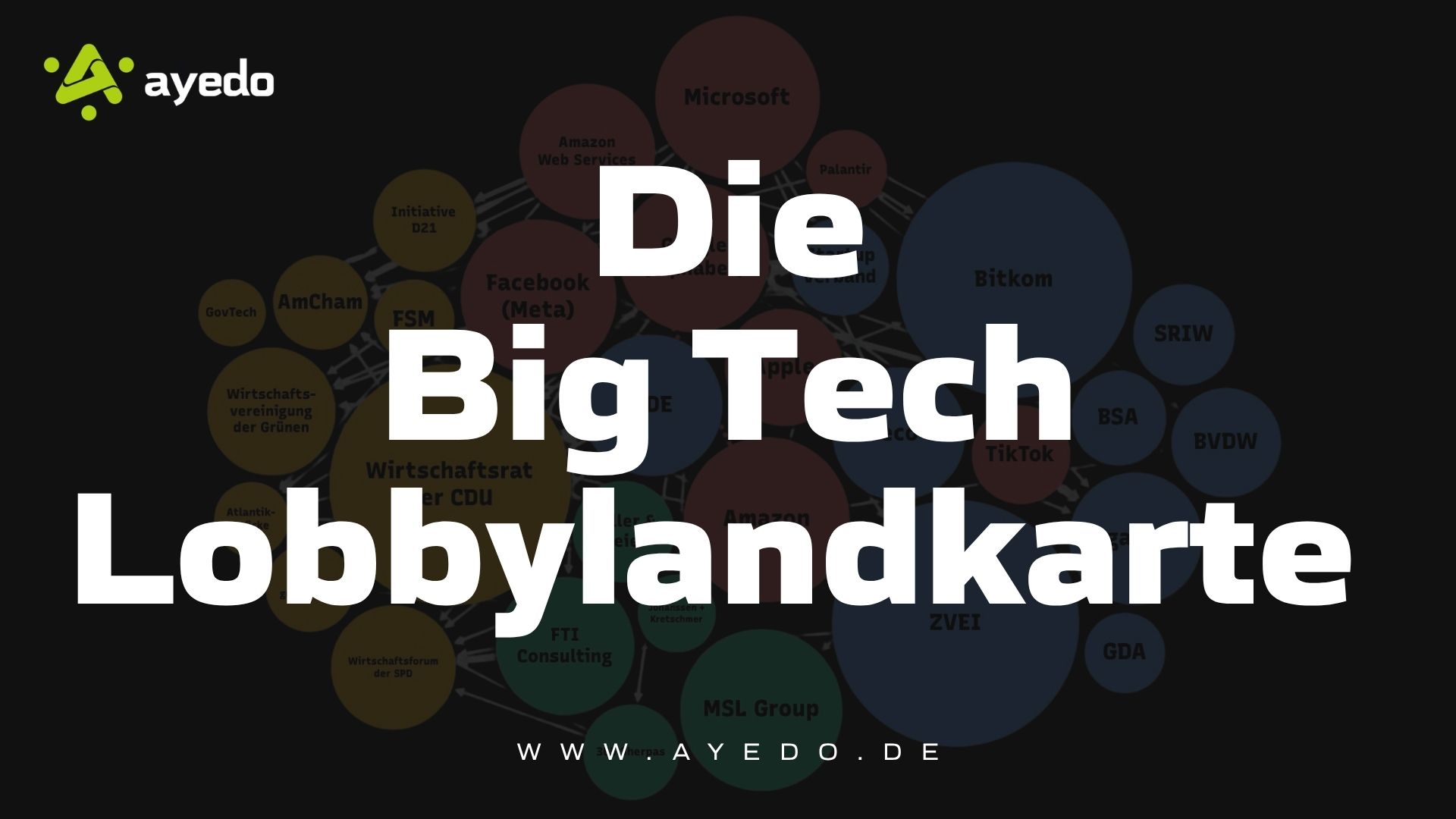
Lobby Map

Lobby Map

The new lobby map from the Center for Digital Rights and Democracy visualizes a problem that has been visible in Europe for years — but rarely depicted so concretely: the structural influence of major US tech companies on political decision-making processes in Germany.

Infrastructure as Code: How GitOps Makes Operating Complex Video Platforms Manageable

Infrastructure as Code: How GitOps Makes Operating Complex Video Platforms Manageable

In the modern IT world, video is the crown discipline. A high-performance video infrastructure today must be many things at once: elastically scalable, strictly tenant-isolated, and absolutely fail-safe. However, with this technical superiority comes increased complexity. Hundreds of namespaces, individual resource limits for different customers, complex network policies, and constantly changing versions of video engines can no longer be managed "by hand."

Beyond Uptime: Why Traditional Monitoring is Blind to Video Quality

Beyond Uptime: Why Traditional Monitoring is Blind to Video Quality

In traditional IT, a glance at CPU load or HTTP status code often suffices: If the server responds and the CPU isn't at 100%, the system is considered "healthy." For video workloads, this perspective is fatal. A streaming server can run perfectly while viewers see only still images because network latency (jitter) is too high or the source bitrate drops.

Economic Scaling: How Node Autoscaling Makes Video Workloads Affordable

Economic Scaling: How Node Autoscaling Makes Video Workloads Affordable

One of the biggest cost drivers in the video business is the gap between **provisioned** and **actually used** capacity. Video workloads are extremely "hungry": A single HD transcoding job or a WebRTC bridge can demand multiple CPU cores. Rigid planning either leads to paying for unused servers (over-provisioning) or risking system crashes during peak loads (under-provisioning).

Elastic Transcoding: How Automated Workflows Accelerate On-Demand Availability

Elastic Transcoding: How Automated Workflows Accelerate On-Demand Availability

A live event often ends in a digital mess: massive raw files in the highest quality are left on the servers. However, the client doesn't want to receive the recording manually via a download link in three days—they expect the video to appear immediately in the media library, optimized for all devices from smartphones to 4K TVs.