The Big Tech Lobby in Germany is Larger Than Many Believe
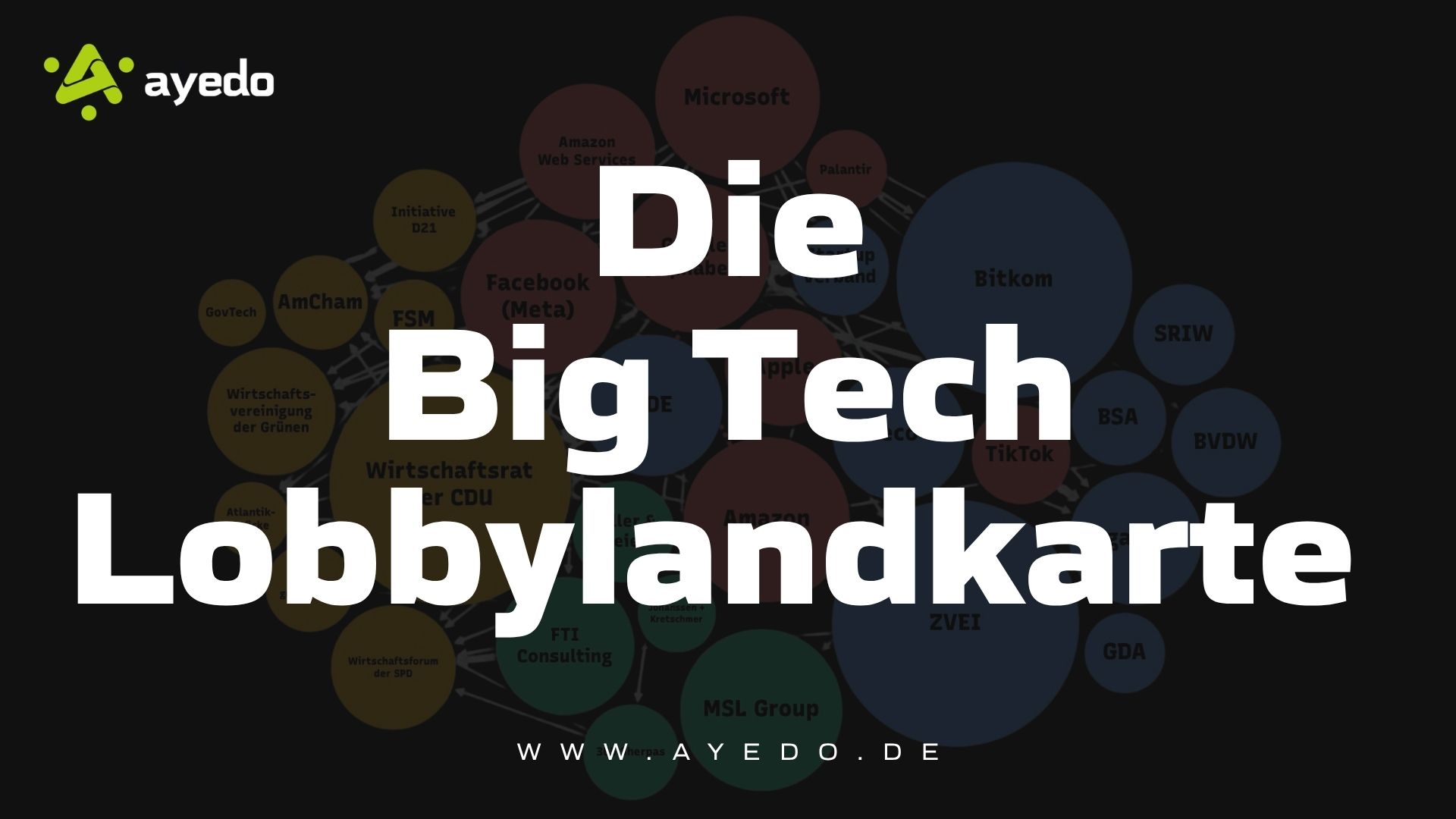
The new lobby map from the Center for Digital Rights and Democracy visualizes a problem that has been visible in Europe for years — but rarely depicted so concretely: the structural influence of major US tech companies on political decision-making processes in Germany.
The map is based on public data from the German lobby register. So, the information itself is not new. What is new is how clearly the connections suddenly become visible.
Google, Microsoft, Amazon, Meta, Apple, TikTok, or Palantir do not appear as isolated companies. Instead, a dense network of business associations, lobby organizations, PR agencies, think tanks, and party-affiliated networks becomes visible.
This is where the real significance of this visualization lies.
Big Tech Does Not Only Lobby Directly
Many people still associate lobbying with direct conversations between companies and politicians. However, modern influence works in a much more complex way.
Large tech companies secure their influence not only through their own lobbying departments. They are simultaneously involved in a multitude of associations and organizations that are permanently engaged in political debates.
This creates a structural multiplier effect.
| Company | Memberships According to Lobby Register |
|---|---|
| Microsoft | 50 |
| 28 |
This practically means:
Almost everywhere in Berlin where discussions about AI regulation, cloud infrastructures, platform oversight, cybersecurity, or data protection take place, the interests of Big Tech are directly or indirectly represented.
And this is precisely why it becomes understandable why Europe has made little progress in digital sovereignty for years.
The Problem is Not Lobbying Alone
Lobbying is legal. Advocacy is part of democratic systems.
The real problem arises where economic power permanently dominates political processes.
According to the lobby register, Google, Microsoft, Amazon, Apple, and Meta alone spent over 7 million euros on federal political advocacy in 2024.
Additionally, there are:
- external lobbying agencies
- law firms
- communication consultancies
- economic partnerships
- technical dependencies of state institutions
The actual influence extends far beyond what is officially documented.
The Consequences Are Already Visible in Everyday Life
The debate about digital sovereignty often seems abstract. The reality is already concrete.
| Area | Dependency |
|---|---|
| Authorities | Microsoft infrastructures |
| Public cloud projects | AWS |
| Security and analysis platforms | Palantir |
| Education sector | Proprietary platform ecosystems |
These dependencies are not just technical decisions. They create long-term political and economic ties.
Because whoever controls infrastructure also controls standards, data flows, and scopes of action.
Digital infrastructure is therefore no longer a neutral technology layer. It is geopolitical power infrastructure.
The Lobby Map Only Shows the Tip of the Iceberg
Particularly noteworthy is that the operators of the map openly acknowledge the limits of their analysis.
Not visible are:
- informal networks
- closed-door meetings
- strategic partnerships
- law firms and legal proceedings
- product deals with authorities
- media influence
The map thus only shows the documented part of a much larger power structure.
And this is precisely why it is politically so relevant.
Because it does not provide speculations or conspiracy theories. It visualizes publicly accessible data — and thereby makes visible how concentrated digital power is now organized.
Europe's Real Problem
The crucial question is no longer whether Big Tech exerts political influence. That is obvious.
The real question is whether Europe is still capable of asserting digital sovereignty against this structural concentration of power.
Because as long as European states remain technically, administratively, and economically dependent on a few US corporations, every debate about digital independence remains limited.
Europe discusses regulation.
Big Tech already controls the infrastructure.
And this is precisely why digital sovereignty is no longer an abstract innovation debate.
It is a question of power.