
Calculating Cloud Costs Accurately: What Does an Application Really Cost?
Compare cloud offerings fairly: total cost of ownership, compute, storage, traffic, operational costs, a worked example and a checklist.
27 items
Compare cloud offerings fairly: total cost of ownership, compute, storage, traffic, operational costs, a worked example and a checklist.

A distributed active-active architecture increases resilience but incurs additional costs for redundant capacities, monitoring, testing, and operational responsibilities. Its cost-effectiveness is not solely reflected in infrastructure prices. The key is whether the architecture reduces failure risks, recovery times, and dependencies to such an extent that its operational effort matches the protection needs.
In many growing tech and industrial companies, the public cloud is still considered the standard path for scaling. However, the commercial and regulatory reality catches up with platform managers at the latest during the monthly billing: In addition to non-transparent base fees, variable data transfer costs—so-called egress fees—strain budgets while confidential operational data is routed through uncontrollable global network nodes.

In many companies, the use of modern accelerator hardware resembles an unregulated race: Data scientists reserve entire high-end GPUs like the NVIDIA A100 or H100 for interactive Jupyter notebooks, while compute-intensive training runs languish in endless queues. The result is low utilization rates alongside skyrocketing cloud budgets and dissatisfied development teams.

polycrate platform operations monitoring requires clear structures for observability, KPI-driven auto-scaling, and a resilient operational culture. This post explains how scalable platform operation models are created, which monitoring concepts provide reliable alerting, and what economic impacts architectural decisions have on costs, availability, and time-to-value—for CIOs, Platform Engineers, and SREs.
After exploring in the first part why the decision for Kubernetes goes far beyond choosing a container orchestration platform, the next inevitable question arises: **What does it actually cost to operate a Kubernetes platform?**

For IT service providers and system houses, agreeing on Service Level Agreements (SLAs) is standard business. Customers demand contractually guaranteed availabilities, such as 99.9% per year. In traditional infrastructure operations, this often leads to tedious, manual work at the end of the month: system administrators sift through log files and server histories to retroactively calculate downtime and compile it into a static report.
SRE operational guidelines in Kubernetes require clear SLOs, structured runbooks, and standardized incident management. Automated escalations, regular drills, and consistent postmortems enable quicker detection, diagnosis, and resolution of disruptions. Runbooks serve as binding action guides and minimize human errors. ayedo supports these practices with centralized runbooks, SLO definitions, and integrated incident response tools, without compromising the autonomy of individual teams.
Transparency over the performance of microservices and distributed architectures is no longer optional in the cloud-native era—it's vital. When latencies rise or services silently throw errors, user experience suffers immediately. However, those seeking deep insights into their Kubernetes clusters quickly hit painful limits with established, proprietary APM suites (Application Performance Monitoring). They are often cumbersome, consume enormous amounts of expensive cluster resources, and ruin every IT budget with opaque licensing models.
When calculating the operating costs of their IT infrastructure in the cloud, most people take a standard look at the obvious items: What do virtual machines (compute) cost, and how much does the provider charge for pure storage space per gigabyte? Budgets are released and migration plans are forged based on these two variables. But once the containerized infrastructure goes live and modern CI/CD pipelines roll out fresh software releases several times a day, the end of the month often brings an unpleasant surprise when looking at the cloud bill.
In the digital age, accessibility is everything. As a company grows, internationalizes its services, or operates critical infrastructures, IT departments invest significant budgets in scaling application servers and database clusters. However, a fundamental component often overlooked in scaling is the nameserver infrastructure. Every connection on the internet begins with a DNS query. If this first step is slow or error-prone, even the fastest backend in the background is of no use.
When companies move their IT infrastructure to the cloud, they usually do so with a clear economic expectation: flexibility and full cost transparency. The principle of *"Pay-as-you-go"* is intended to transform unpredictable capital expenditures (CapEx) into predictable operational expenses (OpEx). However, the deeper companies are drawn into the ecosystems of the major US hyperscalers, the more complex and opaque the monthly billing becomes.
A nightmare for any IT decision-maker is the phenomenon of *vendor lock-in*—the technological and economic captivity with a single IT service provider or cloud provider. What starts with flexible rates and quick deployments often ends in a dead end: storage costs rise, service quality declines, yet switching to another provider is internally declared "impossible."
When analyzing the IT costs of a growing medium-sized enterprise, one almost always encounters the same dynamic: the relentless progression of Software-as-a-Service (SaaS) licensing fees. What begins as a manageable subscription for a handful of employees evolves into one of the largest items in the IT budget as the workforce grows, new departments are added, and major providers regularly adjust prices.
The use of established US SaaS solutions is standard in the mid-sized business sector. Whether for collaboration, customer support, or document management, the advantages are clear: the applications are ready to use immediately, require minimal in-house IT resources, and offer an excellent user experience.

Every SaaS operator knows it: the dreaded load peak. Whether it's Monday morning when all users simultaneously update their project plans, or a sudden surge following a marketing campaign - traditional infrastructures quickly reach their limits.
For an online shop in the mid-sized business or D2C sector, downtime is much more than a technical nuisance. Every minute of unavailability means direct revenue loss, decreased customer trust, and wasted budget on ongoing marketing campaigns.
In the realm of IT infrastructure, few things are as costly as a modern NVIDIA GPU doing nothing. An H100 or A100 instance with major hyperscalers often costs as much per hour as an entire office team consumes in coffee. When data scientists forget to shut down their instances after training, or when clusters idle while reserving expensive resources, costs can skyrocket within days.

By 2026, the mere promise of cloud scalability has given way to a harsh reality: those who do not economically manage their Cloud-Native infrastructure lose control over their margins. In times of NIS-2 and DORA, resilience and compliance are mandatory, yet economic efficiency—the "Unit Economics" per workload—has become the decisive competitive advantage. Simply monitoring cloud bills at the end of the month is a relic of the past.
The hype around Artificial Intelligence has ushered in a new era of IT spending. Those who train or operate LLMs (Large Language Models) today quickly realize: The costs for Graphics Processing Units (GPUs) follow entirely different rules than traditional CPU instances. A single H100 instance in the cloud can cost as much per month as a small car.
Logs are the indispensable "memory" of any application, but their storage often becomes the largest cost item in the cloud. Traditional solutions like Elasticsearch or Splunk index every single word, making them powerful but extremely resource-intensive. Loki takes a radically different approach: "Like Prometheus, but for Logs." It indexes only the metadata (labels), not the content. The result is a log system that stores petabytes of data at a fraction of the cost in inexpensive object storage (S3) and integrates seamlessly with Grafana.
In the growth phase of a SaaS company, there is a dangerous curve: the **Cost of Goods Sold (COGS)**. As user numbers increase, cloud costs often explode disproportionately. The reason: inefficient resource allocation, unused "zombie" instances, and lack of cost transparency per customer (Unit Economics).
Imagine getting the same computing power for **70% to 90% less cost**. The catch? The cloud provider can take the server away from you at any time with just two minutes' notice (AWS) or even just 30 seconds (Azure).
**1. Why is the standard cloud bill for Kubernetes costs unusable?** Cloud providers issue bills for instances (VMs). However, Kubernetes distributes these instances across many teams and apps. Without K8s-native tools, you only see the total sum, but not which service is causing the costs.

For critical applications, "down-time" is no longer just a technical issue for medium-sized businesses, but a direct business risk. However, the traditional response to high availability (HA) has been: Double infrastructure = double costs. A model that breaks many budgets.
We don't need to explain that FinOps is the answer to uncontrolled cloud spending. The challenge for IT decision-makers in medium-sized businesses today lies elsewhere: How can cost responsibility and technical scalability be intertwined so that the cloud doesn't become a bottomless pit?
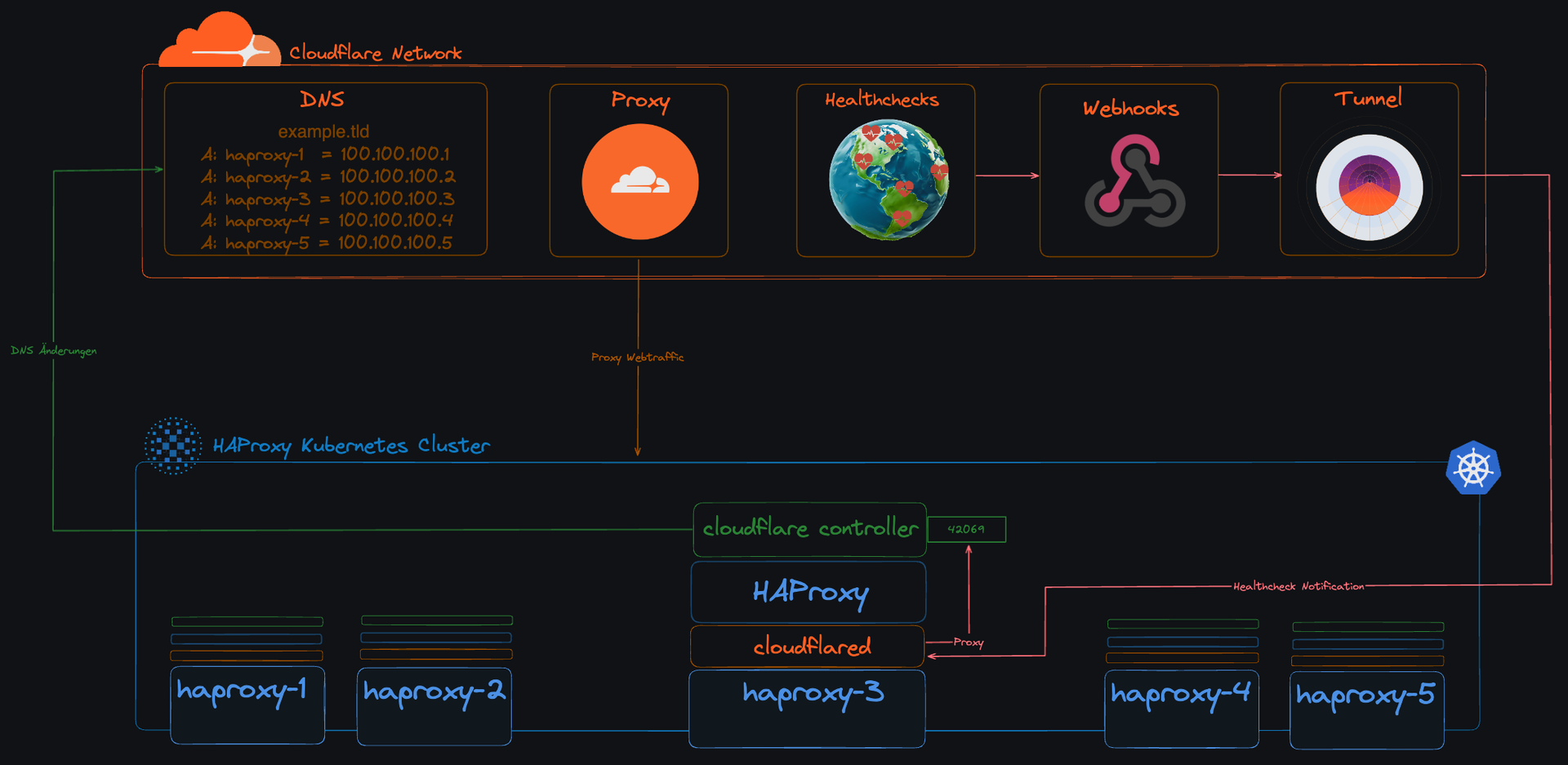
Cloudflare is far more than just a CDN provider. In addition to performance optimization and security features, the platform offers numerous tools that can be creatively used to address individual requirements in modern infrastructure setups—without necessarily relying on the paid Enterprise features.