
New at ayedo: hands-on IT workshops for Cloud Native, Kubernetes and DevOps
Hands-on ayedo workshops on Kubernetes, Docker, GitOps, security and Polycrate: small groups, prepared cloud labs, online or on site.
46 items
Hands-on ayedo workshops on Kubernetes, Docker, GitOps, security and Polycrate: small groups, prepared cloud labs, online or on site.

Technological independence starts with your own expertise. ayedo offers hands-on workshops on Kubernetes, Docker, GitOps and Polycrate for IT teams.
When calculating the operating costs of their IT infrastructure in the cloud, most people take a standard look at the obvious items: What do virtual machines (compute) cost, and how much does the provider charge for pure storage space per gigabyte? Budgets are released and migration plans are forged based on these two variables. But once the containerized infrastructure goes live and modern CI/CD pipelines roll out fresh software releases several times a day, the end of the month often brings an unpleasant surprise when looking at the cloud bill.

In discussions about cloud transformation, the narrative often suggests that the future of IT lies solely in globally connected, public cloud infrastructures. However, for operators of critical infrastructures (KRITIS), defense companies, research-intensive industries, or highly regulated sectors in finance and healthcare, the reality is entirely different. When systems control nuclear command centers, core medical areas, or sensitive state secrets, the risk of internet connectivity is simply unacceptable.
When IT decision-makers and data engineers discuss the deployment of machine learning and artificial intelligence, the focus is almost entirely on frameworks, algorithms, and GPU performance. However, one aspect is regularly underestimated in the early stages—with fatal consequences for stability in later production operations: **artifact management**.
In the world of data engineering, Apache Airflow is the undisputed champion for workflow orchestration. However, with success come scaling pains: local executors hit CPU limits, Celery worker clusters are cumbersome to maintain, and resources sit idle when no DAGs are running.
In software development, versioning code is standard. However, in data engineering and AI projects, this is not sufficient. A model consists not only of code but also of a specific combination of training data snapshots, library dependencies (Python packages), and the weighted parameters of the model itself.
Automate Docker Compose stacks on Linux servers with Polycrate and Ansible
In the past, securing the front door (the firewall) was enough. But today, threats come "delivered to your door"—hidden in the thousands of dependencies we load into our systems daily via `npm`, `pip`, or `docker pull`. A single compromised component in an open-source library can cripple your entire infrastructure from within.
Containers are the backbone of modern cloud infrastructure. They offer developers and ops teams unmatched agility and efficiency, based on the promise of robust isolation. However, this foundation is regularly tested. The discovery of critical **runtime bugs** that allow attackers to escape a container and gain root access on the host system is a serious warning.
When discussing container orchestration today, two terms quickly come up: Docker Swarm and Kubernetes. Both promise to run containers across multiple machines, scale services, and automate deployments. And because Kubernetes has a reputation for being complex, many organizations initially turn to Docker Swarm, hoping to ease into the world of container orchestration with less effort.
You hear it more and more often, half-serious, half-annoyed: "Docker here, Docker there – I'm going back to the old ways."
In many discussions with IT leaders, sysadmins, and architecture decision-makers, a recurring pattern emerges: The question of "Swarm or Kubernetes" is not only a technological one but also strategic. Which platform offers less operational pain, more scaling potential, and long-term stability? After years of operational experience, ayedo has a clear preference – [Kubernetes](/kubernetes/). However, this doesn't mean Swarm lacks validity. On the contrary, one shouldn't believe that choosing Swarm today as a long-term solution will bypass the Kubernetes learning curve. Eventually, you'll find yourself with Kubernetes, facing the typical "and suddenly" problems that Swarm brings, especially in larger environments.
Many people nod knowingly when the conversation turns to "containerization" or "virtual machines" – but honestly: those who can truly explain **where exactly the difference lies** are rarer than you think.
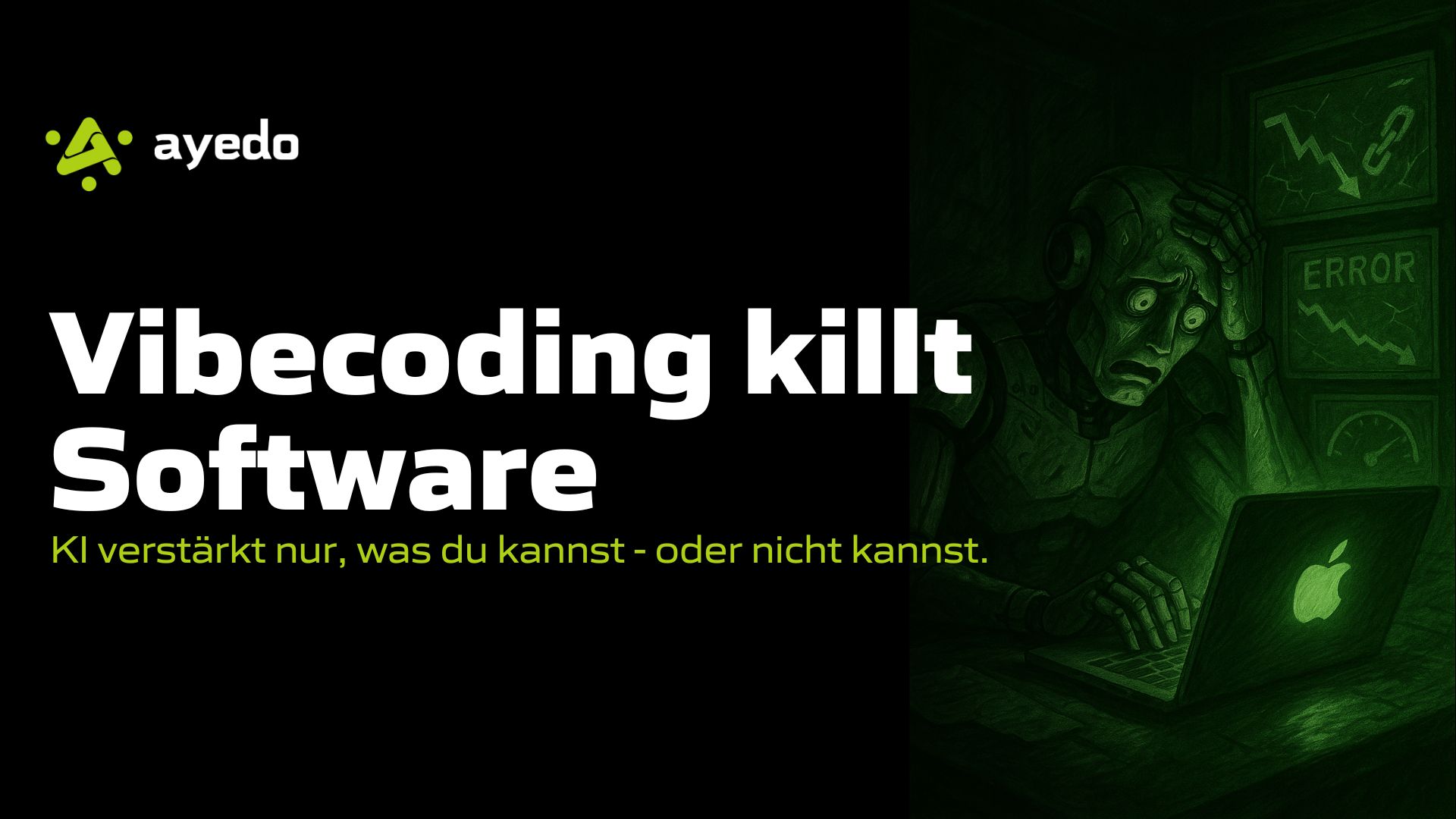
Everyone is writing software with AI now. Prompt in, code out. A few lines of Typescript here, a Dockerfile there, and somehow everything flies. People feel productive. Because they have output.
With the announcement of macOS 26 ("Tahoe"), Apple quietly but fundamentally reshuffles the cards in the DevOps landscape. For the first time, the operating system offers native support for Linux containers—without Docker, without Orbstack, without additional dependencies. A move that not only reduces technical friction but also has the potential to reposition the Mac: as a fully-fledged, system-level development environment for cloud-native workflows.
In this article, we delve into what Kubernetes and Docker achieve, where their differences lie, and why you should combine both technologies to unlock their full potential.
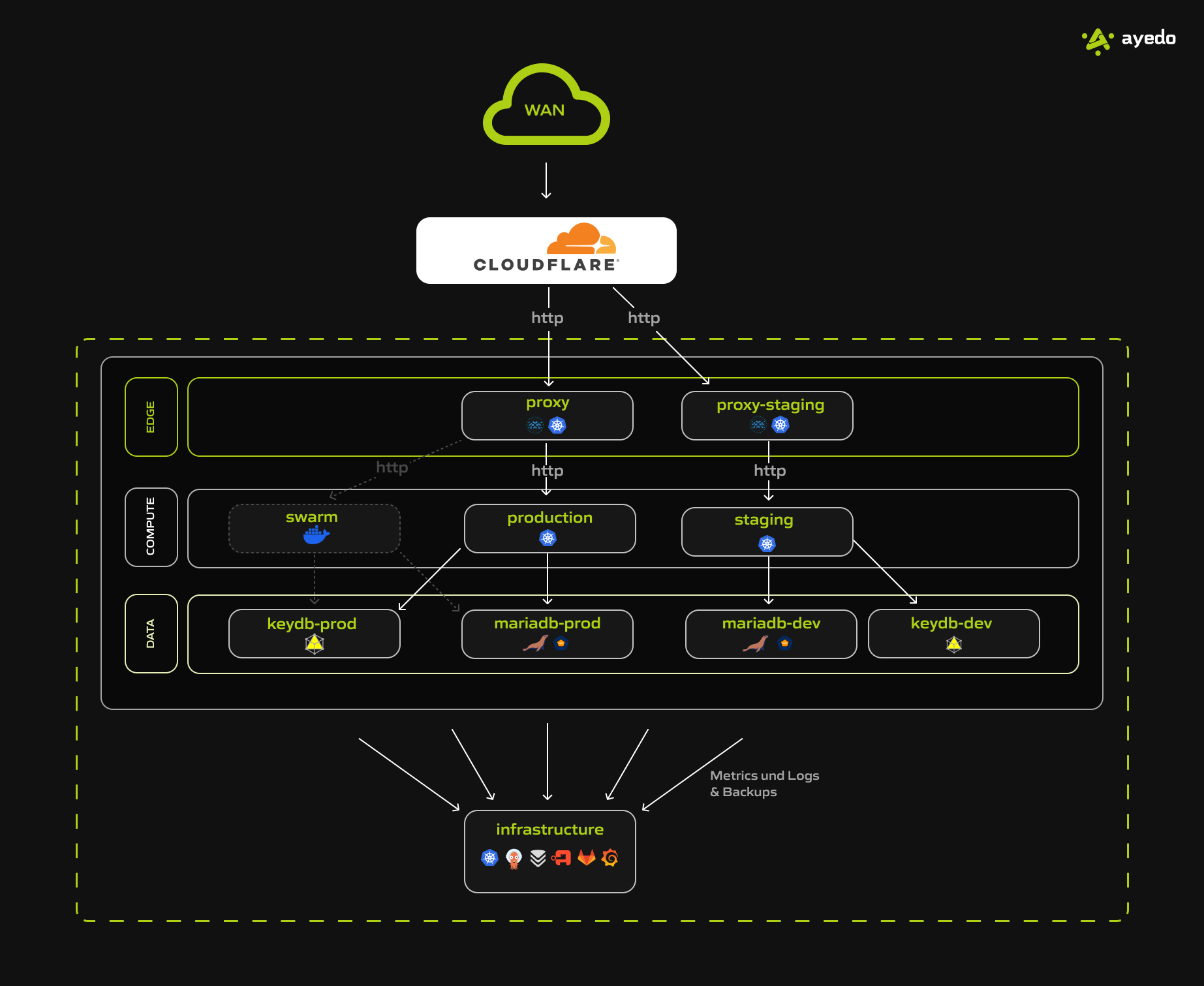
Prime Insights is one of the world's leading companies in market analysis and data collection. More than 160 million users utilize Prime Insights' services every month. By migrating to the ayedo Cloud, more than 70% of infrastructure costs were saved compared to AWS. At the same time, the new hosting infrastructure enabled seamless handling of the customer's exponentially growing user numbers, so today more than 10 times as many requests are processed as 12 months ago - and the systems are still underutilized.
In this post, we describe a comprehensive guide to Cyber Risk Assessment

In this post, we describe why ISO27001 serves as the key to regulatory compliance.
This post shows how to deploy Vikunja with Docker Compose and Traefik and access it via a DNS entry.

Learn how to set up and configure Traefik as a reverse proxy with Docker Compose to manage your applications securely and efficiently.
Learn how to deploy StirlingPDF using Docker Compose and Traefik, and access it through a DNS entry.
Learn how to deploy Portainer using Docker Compose and Traefik, and access it via a DNS entry.
In this post, we show you how to deploy Paperless-ngx using Docker Compose and Traefik, and access it via a DNS entry.
Learn how to deploy Mattermost using Docker Compose and Traefik, and access it via a DNS entry.
Learn how to deploy getHomepage using Docker Compose and Traefik, and access it via a DNS entry.
In this post, we describe how you can effectively protect your business with the help of the Cyber Risk Check.

In this post, we describe the impact of ISO 27001 certification on data protection and data integrity.
Designed for the creative minds who want to enrich the world with their software. Whether you're a Software-as-a-Service provider, a Docker enthusiast, or simply someone who wants to enjoy the peace of night without worrying about running your applications – the ayedo Cloud is for you.

In the world of container orchestration, two technologies are at the center of the discussion: Docker Swarm and Kubernetes. Both offer powerful platforms for managing containers, yet they fundamentally differ in their approach, complexity, and functionality.

Docker and Docker Swarm are closely related technologies in the realm of containerization and orchestration, each covering different aspects of container management.

In this post, we explain why ISO 27001 is important for businesses of all sizes.

In this post, we describe why ISO 27001 is the gold standard for information security.

Kubernetes and Docker are two different technologies that are often used together because they both deal with container management.

Docker is an open-source platform for containerizing applications. It allows developers to package applications and their dependencies into containers to ensure consistent deployment and execution across different environments.

High availability fun with Docker Swarm: GitOps deployments with Portainer.

Discover the key factors for choosing between Docker Swarm and Kubernetes.
It doesn't always have to be Kubernetes: highly available apps with Docker Swarm and Portainer.

Step-by-step guide to creating a Docker Swarm cluster with 3 master and 3 worker nodes on Hetzner Cloud and installing and using Portainer

Use Mattermost SSO without GitLab and without the Enterprise version. Featured by Authentik.

Why You Should Use Portainer Instead of the Console: Introduction and Quick Start

Learn what the upcoming removal of Dockershim means for Kubernetes developers and DevOps teams.