Discover our latest articles about cloud-native technologies, Kubernetes, DevOps, and modern software development. From practical tutorials to in-depth analyses.
The days when machines on the shop floor were protected by an "Air Gap"—the physical separation from the internet—are definitively over. Industry 4.0 demands data flow. However, every external connection is a potential entry point for ransomware, which in the worst case can cripple the entire production for weeks.
In Industry 4.0, the cloud is a powerful ally for data analysis and AI. However, for daily operations on the shop floor, a strict rule applies: **Production must never stop** - especially not due to an internet connection failure.
Kubernetes is an open-source platform for orchestrating containerized applications. It automates deployment, scaling, and operations, forming the foundation of modern cloud-native infrastructures. At its core, Kubernetes is based on a declarative model: the desired state is described, and controllers continuously ensure that this state is achieved and maintained.
In traditional data processing, "batch processes" dominated for a long time: data was collected throughout the day and processed in large batches overnight. For modern industrial applications, this is too slow. When a turbine in a factory shows anomalies or an eCommerce system needs to react to inventory changes, every second counts.
In the world of data engineering, there's a saying: "Storing data is easy, querying it quickly is the art." When we talk about petabytes of industrial sensor data or billions of eCommerce events, traditional relational databases like PostgreSQL or MySQL surrender.
For those building modern data engineering pipelines, S3 (Simple Storage Service) is indispensable. It is the industry standard for accessing unstructured data, model checkpoints, and data lakes. But what if data must remain on-premise for compliance reasons or if the hyperscalers' egress costs are breaking the budget?
In software development, the problem has long been solved: Code is versioned in Git, isolated in containers, and deployed identically across different environments via CI/CD pipelines. In data engineering and AI workloads, the reality is often different.
In theory, Artificial Intelligence is a boon for the industry. In practice, implementation often stumbles over a mundane hurdle: hardware availability. Those who need high-end GPUs (like the NVIDIA H100 or A100) for model training or complex simulations today face long delivery times or astronomical fixed costs in their own data centers.
In the world of data engineering, Apache Airflow is the undisputed champion for workflow orchestration. However, with success come scaling pains: local executors hit CPU limits, Celery worker clusters are cumbersome to maintain, and resources sit idle when no DAGs are running.
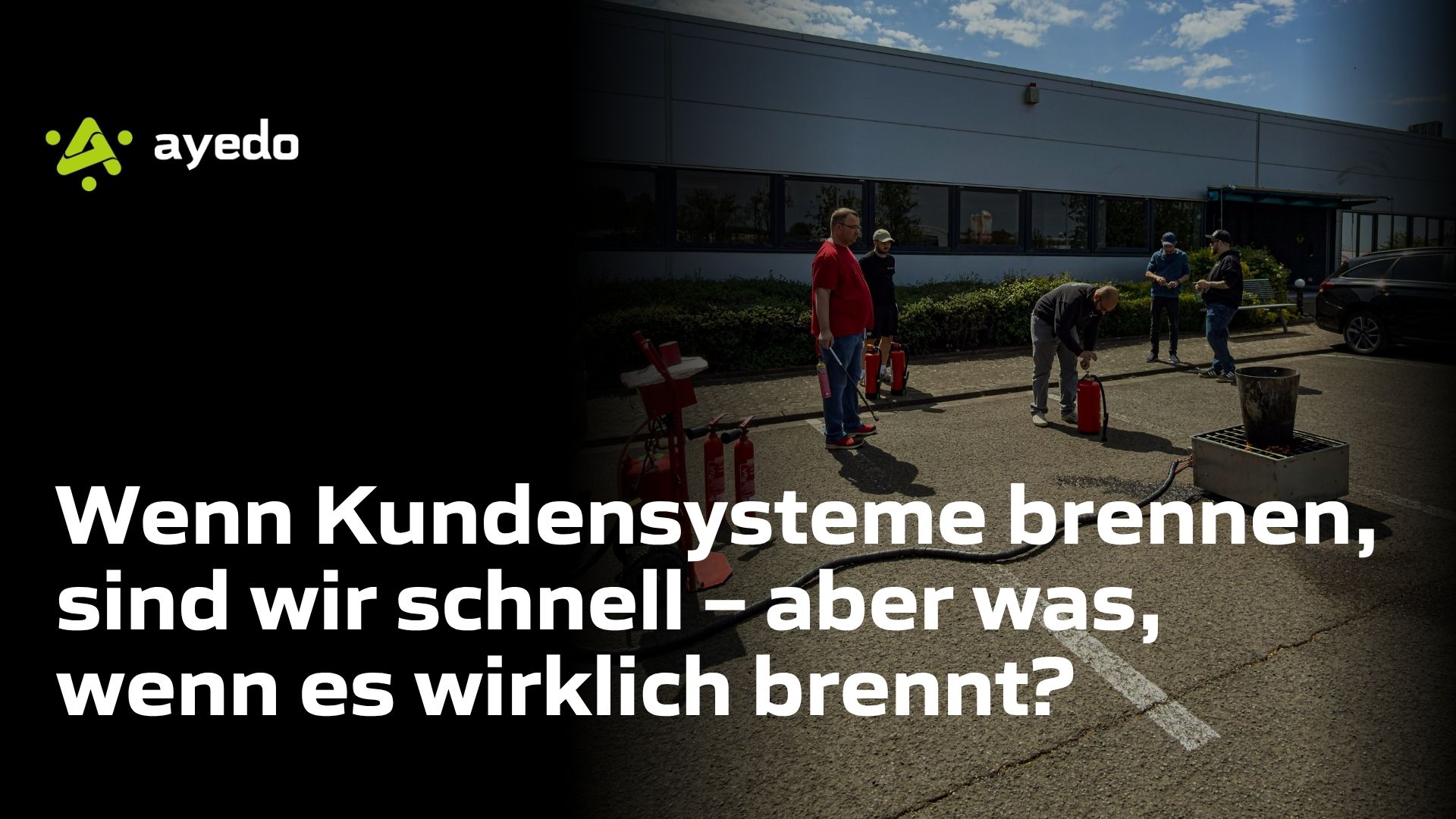
When customer systems are on fire, we act like firefighters—quickly, methodically, and solution-oriented. But what happens when there's a real fire in our own company?
In modern enterprise IT environments, traditional, long-established Ansible structures are increasingly reaching their limits. What often began as an efficient solution for ad-hoc automation has now manifested as an unwieldy "playbook sprawl" and the infamous "Python dependency hell." The manual maintenance of virtual environments on individual administrator workstations ("snowflake workstations") leads to inconsistencies, complicates onboarding, and poses a significant compliance risk. Polycrate acts as a strategic enabler: it transforms automation from a script-based activity into a scalable platform architecture. This not only ensures operational excellence but also strengthens digital sovereignty through provider-independent, reproducible processes that decouple deployment tooling from the underlying cloud infrastructure.
Operating Software-as-a-Service (SaaS) or complex eCommerce solutions presents an economic and architectural challenge: the cost structure demands shared infrastructure (multi-tenancy), while compliance and stability require strict separation of customers (isolation).
In the early stages of a SaaS product or an eCommerce solution, speed is everything. To go live quickly, the path through virtual machines (VMs) and a few well-intentioned Bash scripts is often the path of least resistance. It works—for the first customer, the second, and maybe even the fifth.
Monitoring alerts have become background noise in many IT organizations. When the phone rings at 3 AM, the first reaction is often annoyance rather than adrenaline—followed by the expectation that it's just a false alarm. This **alert fatigue** is not a human failing but the result of an outdated monitoring strategy. A system that escalates with every transient network jitter is not a protective mechanism but an operational burden that ties up resources and significantly increases the risk of errors during real incidents.
In the fintech world, there's a well-known phenomenon: the software is great, the team is convinced, but the legal and compliance department of a major bank stalls the deal for months. The reason is almost always the same: **the outsourcing risk.** When a bank moves its critical processes to your cloud environment, it loses a piece of control - and this is where DORA and internal policies set extremely high hurdles.
When you ask an Ops team in a fintech about the most stressful event of the year, the answer is usually: "The annual IT audit." For weeks, manual lists are created, Jira tickets are searched, and screenshots of configurations are taken to prove to the auditor that processes were followed. In the world of DORA and NIS-2, this manual approach is not only inefficient but also risky—anything that has to be manually documented is prone to errors and vulnerabilities.
In regulatory discussions with BaFin or during due diligence by major banks, the term **exit strategy** inevitably comes up today. For a long time, this topic was neglected—often a theoretical document sufficed, describing how one would "theoretically" move to another provider.
In recent years, the strategy for many fintechs was clear: "Managed first." Those looking to grow quickly used the ready-made building blocks of the major US hyperscalers—from Kubernetes to databases to identity management. Technically, this is brilliant as it massively accelerates product development. However, with the enforcement of **DORA (Digital Operational Resilience Act)** in January 2025, the regulatory landscape has fundamentally changed.
In a shared infrastructure environment like a DBaaS platform, transparency is a balancing act. On one hand, the provider's operations team needs to keep an eye on the entire fleet to proactively respond to bottlenecks. On the other hand, customers expect detailed insights into the performance of *their* specific instances—without seeing their "neighbors'" data.
In the world of databases, there's a significant difference between a "backup" and "recoverability." For a DBaaS provider, a daily snapshot of data is not enough. If a customer accidentally deletes an important table at 2:05 PM, a backup from 2:00 AM is only partially helpful—they would lose an entire morning's work.
Operating a DBaaS platform presents a mathematical trap: If the operational effort per database increases linearly with the number of customers, the business model is not scalable. A team of ten engineers might be able to manually "manage" 50 databases - but never 500 or 5,000.
When scaling a DBaaS platform, storage quickly becomes the most critical bottleneck. Databases have two opposing demands on storage infrastructure: on one hand, they require extremely low latencies for read and write operations (I/O), and on the other, backups and transaction logs (WAL) generate massive amounts of data that need to be stored cost-effectively.
At first glance, the business model "Database as a Service" (DBaaS) seems deceptively simple: take a proven open-source database like PostgreSQL, add a web interface, and sell the operation as a managed service. However, those who attempt to launch this model with a few manually set up virtual machines (VMs) hit an invisible wall with the first ten customers.
Kubernetes might initially seem like a purely developer-centric topic—complex, technical, and far removed from everyday work life. However, this is a misconception. At its core, Kubernetes is about something very fundamental: **How modern software is reliably operated**.