GitOps Platform Independence through Polycrate Automation
GitOps Platform Independence through Polycrate Automation Understanding the automation layer that creates a coherent, reproducible deployment pipeline …
Tags
Content with this tag
GitOps Platform Independence through Polycrate Automation Understanding the automation layer that creates a coherent, reproducible deployment pipeline …
TL;DR Polycrate-driven automation offers cross-architecture, declarative infrastructure control that enables platform independence. Through a central …
In industrial data processing, ETL processes (Extract, Transform, Load) are the nervous system of production. When sensor data from plants worldwide …
TL;DR The Polycrate API transforms individual workspaces into a team platform: all workspaces, action runs, and SSH sessions are centrally …

TL;DR Polycrate not only logs Action Runs (Ansible playbooks) but also SSH sessions, workspace syncs, and CLI instances – all centrally accessible via …

TL;DR Polycrate automatically captures every polycrate run execution as an “Action Run” – including block, action, exit code, timestamp, …
In many technical service teams, there is a dangerous pragmatism when it comes to communication: When things need to move quickly on-site or at the …
TL;DR A well-named, clearly structured Polycrate workspace is half the battle: a consistent name (e.g., acme-corp-automation) and a simple directory …
TL;DR Polycrate is more than just a CLI tool: With PolyHub, an API platform, and MCP, it forms an ecosystem where reusable automation blocks, …
In customer service and technical support, the ticketing system is the central nervous system. Many companies instinctively turn to market leaders …
In the world of Artificial Intelligence, there’s a phenomenon we often refer to as the “Wall of Confusion.” On one side is the data …
TL;DR Plain Ansible is a powerful tool for ad-hoc automation, quick scripts, and simple setups – but teams quickly hit limits with dependencies, …
TL;DR The Model Context Protocol (MCP) is an open standard: AI clients talk to helper programs over stdin/stdout (stdio) using JSON-RPC. polycrate mcp …
TL;DR In many enterprise organizations, each team builds its own Ansible environment—without clear versioning, without central reuse, without …
TL;DR You can centrally manage hundreds of Raspberry Pis and other edge nodes with Ansible—without an agent on the devices, just via SSH. Polycrate …
TL;DR Manual compliance checking with Excel lists is slow, error-prone, and hardly reproducible – with Policy as Code, you describe your requirements …
TL;DR In this post, you’ll create a complete Polycrate block for your own Kubernetes app – including block.poly, an Ansible playbook, and three …
TL;DR PolyHub functions like an app store for infrastructure: Ready-made ayedo blocks for Kubernetes apps (nginx, cert-manager, external-dns, and many …
TL;DR In this post, we build a Polycrate workspace that manages on-premise servers and Azure VMs in a shared inventory—including Resource Groups, …
TL;DR Ansible can fully automate Azure Entra ID (formerly Azure AD) via the azure.azcollection: users, groups, app registrations, and even …
TL;DR Most environments are hybrid: Windows servers for AD, file services, and specialized applications, Linux for web, databases, and automation – …
TL;DR Declarative operating models provide companies with an effective method for automating and standardizing complex infrastructure management …
TL;DR You can implement standardized Windows software deployment without expensive SCCM infrastructure – using Chocolatey as a package manager and …
TL;DR Active Directory changes via GUI or non-versioned PowerShell scripts are error-prone, hard to track, and not very collaborative. With Ansible …
Why the Supposed Alternative is Already a Reality In many companies, Microsoft 365 is still considered the standard for digital collaboration. Teams …
TL;DR Set up WinRM properly once with HTTPS, certificate, and firewall rules, and you’ll have a stable foundation for Ansible automation on …
TL;DR You build a reusable Polycrate workflow that automatically executes backup → update → verify on your Linux servers – including rollback via …
TL;DR Managing a single server with Ansible is quick and easy, but once you add 10, 50, or 200 hosts, the inventory becomes a critical scaling factor. …
In a perfect world, your Infrastructure as Code (IaC) repository is the absolute “Source of Truth.” Every change to load balancers, DNS …
Why Stable Interfaces Are Crucial for the Ecosystem Kubernetes is now much more than a Container orchestrator. A vast ecosystem has developed around …
TL;DR You build a reusable Polycrate block that automates the deployment of Nginx and Let’s Encrypt (via community.general.certbot) on a Linux …
TL;DR With Polycrate, you create a single inventory.yml in the workspace root to centrally manage all Linux servers—without needing your own Ansible …
TL;DR Polycrate structures Ansible automation into three building blocks: Blocks, Actions, and Workspaces – eliminating the classic playbook sprawl …
TL;DR Install Polycrate with a single curl command – no pip, no virtualenv, no local Ansible installation required. Initialize a workspace, understand …
TL;DR Ansible is a strong foundation: agentless, idempotent, human-readable YAML, and a vast module ecosystem make it the de facto standard for …
Why Digital Sovereignty is Less Radical Than Many Believe Geopolitical tensions, extraterritorial laws, sanction regimes – all these have long been …
Why the Open-Source Technology is More Than Just Container Orchestration When digital sovereignty is discussed today, one name almost always comes …
Until recently, infrastructure automation was reactive: when CPU usage exceeded 80%, Kubernetes would start a new pod (autoscaling). This is …
Public administration has a massive image problem among IT talents. Young Cloud Architects and DevOps Engineers often associate the public sector …
In a highly automated logistics center, time is the most critical currency. When an autonomous guided vehicle (AGV) approaches an intersection or a …
For MedTech companies and developers of Digital Health Applications (DiGAs), the path to market is not a sprint but a hurdle race through regulatory …
TL;DR Kubernetes is permissive by default: it allows developers almost anything, including insecure configurations (e.g., running containers as …
In many retail companies, an ERP system that has evolved over decades forms the backbone of IT. These systems are stable and proven, but were …
Retail is faster than ever today. A new trend on social media, a sudden strategic shift by the competition, or the introduction of a new payment …
Considering Real Observability Needs Observability determines how well systems can be understood, operated, and evolved. It is not an add-on for …
Identity Management as a Control Instrument or Open Infrastructure Identity management is far more than just login and user administration. It …
Pipeline Orchestration or GitOps as an Operational Model CI/CD is often treated as a tool question: Which pipeline, which runner, which service? In …
Monitoring as a Cloud Function or as an Open Observability Layer Monitoring and Observability have long surpassed being mere operational tools. They …
Identity as a Service or as Infrastructure Azure Entra ID and Keycloak address the same core issue: managing identities, controlling access, and …
Observability as a Service or as Your Own Infrastructure Azure Monitor and Loki take two fundamentally different approaches to monitoring and logging. …
TL;DR Kubernetes clusters should not be managed manually or with fragile scripts. While AWS CodePipeline tries to enforce deployments through external …
The classic SaaS model is simple: one cloud, one architecture, all customers share the resources. However, as a SaaS provider becomes more successful …
The promise of the cloud has always been flexibility. Yet, the reality in many IT departments is different: Vendor Lock-in. Those who build their …
Operating a modern IT infrastructure today often feels like being a mechanic who needs a different workshop for every screw. We use Terraform for …
TL;DR Encryption is mandatory, but managing it is often a nightmare. While AWS Certificate Manager (ACM) offers free certificates, they are …
In 2026, compliance is no longer a “paper tiger.” With regulations like the Cyber Resilience Act or certifications such as ISO 27001 and …
The grace period for cybersecurity in the industry is coming to an end. With the new EU directive NIS2 (Network and Information Security Directive), …
TL;DR Polycrate is an Ansible-based framework for deployment automation that containerizes all necessary tools, enabling reproducible deployments …
TL;DR GitLab CI/CD is much more than a build tool: When used correctly, it becomes the central backbone of your delivery process – from commit to …
TL;DR Kyverno is a Kubernetes-native policy engine that allows you to define security and operational policies directly as YAML and enforce them …
TL;DR Deterministic security checks in the cloud-native environment are based on three pillars: Policy as Code, automated CVE scanning, and SBOM …
GitHub will migrate its entire infrastructure to Microsoft Azure within the next 24 months. This information comes from internal documents reported …
Title: OpenAI for Germany – Digital Sovereignty with Azure as the Foundation? Markdown-Content: On September 24, 2025, SAP and OpenAI announced a new …
In industries like manufacturing, finance, or critical infrastructures, automation is not a “nice-to-have” but a mandatory necessity. …
On October 14, 2025, regular support for Windows 10 will end. What initially appears to many IT departments as a manageable maintenance date reveals …
Cloud infrastructure has its justification. Scalability, automation, and globalization of IT resources are now standard. Technically, the major …
The Forgotten Vulnerability in Your CI/CD Pipelines: The Registry Everyone talks about build pipelines, deployment automation, GitOps, blue/green …
Technological Independence Begins in the Data Center: Why We Rely on European Network Technology Digital sovereignty doesn’t start with legal …
Digital transformation is no longer a thing of the future – it is a reality. It affects not only e-commerce or digital tools in the office but has …
Automation must become manageable again. At ayedo, we are building a framework with Polycrate that brings order to the chaos of complex IT …
Digital sovereignty doesn’t end with tool selection or architecture. It only reaches its full potential when operations are efficient, secure, …
ArgoCD and Flux are both tools used for Continuous Deployment (CD) and GitOps workflows in Kubernetes clusters. They automate the deployment of …
The long-awaited day has arrived: HostProcess containers, the Windows counterpart to Linux privileged containers, are finally generally available in …
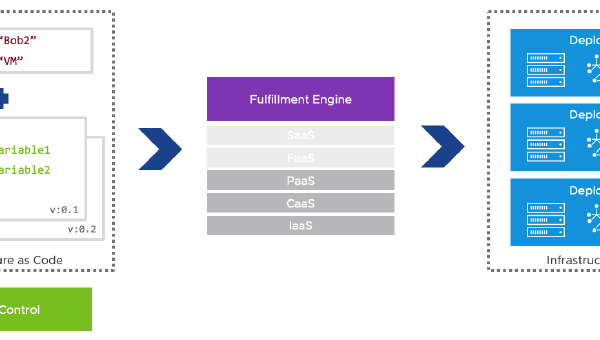
Infrastructure as Code (IaC) supports DevOps best practices by facilitating the creation of repeatable infrastructure environments using a declarative …
Kubernetes v1.22 introduced an exciting new alpha feature for clusters with Windows nodes: HostProcess Containers. HostProcess Containers extend the …