

Polycrate API 0.11.10 released: Endpoint Monitoring Fixes
Polycrate API 0.11.10 addresses UI bugs and performance issues in the endpoint monitoring system.
Blog
Cloud-Native Insights & Expertise
Discover our latest articles about cloud-native technologies, Kubernetes, DevOps, and modern software development. From practical tutorials to in-depth analyses.
Latest Blog Posts
Stay up to date with our latest articles about cloud-native technologies, Kubernetes, and DevOps.
1219 posts
Polycrate API 0.11.10 addresses UI bugs and performance issues in the endpoint monitoring system.
Polycrate CLI 0.29.9 introduces a redesign of Agent Health data and the submission of Check Results to the API for faster status updates.
The classic SaaS model is simple: one cloud, one architecture, all customers share the resources. However, as a SaaS provider becomes more successful in the enterprise segment, a phrase is often heard in sales conversations: "We love your software, but for compliance reasons, the data must reside in our own Azure tenant (or on-premise)."
In the growth phase of a SaaS company, there is a dangerous curve: the **Cost of Goods Sold (COGS)**. As user numbers increase, cloud costs often explode disproportionately. The reason: inefficient resource allocation, unused "zombie" instances, and lack of cost transparency per customer (Unit Economics).
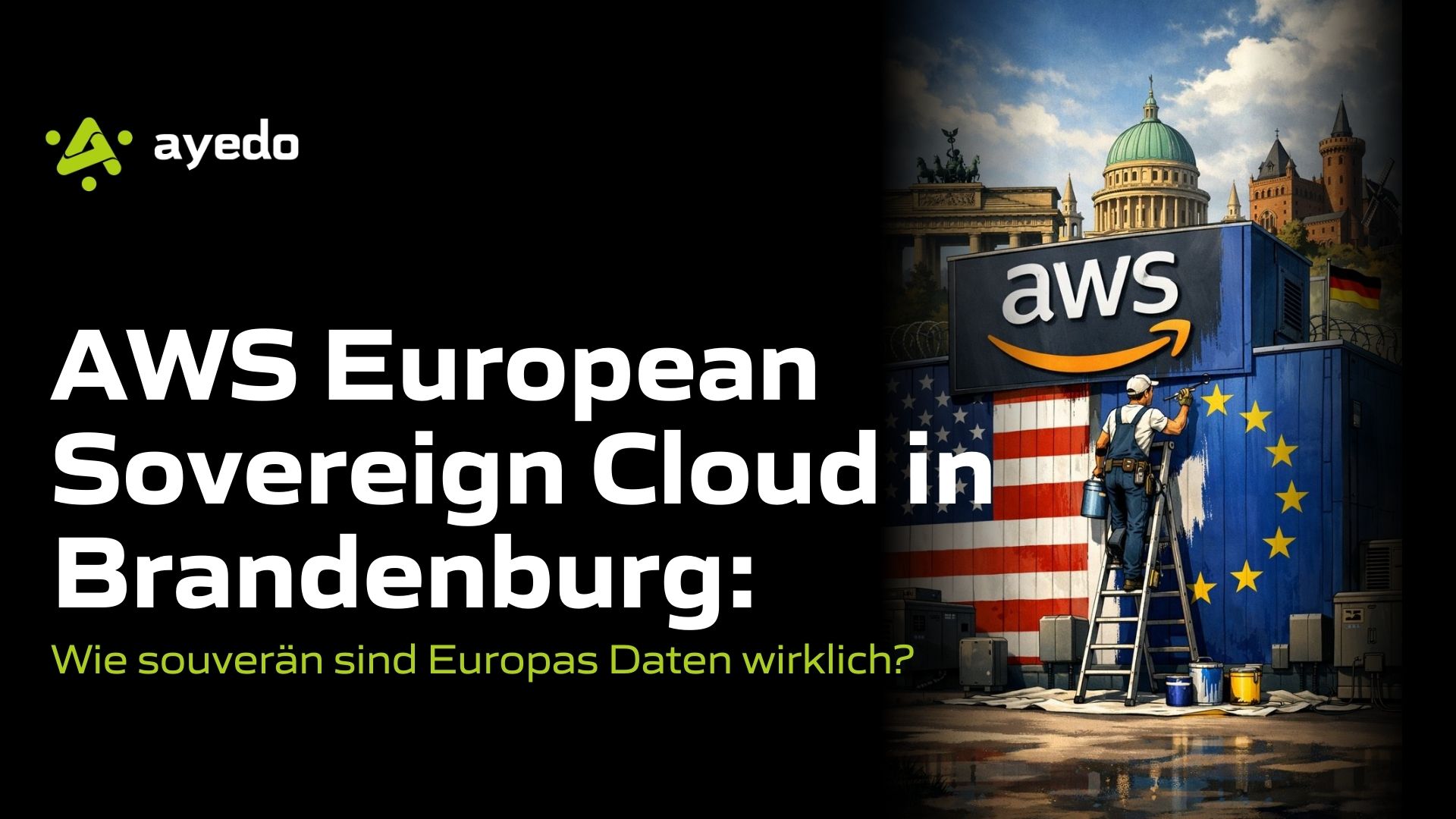
Amazon Web Services is putting the "AWS European Sovereign Cloud" into operation in Brandenburg. Cloud campuses are being established in Baruth/Mark and Finsterwalde, initially through leased data centers, prospectively with their own infrastructure. Operations are carried out via a German GmbH, the data centers are located exclusively in the EU, and the staff employed are resident in Europe. The claim is clearly formulated: operation, control, and responsibility are to be entirely European.
Polycrate API 0.11.7 corrects the string representation of host objects.
Polycrate API 0.11.6 fixes UniqueValidator errors in K8sApp and Host updates that blocked the operator.
Polycrate CLI 0.29.8 enhances API error diagnosis: All 42 API client functions now display the response body on errors.
Polycrate CLI 0.29.7 addresses API schema incompatibilities and enhances error diagnostics for the operator.
Polycrate CLI 0.29.6 addresses a critical JSON deserialization error: K8sApp objects can now be correctly synchronized with the API again.
Polycrate API 0.11.5 addresses CLI compatibility, enhances auto-refresh to 10s, and enables deep-linking for objects.
Polycrate API 0.11.4 introduces Dynamic Tables with auto-refresh, a unified Info Drawer, and a collapsible sidebar for enhanced clarity.
The promise of the cloud has always been flexibility. Yet, the reality in many IT departments is different: **Vendor Lock-in**. Those who build their entire automation exclusively on AWS APIs, Azure-specific scripts, or Google Cloud tools find themselves in a "golden trap." Switching providers or even distributing workloads to a European provider like STACKIT or Hetzner becomes an unaffordable mammoth task.
Operating a modern IT infrastructure today often feels like being a mechanic who needs a different workshop for every screw. We use **Terraform** for cloud resources, **Ansible** for server configuration, **Helm** for Kubernetes apps, and a handful of **Bash scripts** to somehow hold everything together.
Secrets (API keys, database passwords) do not belong in Git code, but their runtime provisioning is often complex. Integrating AWS Secrets Manager directly into your application (via SDK) creates a hard vendor lock-in in the source code. The External Secrets Operator (ESO) solves this dilemma. It acts as a bridge, synchronizing secrets from external sources (AWS, Azure, Vault) and providing them as native Kubernetes Secrets. The result: The application remains cloud-agnostic and clean.
Data is the new oil, but traditional data warehouses (like AWS Redshift) are often expensive, sluggish refineries. ClickHouse has revolutionized the OLAP (Online Analytical Processing) market. With columnar storage and vectorized query execution, it delivers answers to questions over billions of records in milliseconds. While cloud services tie costs to data volume, ClickHouse decouples performance from price through extreme compression and tiering.
Kubernetes networking has long been a bottleneck, hindered by outdated Linux technologies (iptables). While AWS provides a solid base connectivity with the VPC CNI plugin, it quickly hits limits in security and visibility (IP-based instead of identity-based). Cilium revolutionizes this layer by using eBPF. It enables high-performance networking, transparent encryption, and deep observability (Hubble) without needing to change application code—portable across any cloud.
Encryption is mandatory, but managing it is often a nightmare. While AWS Certificate Manager (ACM) offers free certificates, they are technically tied to the AWS infrastructure (no key export). Cert-manager establishes an open standard, automating the issuance, renewal, and use of certificates via Kubernetes CRDs. This ensures that the cryptographic identity of your applications remains portable and belongs to you—not the cloud provider.
Storage has traditionally been the heaviest "anchor element" in cloud architecture. Using AWS EBS or S3 ties your data physically and economically to a provider. Ceph breaks this model as a "Unified Storage Solution" (Block, File, Object). It runs on standard hardware and scales linearly into the exabyte range. With full S3 compatibility and Kubernetes integration, Ceph enables true data portability without reliance on proprietary cloud storage systems.
Authentik redefines identity management: moving away from proprietary cloud silos towards a unified identity layer. As an open-source solution, it integrates authentication, enrollment, and authorization in a highly flexible engine. Unlike cloud providers that lock user data in closed "user pools," Authentik ensures full data sovereignty and portability of digital identities across all infrastructure boundaries.
Until now, monitoring was often a compromise: Those who wanted to know exactly what was happening in their applications had to install "agents" or instrument the code with libraries (SDKs). This costs performance, makes the containers heavier, and annoys developers.

In the traditional server world, the mantra was: "Better too much RAM than too little." In Kubernetes, this mindset leads directly to a bloated cloud bill. Since Kubernetes schedules Pods based on their **Resource Requests**, you pay for the space you reserve—regardless of whether your application actually uses it.
Imagine getting the same computing power for **70% to 90% less cost**. The catch? The cloud provider can take the server away from you at any time with just two minutes' notice (AWS) or even just 30 seconds (Azure).
ArgoCD has established itself as the industry standard for Continuous Delivery in Kubernetes. By implementing the GitOps paradigm, it transforms infrastructure management from imperative pipelines to declarative state management. This enables automated synchronization ("Self-Healing"), seamless auditability, and a strict separation of CI (Continuous Integration) and CD (Continuous Delivery).