GPU Elasticity Without Lock-in: Hybrid Cloud Strategies for AI Workloads
In industrial AI development, the GPU (Graphics Processing Unit) is the new gold. Whether for …
27.03.2026
Vendor lock-in is one of the central challenges companies face when using cloud services. Strategies like multi-cloud approaches, the use of open standards, and the implementation of modular architectures can help reduce dependency on providers. A well-thought-out cloud migration and the use of container technologies further support the flexibility and agility of IT environments. Companies must make a conscious decision about their cloud strategy to avoid long-term dependencies and ensure control over their data and applications.
In an era where cloud computing is considered key to digital transformation, many companies face the challenge of becoming dependent on major cloud providers. Vendor lock-in can not only limit a company’s flexibility and agility but also drive up costs and hinder innovation. The question is: How can companies reduce their dependencies and create a flexible cloud architecture? In this article, we will explore strategies that enable avoiding vendor lock-in while still leveraging the benefits of the cloud.
Vendor lock-in describes a situation where it becomes difficult or expensive for companies to switch cloud providers. This can have various causes, including proprietary technologies, specific APIs, or high costs for migrating data and applications. This dependency can lead to significant risks, such as:
Therefore, companies must take proactive measures to minimize these risks.
One of the most effective methods to avoid vendor lock-in is implementing a multi-cloud strategy. By using multiple cloud providers, companies can:
It is important that companies implement clear processes and tools for managing and orchestrating between different cloud providers as part of their multi-cloud strategy.
The use of open standards is another critical factor in avoiding vendor lock-in. When companies design applications and data to be compatible with open and recognized standards, they create greater interoperability. Benefits include:
Implementing modular architectures is crucial for avoiding vendor lock-in. By designing applications as microservices, companies can:
A modular approach allows companies to update or change specific components of their architecture without needing a complete overhaul.
To clearly illustrate the importance of these strategies, a comparison between proprietary and open solutions can be helpful.
Such an architecture allows the company to make short-term decisions without remaining in a long-term dependency.
1. What does vendor lock-in mean? Vendor lock-in describes a company’s dependency on a specific cloud provider, making it difficult to switch providers.
2. How can I successfully implement a multi-cloud strategy? A successful multi-cloud strategy requires clear governance policies, unified orchestration tools, and the creation of standards for interoperability.
3. Why are open standards important? Open standards promote interoperability, reduce migration costs, and allow for greater flexibility in technology selection.
4. What are microservices? Microservices are an architectural approach where applications consist of small, independent services that can be developed and deployed individually.
5. What risks are associated with vendor lock-in? Vendor lock-in can lead to high costs, limited flexibility, and potentially dangerous security risks.
Vendor lock-in is a significant challenge that companies must address in an increasingly digitized world. By implementing a multi-cloud strategy, utilizing open standards, and adopting a modular architecture approach, companies can not only reduce their dependency on specific providers but also significantly increase their flexibility and agility. ayedo supports companies in planning and executing a strategic cloud migration that ensures long-term provider independence. It’s time to regain control over your cloud architecture and make strategic decisions that pave the way for a future-proof IT environment.
In industrial AI development, the GPU (Graphics Processing Unit) is the new gold. Whether for …
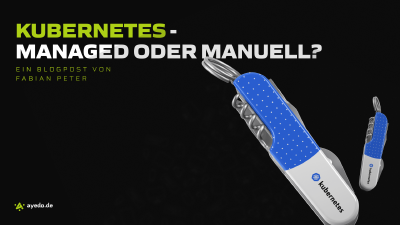
Kubernetes - Managed or Manual? Should you manage Kubernetes yourself or entrust the responsibility …
TL;DR Criterion AWS EKS Azure AKS Google GKE Pricing Complex, based on instances, services, and …