End SaaS Servitude: Why We Are Committed to Digital Independence
The dependency on US SaaS providers is increasingly costing German companies control, money, and …
15.04.2025
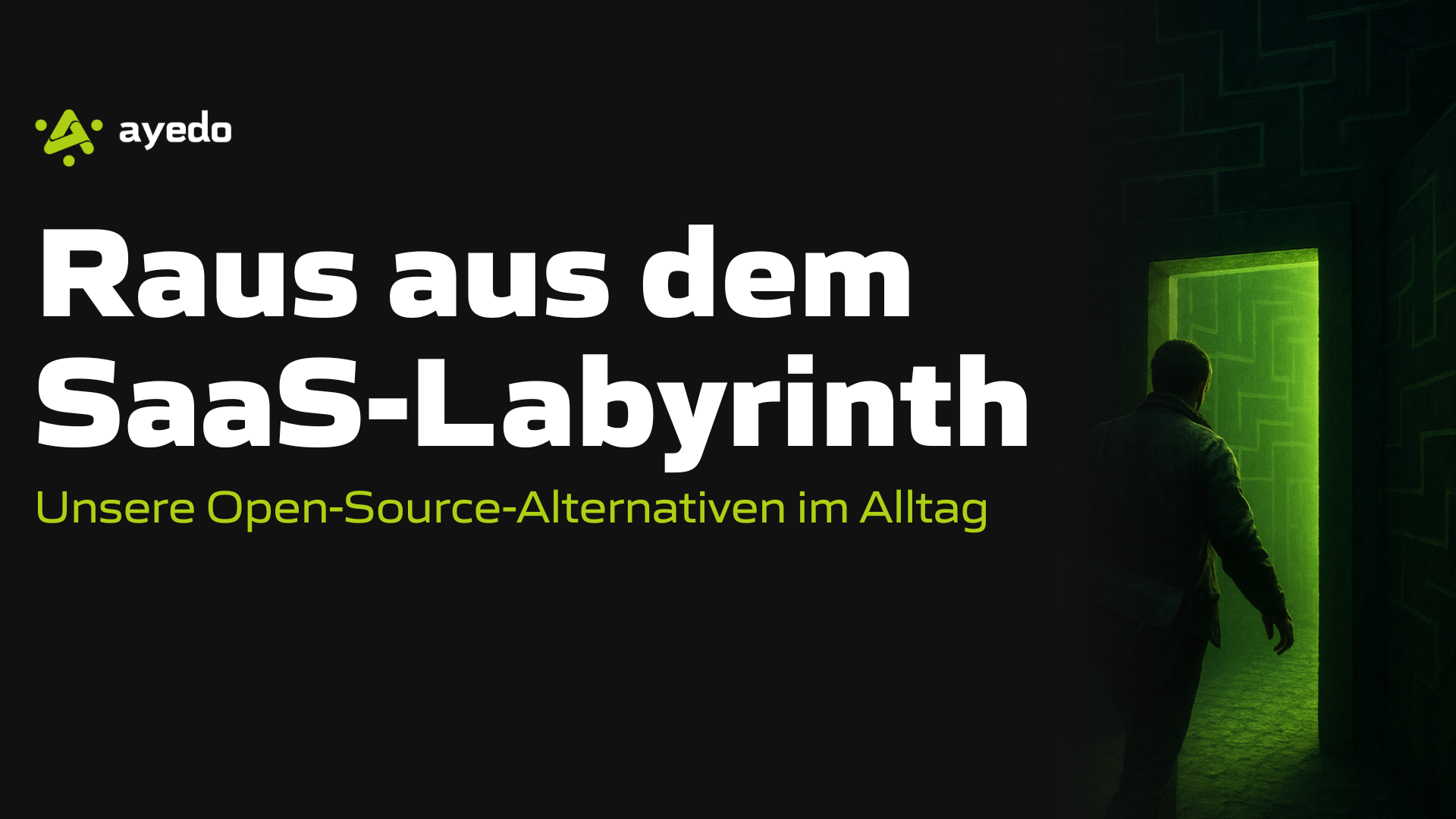
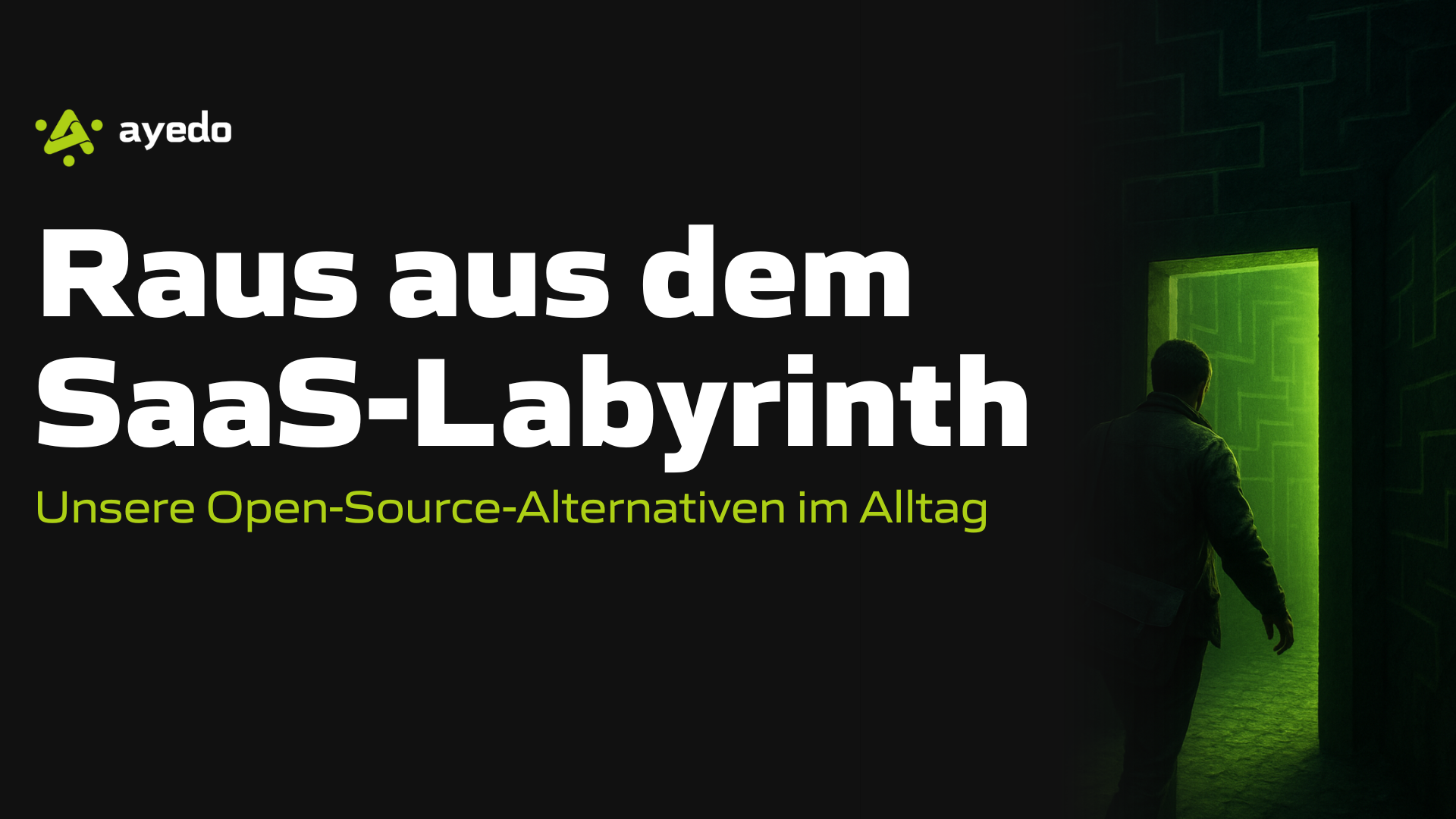
Digital sovereignty begins with concrete decisions. In this post, we show how we at ayedo have replaced key SaaS tools with powerful open-source solutions—and what we learned in the process.
In discussions about digital independence, the focus is often on grand strategies—but change starts with the tools we use daily:
We demonstrate: There is another way. And it works.
| Area | Previously (SaaS) | Now (Open Source) | Benefits for Us |
|---|---|---|---|
| Project Management | Asana, Trello | Outline, OpenProject | Data sovereignty, custom workflows |
| Communication | Slack, MS Teams | Mattermost, Discord | GDPR-compliant, internally hosted, flexible |
| Collaboration & Docs | Google Workspace | Nextcloud, Collabora | Control, integration with LDAP/SSO |
| Knowledge Management | Confluence | Outline | Fast, searchable, team-centered |
| Video Conferencing | Zoom, Google Meet | Discord, Jitsi Meet | No tracking, full control |
| Password Management | LastPass | Bitwarden (self-hosted) | Auditable, internally secured |
Especially with open source, an active developer community is crucial. It provides quick bug fixes, new features, and a genuine roadmap.
Instead of an all-in-one cloud fortress, we rely on well-integrated specialized tools. The DevOps-oriented architecture is more adaptable—and scales with us.
Security by Design: Knowing what the code does allows us to minimize vulnerabilities and apply updates strategically—without waiting for vendor cycles.
Sure, the transition wasn’t a walk in the park. But:
What remains? Our commitment to working flexibly, sovereignly, and innovatively—without compromising on data protection and control.
In the next post, we open the next level:
Because: Choosing the right tools is just the beginning—the real power lies in the architecture.
We want to shape this change not just for ourselves—but with the community. What open-source tools do you use? What experiences have you had?
Write to us, join the discussion, or come by.
Digital independence is achievable—we show how.
The dependency on US SaaS providers is increasingly costing German companies control, money, and …
The US Cloud Act allows US authorities to access European servers—a clear conflict with the GDPR. …
The sudden dismissal of Jutta Horstmann as the managing director of the Center for Digital …