Nextcloud: The Reference Architecture for Sovereign Collaboration & Digital Office
TL;DR In a world where Microsoft 365 and Google Workspace set the standard, companies often pay with …
09.03.2026
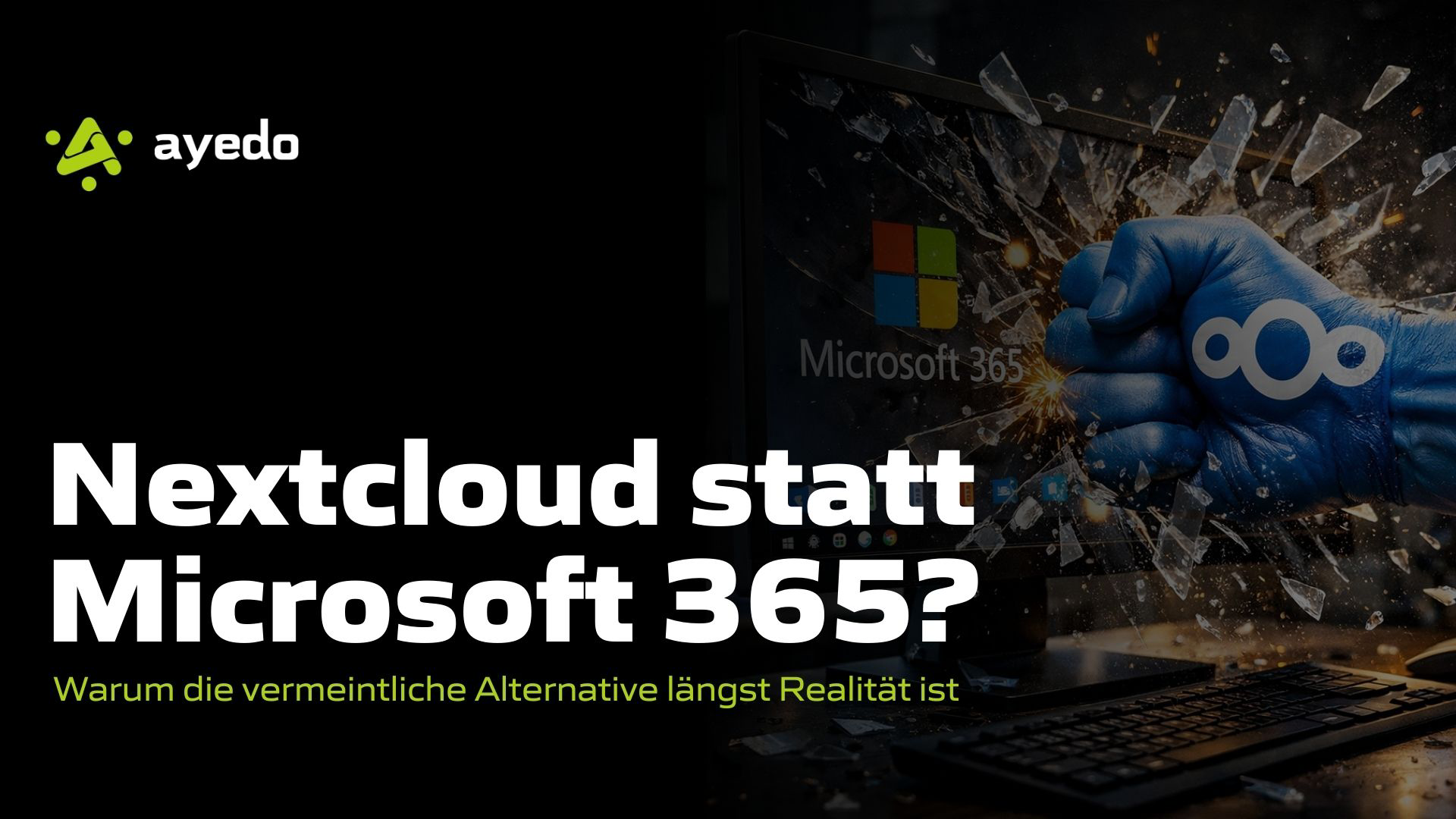
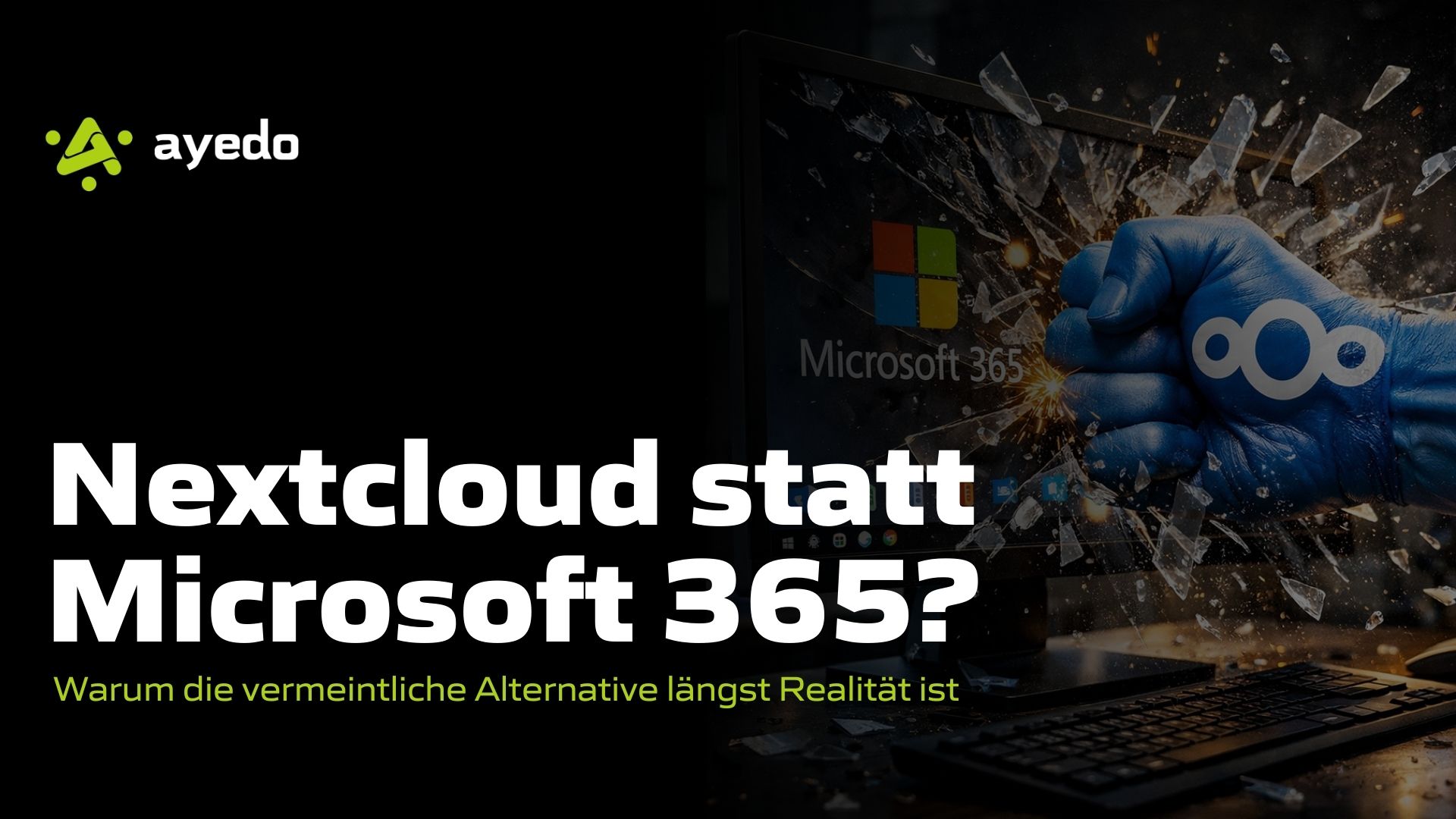
In many companies, Microsoft 365 is still considered the standard for digital collaboration. Teams for meetings and chats, OneDrive for files, SharePoint for documents. The platform is established, the tools are familiar, and many organizations have built their workflows around it over the years.
At the same time, a narrative persists: There are no real alternatives.
A recent practical test by heise challenges this assumption. The editorial team of c’t 3003 worked consistently with Nextcloud for several weeks—handling all central work processes via a self-hosted instance: video conferences, chats, document editing, and file sharing.
The conclusion is remarkably straightforward: Collaboration works seamlessly.
You can find the full article here: https://www.heise.de/news/Nextcloud-im-Praxistest-BESSER-als-Teams-c-t-3003-11201042.html
For many readers, this result may be less surprising than initially thought. Nextcloud is no longer an experimental niche solution. The platform is used worldwide by companies, authorities, universities, and organizations—often wherever control over data and infrastructure plays a central role.
The digital workplace has changed significantly over the past ten years. Collaboration platforms have become the central nervous system of modern organizations. Documents are collaboratively edited, meetings take place online, and files circulate constantly between teams, partners, and customers.
In this environment, large platform providers have prevailed, offering a complete work environment from a single source. Microsoft, Google, and a few other providers have built highly integrated ecosystems from this.
However, this integration leads to a strong dependency. Once a company has bundled its communication, documents, and workflows into one platform, switching becomes increasingly difficult.
Often, this leads to the conclusion that alternatives are not technically competitive. In many cases, however, the opposite is true: Alternatives are simply not seriously considered.
Nextcloud clearly shows that digital collaboration can be organized differently.
Nextcloud is an open-source platform for file, communication, and collaboration services. At its core, it offers features that many companies know from Microsoft 365 or Google Workspace: secure file storage, synchronization between devices, collaborative document editing, chat, video conferencing, calendar, contacts, and task management.
The crucial difference lies in the architecture.
Nextcloud is not a proprietary platform from a single provider. The software can be run on one’s own infrastructure, operate in private or public clouds, or be used in hybrid environments. Companies decide for themselves where their data resides and how the platform is operated.
Through the modular app system, the environment can also be flexibly expanded. Office functions can be integrated via Collabora or OnlyOffice, for example. Communication functions run through Nextcloud Talk, while additional apps cover calendars, project management, or knowledge organization.
In practice, this creates a platform that replicates many functions of traditional collaboration suites without relinquishing control over data and infrastructure.
Technical alternatives to large cloud platforms have existed for a long time. However, it is only in recent years that awareness has changed regarding why these alternatives are important at all.
A central point is the US CLOUD Act, which allows American authorities access to data from US companies—even if the servers are physically located in Europe. For companies, authorities, and organizations with sensitive data, this poses a real challenge.
At the same time, the desire for digital sovereignty is growing in Europe. This refers to the ability to control central digital infrastructures oneself and operate independently of individual platform providers.
This is where open source plays a crucial role. Software whose code is openly visible and whose operation is not tied to a single provider creates more freedom of action in the long term.
Nextcloud is one of the most well-known projects in this area.
The heise practical test reveals an important insight: The discussion about alternatives is often conducted abstractly. In practice, however, everyday life decides.
Do video conferences work stably? Can documents be collaboratively edited? Can files be easily shared? Is the platform fast enough?
These are exactly the questions the editors answered in the test—and they concluded that Nextcloud works surprisingly smoothly in daily use.
Many teams trying Nextcloud for the first time have a similar experience. The platform initially seems less “polished” than some commercial suites but reliably covers the essential functions and can be adapted much more flexibly to individual requirements.
When organizations consider alternatives to Microsoft 365 or Google Workspace, another concern often arises: the operation.
Who operates the platform? Who takes care of updates? Who monitors the infrastructure? How is the environment scaled?
These questions are justified because a self-operated platform requires responsibility for infrastructure, security, and availability.
At the same time, this no longer needs to be an obstacle today. Modern cloud-native platforms enable applications like Nextcloud to be operated stably and scalably without companies having to build their own infrastructure teams.
[Container] technologies and Kubernetes have massively simplified the operation of complex applications in recent years. Applications can be automatically scaled, monitored, and updated. At the same time, the infrastructure remains portable and independent of individual cloud providers.
This creates an environment where organizations can leverage the benefits of open source without having to bear the full operational responsibility internally.
We have been working with Nextcloud ourselves for years and use the platform in various projects and organizations. One thing has become particularly clear: Nextcloud is much simpler than many assume.
The platform can be flexibly integrated into existing work environments and grows with a company’s requirements. At the same time, control over data and infrastructure remains fully intact.
For many organizations, however, the problem is less the software itself and more the operation. Updates, monitoring, backups, scaling, and security must function reliably for a platform to run stably in the long term.
This is where we support companies.
We operate Nextcloud in modern, cloud-native environments and take over the technical operation of the platform—from monitoring to updates to backup and security concepts. The infrastructure can run in various cloud environments or be integrated into existing [Kubernetes] clusters.
This allows companies to retain control over their platform without having to manage the operational operation themselves.
The discussion about digital sovereignty will continue to gain importance in Europe in the coming years. Regulations, security requirements, and geopolitical developments will lead organizations to critically question their digital infrastructure.
It’s not about replacing existing platforms across the board. Rather, it’s about creating options for action.
Nextcloud is a good example of the fact that such options have long existed. The technology is mature, the platform is used worldwide, and the heise practical test clearly shows that it works in everyday work.
The real question is no longer whether alternatives exist.
The question is, who uses them.
TL;DR In a world where Microsoft 365 and Google Workspace set the standard, companies often pay with …

🧠 Editorial Schleswig-Holstein. The real North. is kicking Microsoft out of administration. …

In 2026, regulatory requirements for the European economy have reached a new level of quality. With …