The Gap Between Shopfloor and Enterprise IT
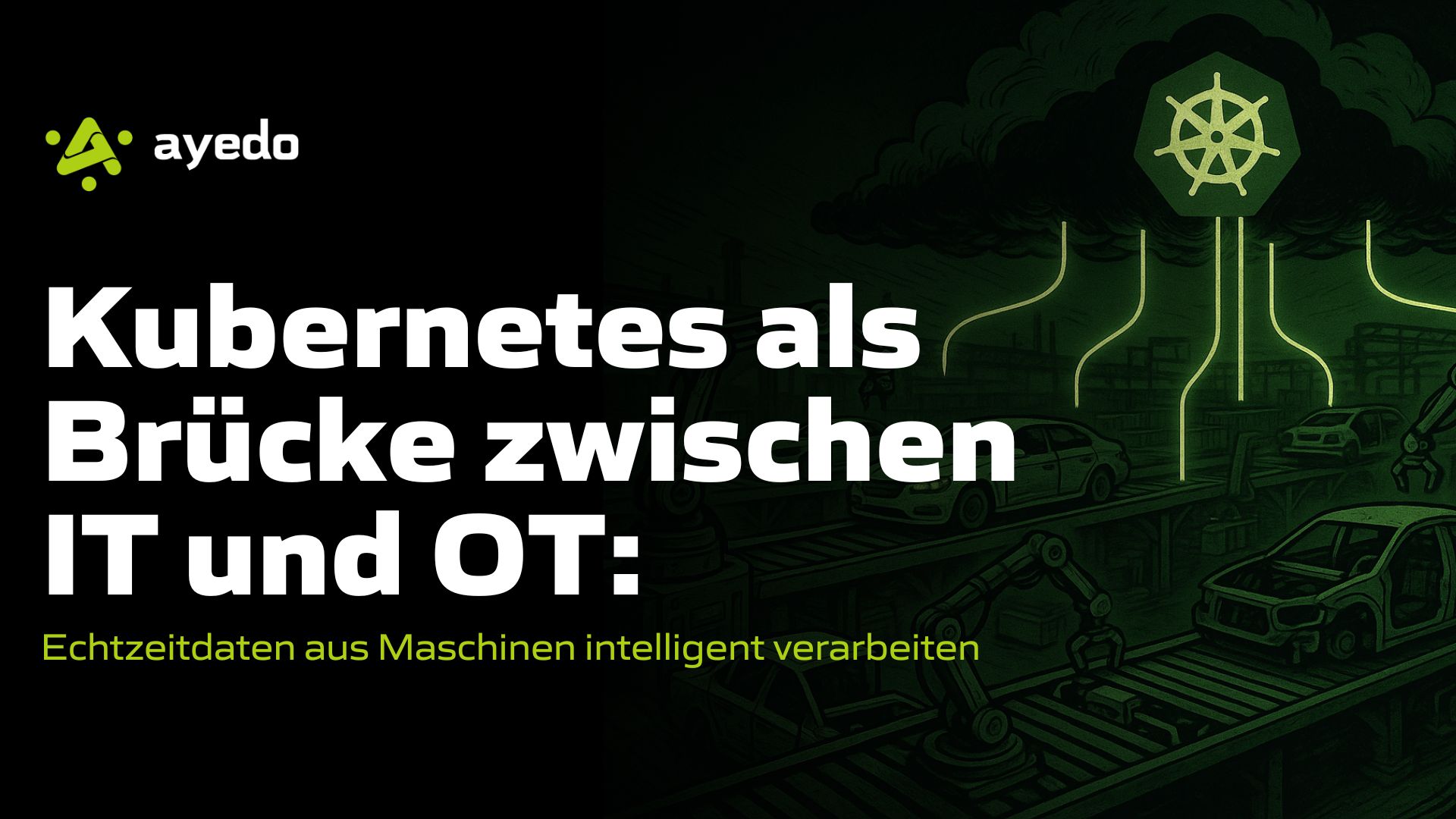
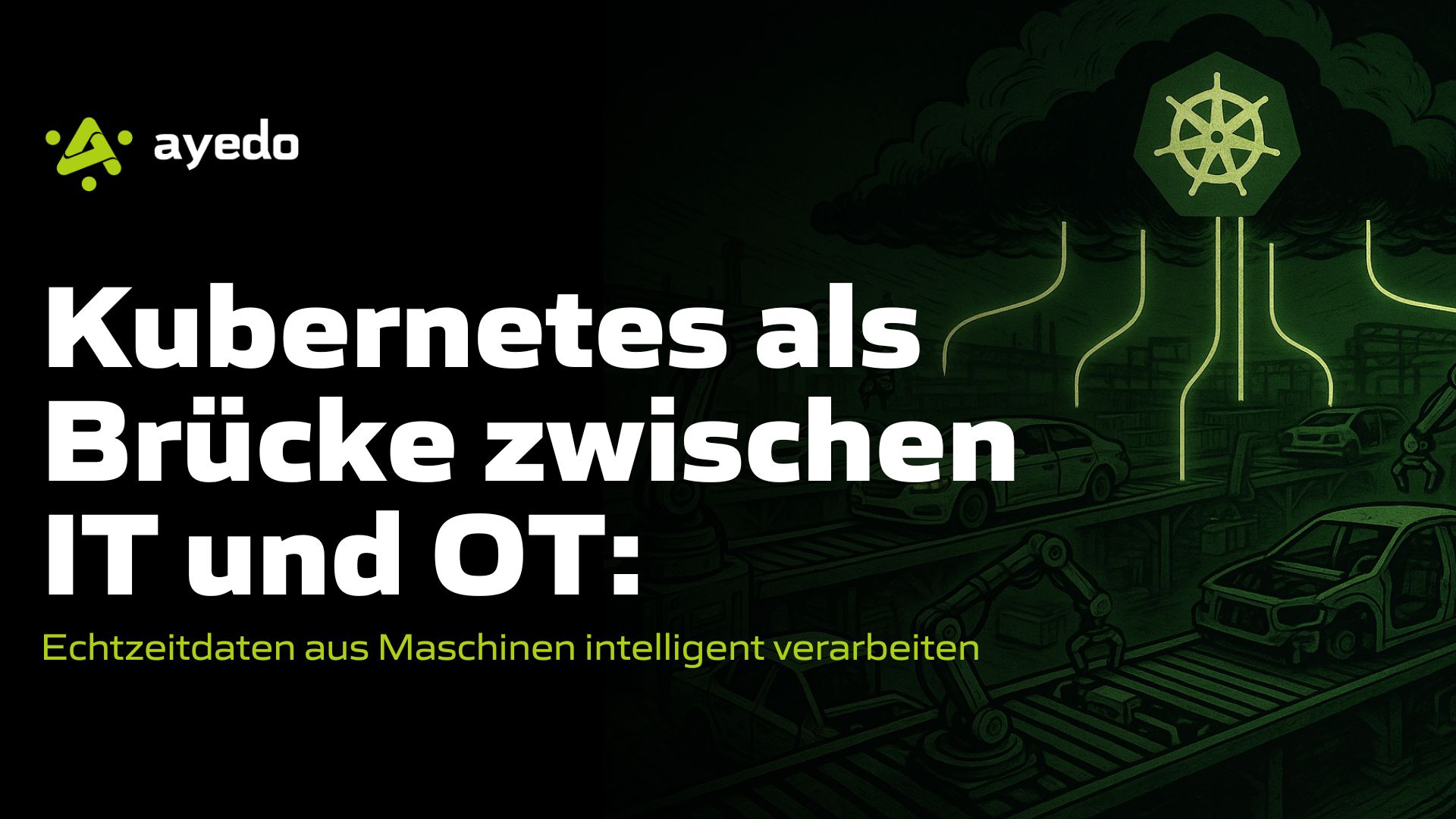
In more and more companies, IT and OT (Operational Technology) are converging. Production facilities, machines, control systems, and sensors deliver massive amounts of real-time data. This information is valuable—but only if it can be quickly, reliably, and securely integrated into the IT infrastructure and further processed. This is where the typical challenges have been arising for years:
- High latency and inconsistent protocols
- Fragmented networks between shopfloor and enterprise IT
- Security requirements and segmentation
- Proprietary interfaces and legacy systems
The traditional separation between OT and IT is becoming increasingly impractical. What is needed is a clean, standardized integration layer that connects both worlds—and this is precisely where Kubernetes offers decisive advantages.
Kubernetes: More Than Just Cloud-Native
Kubernetes is often reduced to its classic Cloud-Native use in IT. However, its true strengths—portability, orchestration, resilience, and automation—also make it ideal for industrial applications:
- Containerization of data pipelines, machine controls, edge components
- Rapid scaling for data streams with variable loads
- Standardized management of services across distributed infrastructures
Especially in OT scenarios with a high real-time character, Kubernetes can be used as a distributed control layer to process machine and sensor data directly where it is generated—at the network edge (Edge).
Use Case 1: Real-Time Processing Directly at the Edge
Production lines today generate thousands of measurement and control data per second:
- Vibration data
- Temperature values
- Manufacturing parameters
- Quality data
These data do not necessarily need to be immediately transferred to central data centers. Edge clusters based on Kubernetes enable local processing:
- Real-time data preprocessing and filtering
- Anomaly detection directly at the sensor location
- Local decisions with minimal latency
- Initial aggregation, then transport of condensed data to IT
The advantage: Reduced network load, lower latency, higher resilience in case of network failures. Kubernetes distributions like K3s or MicroK8s are ideally suited for such lean edge deployments.
Use Case 2: Integration into the Enterprise Network
While preprocessing occurs locally, many results—KPIs, quality metrics, production statistics—need to be integrated into central IT systems:
- ERP systems (e.g., SAP)
- MES (Manufacturing Execution Systems)
- BI and analytics platforms
- IoT platforms
With Kubernetes, these systems can be standardized connected, regardless of hardware, location, or manufacturer. Service mesh technologies like Istio or Linkerd additionally offer:
- Transparent service communication between edge and core
- Security through mTLS, authentication, and policy enforcement
- Load balancing and monitoring across all locations
Kubernetes thus becomes a consistent integration platform that connects IT security, data consistency, and operational stability.
Advantages in Industrial Operations
The use of Kubernetes in IT/OT scenarios results in concrete operational advantages:
- Scalability: New production lines can be integrated in a standardized manner.
- Maintainability: Updates, patches, and changes are performed in a controlled manner via CI/CD pipelines.
- Security: Clear network segmentation, controlled interfaces, and access control.
- Transparency: Unified logging, monitoring, and auditing across all systems.
- Vendor independence: Proprietary gateway solutions are avoided.
Conclusion: Kubernetes as a Standardization Layer Between Machines and IT
The complexity of modern production data demands flexible, scalable, and secure platforms. Kubernetes is not just a cloud orchestrator here but becomes a strategic bridging technology between real-time data streams from machines (OT) and the central processes of enterprise IT.
For companies, this means:
More control over their own data processing, less vendor lock-in, higher security, and clean integration along the entire value chain.
Anyone serious about industrial digitalization cannot ignore Kubernetes—even beyond classic IT.