NPM Under Siege: Supply Chain Attack on the Foundation of Software Development
Since September 8th, concrete evidence has emerged that a number of extremely widespread NPM …
08.09.2025
The security of the software supply chain is one of the central topics in modern software development. With every new dependency, external artifact, and library used, the attack surface grows – and so does the responsibility of developers to secure this chain against manipulations and accidental errors. GitHub has now introduced a feature called Immutable Releases, which marks a significant step in this direction: once published, releases can no longer be altered.
In this post, we explore:
Software development is no longer a linear process where a single developer writes everything. Modern applications consist of hundreds to thousands of dependencies. Open-Source libraries, Container images, Helm charts, and cloud-native tools are integral components – and thus potential attack vectors.
Here lies the real challenge: Trust must be replaced by verifiability.
No single feature or tool solves supply chain security. It is always a combination of multiple components:
Together, these tools form the foundation for a robust security architecture – with clear responsibilities, traceable artifacts, and verifiable states.
In August 2025, Bitnami, a key provider of Helm charts and Docker images, unexpectedly decided to place its artifacts behind a paywall. Projects that had relied on these images for years suddenly faced a problem: the loss of a central and trusted distribution channel.
This incident shows: Building and securing your own supply chain in the long term is extremely complex. Providers like Bitnami take on this responsibility for many organizations. When such a provider disappears, the fragility of global software ecosystems becomes apparent.
With Immutable Releases, GitHub introduces a feature that prevents published artifacts or Git tags from being altered. This means:
Of course, this also has consequences: if a release is published with an error, it cannot simply be swapped out. Instead, a new version must be created. This requires more care but leads to greater stability in the long run.
In regulated industries like Pharma, Industry, or GovTech, particularly stringent requirements apply to the traceability and validity of software.
With Immutable Releases, companies gain a clear compliance advantage: they can prove that a specific artifact unchanged corresponds to what was originally published. This significantly reduces audit efforts and builds trust across the entire supply chain.
Immutable Releases are not a panacea – but they address a central problem: the manipulation of existing releases. In combination with tools like GitLab, Harbor, Vault, and ArgoCD, as well as the consistent use of cryptographic methods, a significantly more robust software supply chain emerges.
The Bitnami incident has shown how dependent even large organizations are on stable, trusted distribution channels. GitHub now provides a feature with Immutable Releases that further strengthens this trust foundation.
Will this feature establish itself as a new standard in the open-source world? Likely yes. Developers will be forced to handle versioning and release management more carefully – which only brings advantages in the long run.
Since September 8th, concrete evidence has emerged that a number of extremely widespread NPM …
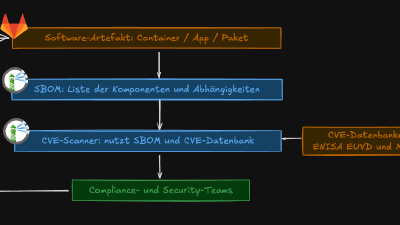
The security of software supply chains is one of the central topics in IT security today. Companies …

Kubernetes has become the de facto standard for operating cloud-native applications. However, with …