
Data Sovereignty vs. Digital Hesitation: Why Germany Must Catch Up on Cloud
Germany discusses data sovereignty but remains technologically dependent. How this relates to our …
13.05.2025
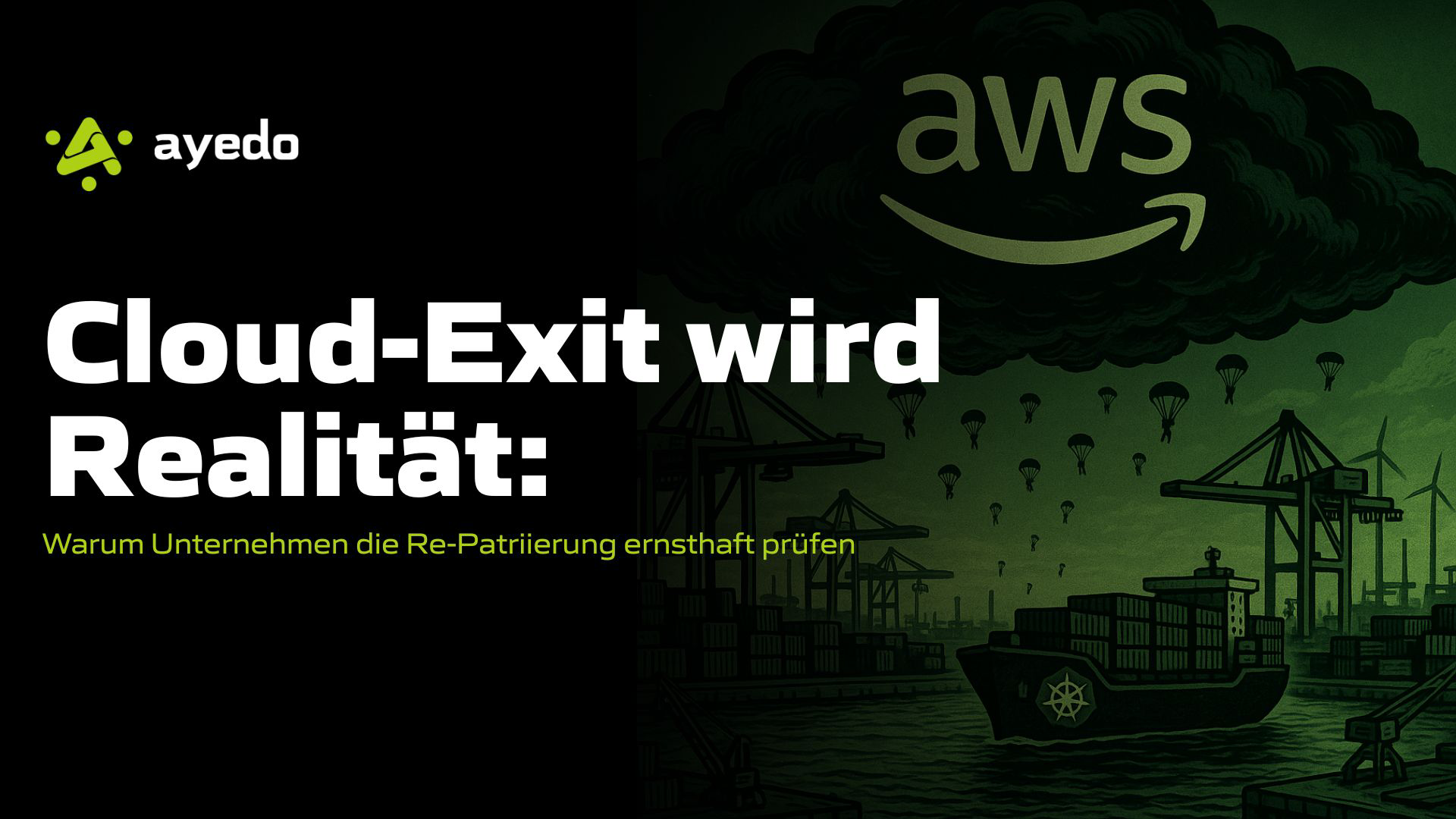
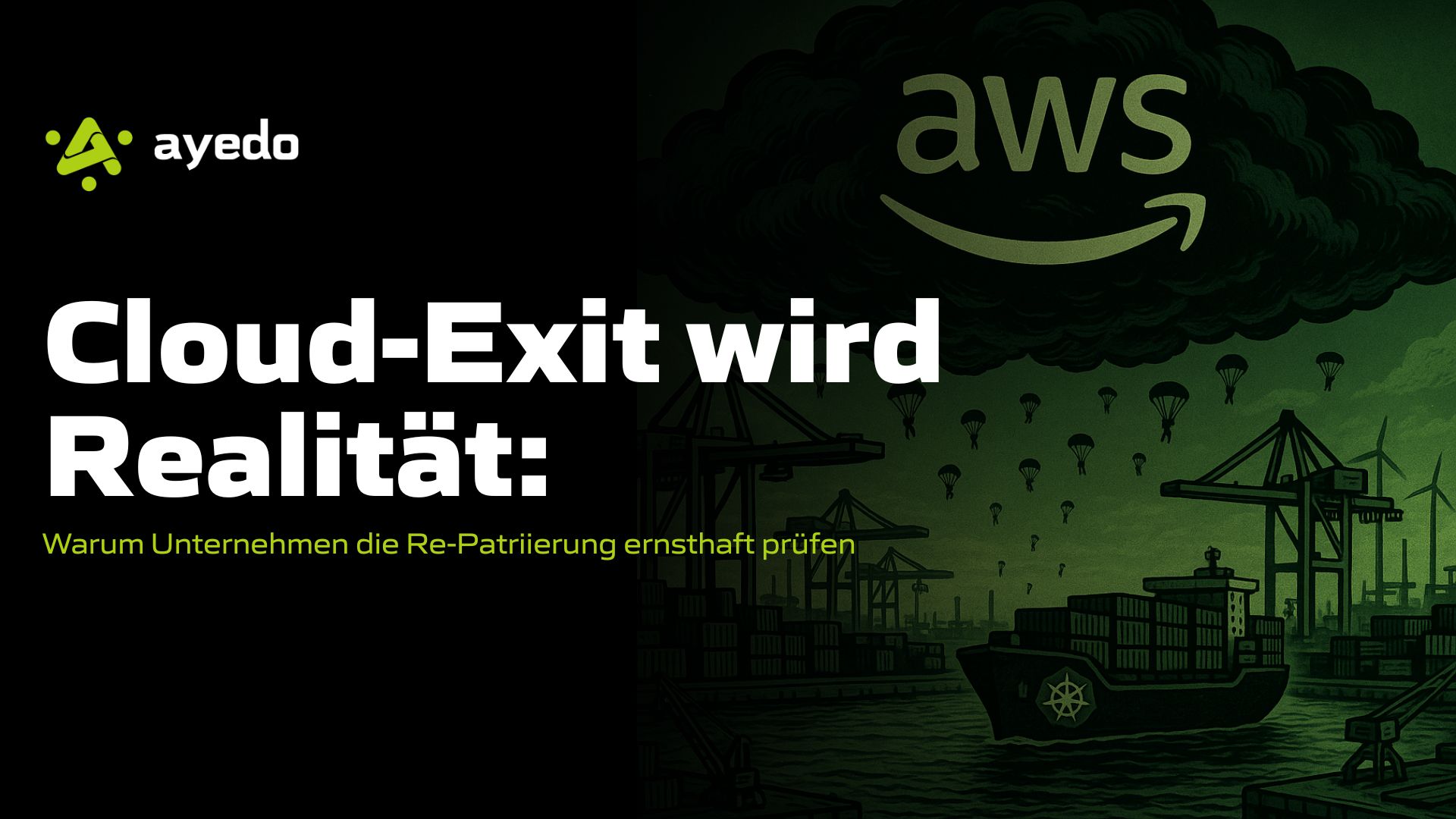
The cloud was once the epitome of efficiency, scalability, and digital transformation. However, the reality has caught up with many companies: vendor lock-ins, uncontrolled cost increases, compliance risks, and a growing loss of control over sensitive data have led more organizations to consider the option of a cloud exit—and in some cases, to implement it decisively.
Cloud exit does not mean the end of cloud usage per se, but rather a targeted retreat from certain public cloud scenarios towards more sovereign, cost-transparent, and controllable IT infrastructures—whether on-premises, in the private cloud, or on European open-source platforms.
The promised cost efficiency of the cloud does not materialize for many companies. Especially in the operation of high-frequency systems or data-intensive workloads, costs often rise exponentially—without long-term predictability.
GDPR, NIS2, DORA—the regulatory requirements for data location and access protection are steadily increasing. Particularly in the public sector and regulated industries, it is crucial to maintain full control over data and access mechanisms.
API dependencies, proprietary services, and ties to billing models hinder technical and economic freedom of movement. An exit also means: regaining independence through standardization and open-source.
Many organizations are undergoing a strategic shift. Instead of “Cloud First,” it is now “Right Sourcing.” The question is no longer whether cloud—but where, when, and how much.
A cloud exit is not a quick decision but a structured process that must be strategically prepared and technically implemented professionally. Successful organizations follow a clear four-phase model.
In the analysis phase, the focus is initially on a thorough inventory. Companies systematically assess current usage, existing dependencies, and the actual cost structures of the cloud services used. Workload mapping, a TCO (Total Cost of Ownership) analysis, and the creation of a dependency matrix provide the basis for reliable decisions.
The subsequent exit strategy defines specific exit candidates and evaluates suitable alternatives. Various operating models are assessed—such as deploying Kubernetes on-premises, switching to a European cloud infrastructure, or fully repatriating to an in-house data center. The goal is to find the balance between sovereignty, operational efficiency, and investment protection.
In the migration and transformation phase, implementation takes place: existing systems are technically re-implemented, new DevOps-capable infrastructures are built, data is migrated, and interfaces are reintegrated. This phase requires deep technological know-how and close collaboration between departments, operations, and architecture teams.
The final step is long-term operation and optimization. Now it’s about ensuring stable, secure, and sovereign operations. Monitoring, automation, and compliance-by-design play a key role. Companies that follow this path consistently not only regain technical control but also strengthen their economic resilience.
The future belongs not to either-or, but to multi-vendor, multi-cloud, and edge-capable infrastructure strategies. Modern IT operations rely on containerization, GitOps, open-source components, and API standardization—so that workloads can run where they bring the greatest benefit.
A cloud exit is not a retreat but a controlled change of direction. Those who act strategically regain control—technically, economically, and regulatorily. For CIOs and CTOs, this means: out of reactivity, into a role of design.
The reality of the cloud exit shows: Digital sovereignty is not an ideal—it becomes a competitive factor.
Germany discusses data sovereignty but remains technologically dependent. How this relates to our …
A sovereign cloud requires more than just a data center in Europe. How the CLOUD Act collides with …
The US Cloud Act allows US authorities to access European servers—a clear conflict with the GDPR. …