

Blog
Cloud-Native Insights & Expertise

Discover our latest articles about cloud-native technologies, Kubernetes, DevOps, and modern software development. From practical tutorials to in-depth analyses.

Latest Blog Posts

Stay up to date with our latest articles about cloud-native technologies, Kubernetes, and DevOps.

1219 posts

Active-Active Architecture for Highly Available Platforms

Active-Active Architecture for Highly Available Platforms

An active-active architecture distributes edge functions across multiple PoPs, instead of maintaining a site as a passive backup. This makes failover and maintenance part of ongoing operational processes. For internal platform services, this means the public access, protection functions, and routing must be resilient themselves—regardless of where the backends are operated.

Backend Cloaking as a Platform Standard for Services

Backend Cloaking as a Platform Standard for Services

Backend Cloaking separates the public service endpoint from the actual backend addresses. As a platform standard, it reduces the visible attack surface, facilitates network segmentation, and decouples service publication from internal infrastructure details. The ayedo Edge Cloud implements this separation at the edge—even for Kubernetes clusters outside of ayedo Managed Kubernetes.

Provider-Independent Edge Architecture in Platform Operations

Provider-Independent Edge Architecture in Platform Operations

A provider-independent edge is not achieved merely by using multiple cloud providers. The key is who controls public accessibility, routing, protection, and failover. An independent network, autonomous system, and a centrally operated edge platform decouple these functions from individual compute or Kubernetes providers. This makes migration capability and operational responsibility architecturally manageable.

An Edge Layer for Heterogeneous Kubernetes Clusters

An Edge Layer for Heterogeneous Kubernetes Clusters

Heterogeneous Kubernetes clusters increase flexibility but also distribute routing, TLS, security, and failover across multiple implementations. A unified edge layer decouples the public ingress from cluster technologies and compute providers. The ayedo Edge Cloud performs these functions provider-independently, enabling consistent backend cloaking across multi-cluster architectures.

Boundaries of Responsibility Between Platform and Application

Boundaries of Responsibility Between Platform and Application

A resilient operational model for the edge separates core protection and network functions from application-specific configuration. The platform team is responsible for DNS, TLS, DDoS Protection, and technical accessibility. The application team provides business requirements, WAF rules, and robust health check endpoints. Shared responsibility prevents blind spots in accountability.

Self-Service for DNS and Traffic at the Application Entry Point

Self-Service for DNS and Traffic at the Application Entry Point

Self-service DNS should not mean that application teams manage DNS zones, routing, and security decisions entirely on their own. An internal platform should offer standardized building blocks, fixed policies, and traceable approvals. This way, services are published faster while operations, security, and network responsibilities remain centrally manageable.

Kubernetes and Edge Cloud as a Unified Platform Boundary

Kubernetes and Edge Cloud as a Unified Platform Boundary

A unified deployment of multiple Kubernetes clusters doesn't start with Ingress resources, but with a clear platform boundary. Kubernetes manages workloads and internal services; the provider-independent edge handles public traffic, protection, TLS, routing, and failover. This creates a unified Kubernetes Edge Integration for managed and external clusters.

Standardized Load Balancing in Developer Platforms

Standardized Load Balancing in Developer Platforms

Standardized load balancing separates central network and security decisions from team-specific service parameters. Layer-4 and Layer-7 load balancing can be integrated into internal platforms when policies, defaults, and responsibilities are clearly defined. The ayedo Edge Cloud provides a provider-independent edge layer for applications and APIs.

Edge Functions as a Product of the Internal Platform

Edge Functions as a Product of the Internal Platform

An internal developer platform should not treat edge functions as individual infrastructure tasks. TLS termination, DNS, load balancing, and backend health checks are provided as standardized platform services with clear interfaces, responsibilities, and operational models. This creates a reusable platform product for different application teams and runtime environments.

Runbooks for Failover and Recovery at the Edge

Runbooks for Failover and Recovery at the Edge

Runbooks for edge failover must include more than just a list of technical commands. Clear symptoms, responsibilities, verification sequences, and abort criteria are crucial. Only when health checks, failover status, backend condition, and return to normal operations are evaluated together can incident response remain manageable under time pressure.

Proxy Protocol and Backend Cloaking in Case of Failure

Proxy Protocol and Backend Cloaking in Case of Failure

Proxy Protocol passes the original client IP and other connection information across the proxy to the backend. In contrast, Backend Cloaking alters the accessible network path: the backend is not directly publicly addressable. In case of errors, protocol interpretation, routing, health checks, and actual reachability must be checked separately.

Planning Resilience Tests for Edge Routing and Backends

Planning Resilience Tests for Edge Routing and Backends

Resilience tests for edge routing should not be limited to the failure of individual backends. Only controlled tests along the entire public traffic path reveal whether Anycast routing, DNS, edge reachability, health checks, and failover work together as planned. Clear test boundaries, observable results, and a secure rollback path are crucial.

Operational Assessment of DDoS Events in SRE Operations at the Edge

Operational Assessment of DDoS Events in SRE Operations at the Edge

DDoS Protection does not automatically resolve an incident. For SRE teams, the real operational task begins with classification: Is traffic being dropped at the edge, are requests still reaching the backends, and what risks remain for availability, costs, and downstream dependencies? Clear signals, escalation paths, and a reliable assessment of backend impacts are crucial.

Systematic Error Analysis for Distributed Edge Traffic

Systematic Error Analysis for Distributed Edge Traffic

In distributed edge traffic, the root cause of an error is often not where the symptom becomes visible. A robust analysis reconstructs the actual request path: from Anycast DNS through network and Edge-PoP, TLS termination, and protection functions to the backend. Only by separating these layers can misassignments be prevented and incident response times shortened.

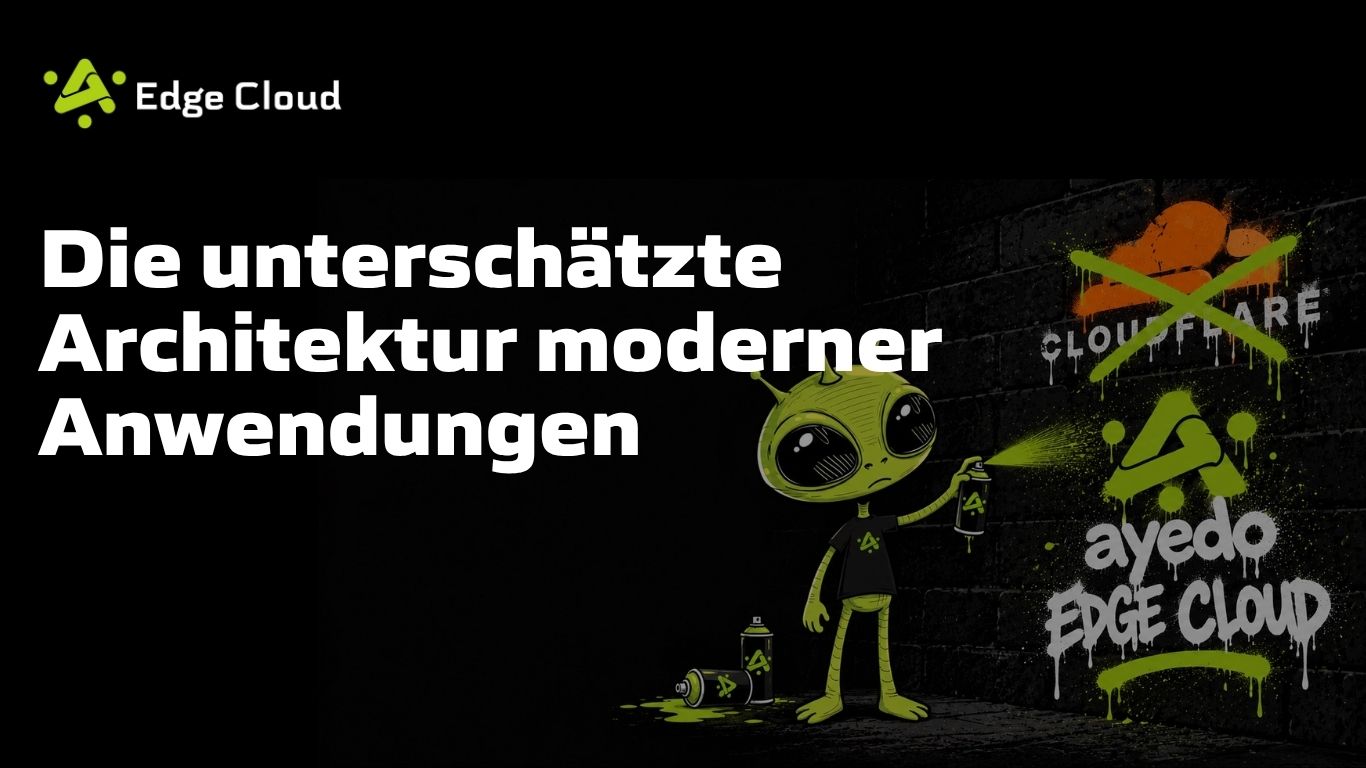
ayedo Edge-Cloud: The Underestimated Architecture of Modern Applications

ayedo Edge-Cloud: The Underestimated Architecture of Modern Applications

When we talk about running an application, we almost automatically think of the data center. Of virtual machines, Kubernetes clusters, databases, containers, or storage systems. Our architecture diagrams often start right there: somewhere within a cloud region, behind a firewall, where compute resources are provisioned and applications are executed.

Sovereign Edge Cloud for Technical Multi-Cloud Operations

Sovereign Edge Cloud for Technical Multi-Cloud Operations

A multi-cloud architecture becomes difficult to manage when each provider operates its own public entry points, routing rules, and protection mechanisms. A provider-independent edge cloud consolidates these functions in front of heterogeneous compute environments. It separates public traffic from the backends and creates a central layer for routing, security, TLS, failover, and operations.

BYOIP as a Building Block for Digital Sovereignty at the Edge

BYOIP as a Building Block for Digital Sovereignty at the Edge

Bring Your Own IP keeps your own IP address space under your control even when switching Edge or Cloud providers. This facilitates provider changes, stabilizes routing and DNS structures, and reduces adjustments to security policies. However, BYOIP does not replace an independent architecture: The key is the interplay of address space, routing, DNS, edge protection, and operational processes.

Active-Active Architecture for Sovereign Edge Operations

Active-Active Architecture for Sovereign Edge Operations

An active-active architecture distributes public traffic entry across multiple simultaneously active locations, eliminating the single active entry point as a central point of failure. However, this approach increases the demands on anycast routing, health checks, failover, and operational processes. Sovereignty primarily means that companies control the network, routing logic, and failure behavior themselves.

Systematically Assessing Provider Dependencies in Edge Operations

Systematically Assessing Provider Dependencies in Edge Operations

Provider dependencies in edge operations do not arise solely from the number of providers used. Critical are the technical couplings along DNS, IP addressing, routing, security, traffic distribution, and backend connectivity. A robust dependency analysis therefore evaluates switching costs, control points, and failover behavior. The ayedo Edge Cloud consolidates these layers into a provider-independent edge platform.

Jurisdiction and Technical Control at the Edge

Jurisdiction and Technical Control at the Edge

Jurisdiction in the cloud describes legal responsibilities, not automatically the technical control over data flows and infrastructure. To evaluate an edge architecture, routing, traffic processing, TLS termination, backend cloaking, and operational processes must be considered separately. The ayedo Edge Cloud creates technical control points but does not replace legal review.

Open Standards for a Portable Edge Architecture

Open Standards for a Portable Edge Architecture

A portable edge architecture is not based on a single provider but on standardized network, protocol, and integration interfaces. DNS, TLS, HTTP, TCP/IP, and Proxy Protocol reduce proprietary lock-ins. However, they do not enable complete interchangeability: routing, security features, operational models, and migration remain architecture-specific tasks.

Exit Capability: Edge Architectures Without Provider Lock-In

Exit Capability: Edge Architectures Without Provider Lock-In

Exit capability in the cloud is not solely achieved through multiple compute providers. The key is which functions are operated independently before the workloads: public accessibility, TLS termination, protection, and routing. A provider-independent edge layer reduces migration effort but does not eliminate all dependencies. DNS, identities, data, secrets, and workload interfaces remain critical.