Weekly Backlog Week 11/2026
🧠 Editorial Schleswig-Holstein. The real North. is kicking Microsoft out of administration. …
05.03.2026

This week feels like a reality check for everyone who thought digital sovereignty was just a grant program with a pretty cover. Cloud is power politics. Software is foreign policy. And dependency is not an operational accident, but a strategic decision. While hyperscalers rebrand ‘sovereignty,’ presidents threaten tariffs, and CEOs openly talk about killing, one thing is clear: Europe’s comfort zone is over. Welcome to the year when tech becomes definitively geopolitical.
Amazon Web Services (AWS) is launching the AWS European Sovereign Cloud in Brandenburg. Cloud campuses in Baruth/Mark and Finsterwalde, operated by a German GmbH, data centers exclusively in the EU, staff residing in the EU. The claim: operation, control, and responsibility are entirely European.
The political pressure is real. Administrations, critical infrastructure operators, and regulated industries are desperately seeking ways out of structural dependency on non-European hyperscalers. AWS responds with organizational decoupling from the global AWS partition. Mustafa Isik, Chief Technologist of the AWS European Sovereign Cloud, points to European operating models, legal frameworks, and personnel.
This addresses known risks – but does not automatically eliminate them. Influence arises not only from data access but through export controls, software supply chains, update approvals, and strategic roadmaps. Or put differently: whoever controls the code controls the operation – even without root access.
Markus Beckedahl, founder and CEO of the Center for Digital Rights and Democracy, aptly calls this ‘sovereignty washing.’ As long as the offering remains part of a US corporation, non-European power instruments continue to operate – subtly but effectively.
Prof. Dr. Dennis-Kenji Kipker from the Cyber Intelligence Institute acknowledges that Amazon is building real infrastructure in Europe. However, sovereignty is only robust if operations can continue independently even in the event of political escalations or supply stoppages.
A key role is played by the Federal Office for Information Security (BSI). Claudia Plattner, President of the BSI, announces a close examination of the decoupling capability. The criteria of the EU Cloud Sovereignty Framework could set binding standards beyond marketing slides for the first time.
The comparison with European providers remains uncomfortable but necessary: OVHcloud, IONOS, Hetzner Cloud GmbH, and STACKIT are structurally more independent – even if they offer less of a ‘Magic Console Experience.’ Digital sovereignty is not a feature. It is a strategic decision with a loss of comfort.
Comment: The AWS European Sovereign Cloud can be a transitional model. It is not an endpoint. As long as US corporations use ‘sovereign’ labels primarily to secure market share, the accusation of sovereign washing remains justified. What matters is whether the BSI consistently fulfills its role – critically, independently, and with an eye on a strong European cloud ecosystem.
🔗 https://www.bsi.bund.de/DE/Service-Navi/Presse/Pressemitteilungen/Presse2026/260115_BSI_AWS_European_Cloud.html 🔗 https://www.rbb24.de/wirtschaft/beitrag/2026/01/cloud-daten-speicher-amazon-brandenburg-aws-usa.html
US President Donald Trump imposes a ten percent punitive tariff against Germany and other EU states. The reason: an ultimatum on the level of a bad real estate pitch – Greenland or tariff threats. Rejection is met with economic punishment.
This is not diplomacy, this is extortion. NATO partners are pressured, trade relations are used as a power tool. Europe is supposed to pay for its sovereignty.
We at ayedo say: Not with us.
As a symbolic response, we offer all new customers 10% discount on our services – with the discount code FCKDT2026.
Whether hosting, Kubernetes operations, or compliance for critical infrastructures: We believe in partnership, resilience, and sovereignty – not in threats, deals, and tariff threats.

Advertisement
The public dispute between Bavaria’s Digital Minister Dr. Fabian Mehring and Finance Minister Albert Füracker is more than political bickering. It reveals a core conflict: Digital infrastructure is power politics.
Füracker considers the use of Microsoft in Bavarian administration unproblematic. Mehring argues with the changed geopolitical situation and digital sovereignty. Content-wise, Mehring is right – even if the tone is politically unfortunate.
Donald Trump announces tariffs of ten percent, later even 25 percent. These measures are not an economic tool, but political pressure. Anyone who claims under these conditions that US software in administrations is unpolitical denies reality.
It’s not about data leakage tomorrow morning. It’s about lock-in, licensing models, proprietary standards, and political levers in a crisis. Anyone who binds central administrative processes to a US corporation accepts this dependency – no matter where the server is located.
Others have reacted: Denmark, Schleswig-Holstein. The Real North. Modular, open, European. Even the President of the Federal Criminal Police Office calls for moving away from universal solutions.
Comment: The question is not whether Bavaria can use Microsoft. The question is whether it should – in a world where digital, political, and economic power converge.
🔗 https://www.tagesschau.de/eilmeldung/usa-groenland-eu-trump-zoelle-100.html 🔗 https://www.br.de/nachrichten/bayern/fake-news-und-schlechter-stil-mehring-und-fueracker-zoffen-sich-wegen-microsoft,V85aKCH
Alex Karp, CEO of Palantir, openly states what is usually hidden behind security contracts: His company helps intimidate opponents – and ‘on occasion’ kill. No provocation. A self-description.
The real relevance lies in the civilian sector. Palantir is pushing into police, administration, and business. The same technology that originates from a military worldview is sold there as efficiency.
Germany and Europe rely on providers whose business models are closely intertwined with the military and intelligence services. The question is no longer whether data is secure. The question is in whose power logic it is processed.
Comment: Digital sovereignty does not begin with data protection paragraphs. It begins with the decision of whom we entrust our digital core functions.
Play
The BSI and IONOS enter into a strategic cooperation. Not a buzzword, but an operational step. Cloud services are to be technically scrutinized – architecture, cryptography, operating models.
IONOS supports the development of a Private-Enterprise-Cloud for the federal administration. An alternative to the implicit dependency on hyperscalers.
Particularly relevant: the focus on post-quantum cryptography. Not future music, but a strategic necessity.
Comment: Digital sovereignty is real freedom of choice. This cooperation finally creates a reliable foundation for it.
🔗 https://security-network.com/digitale-souveraenitaet-bsi-ionos-kooperation/
Saarland is investing five million euros in two regional VC funds. Two million go to the Futury Fund III, three million to U2V (University to Ventures).
Instead of individual projects, the state focuses on sustainable financing infrastructure. Central anchor: the Startup-Factory SouthwestX.
Comment: Unspectacular. Strategically smart. This is how you build ecosystems.

Advertisement
Frank Karlitschek, founder of Nextcloud, speaks plainly in a brutkasten interview. Digital dependency is not an IT issue, but a societal risk.
Open Source is not idealism here, but political capital. Nextcloud stands for a European, controllable alternative – technically and strategically.
🔗 https://brutkasten.com/artikel/nextcloud-gruender-interview
In the BR Sunday Roundtable, Dr. Fabian Mehring warns of the structural dependency on US tech giants. The comparison with energy policy towards Russia hits home – and hurts.
Stefan Hessel analyzes the planned adjustments to the NIS-2 Directive. Higher thresholds, corrections for DNS providers, new clarity in several sectors.
Nothing is decided yet. But: new room for argumentation is emerging.
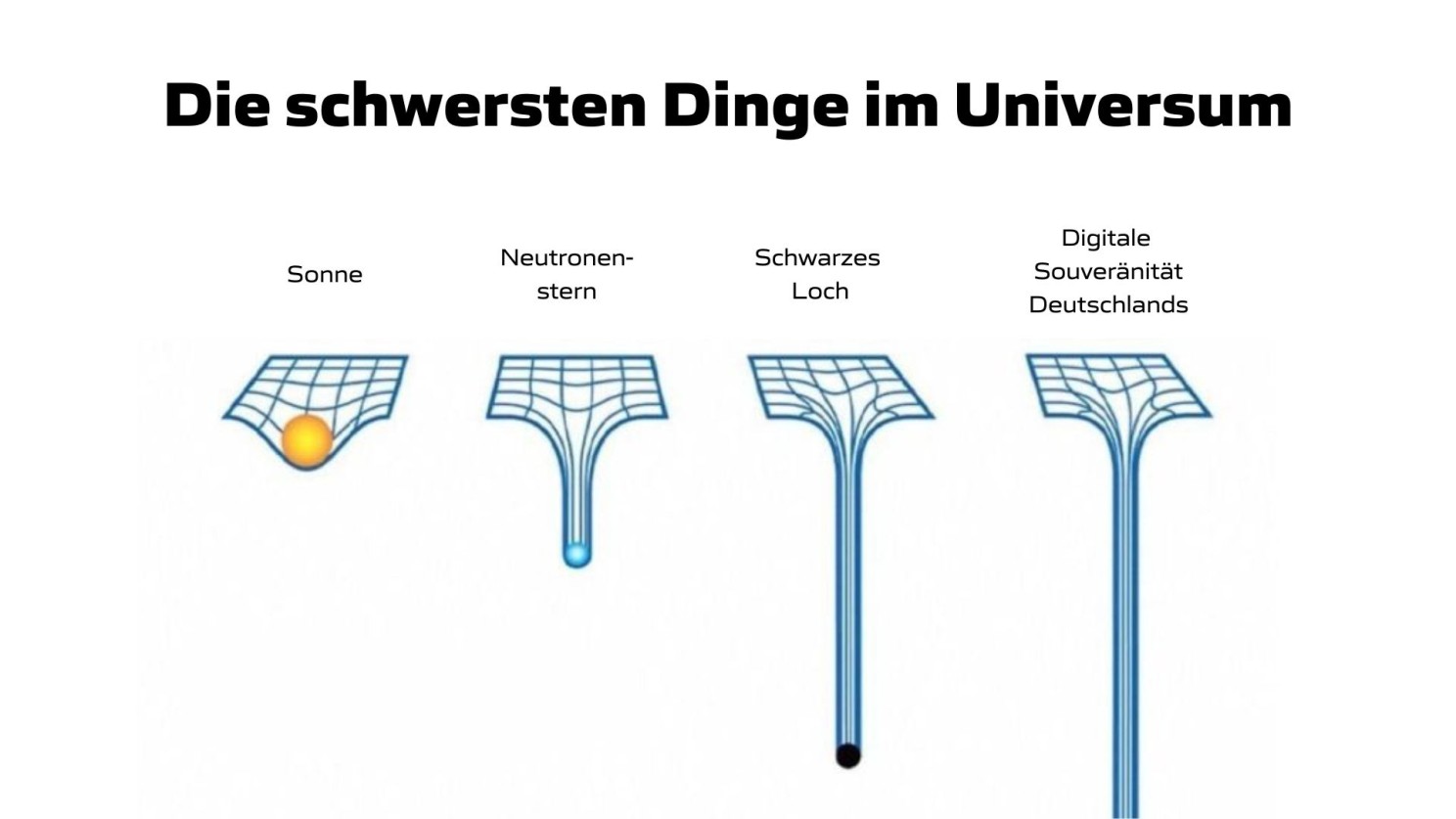
If you’ve made it this far, I’d appreciate a like and a comment – dissent, additions, and other opinions are expressly welcome, because without debate there is no digital sovereignty.
Katrin Peter
🧠 Editorial Schleswig-Holstein. The real North. is kicking Microsoft out of administration. …
🧠 Editorial: Cloud is political. Period. This issue focuses on a topic often wrapped in technical …
🧠 Editorial: The Week of Sovereignty Simulations This week had it all: operating systems wanting to …