
Weekly Backlog Week 10/2026
🧠 Editorial: Cloud is political. Period. This issue focuses on a topic often wrapped in technical …
03.03.2026
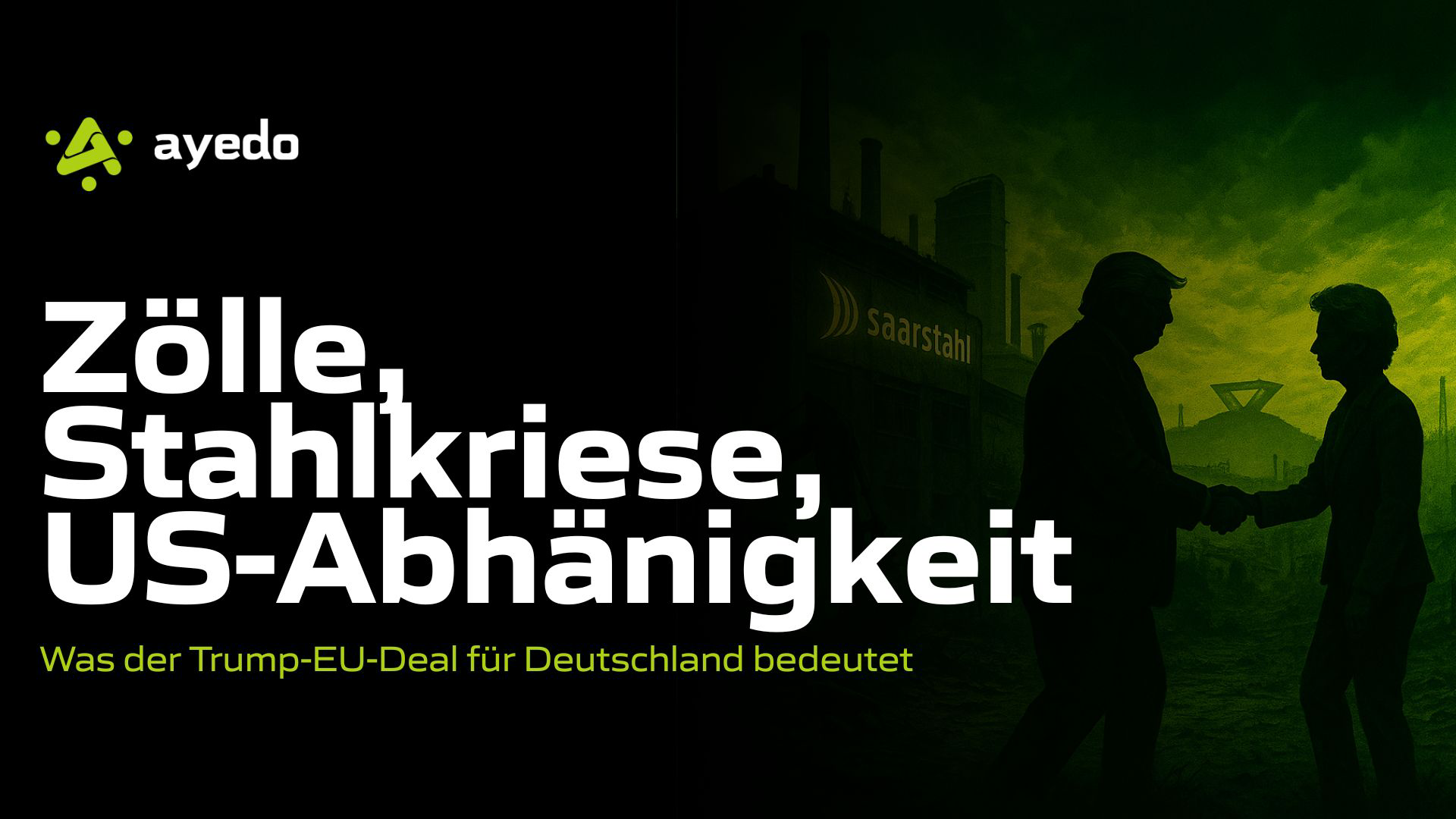
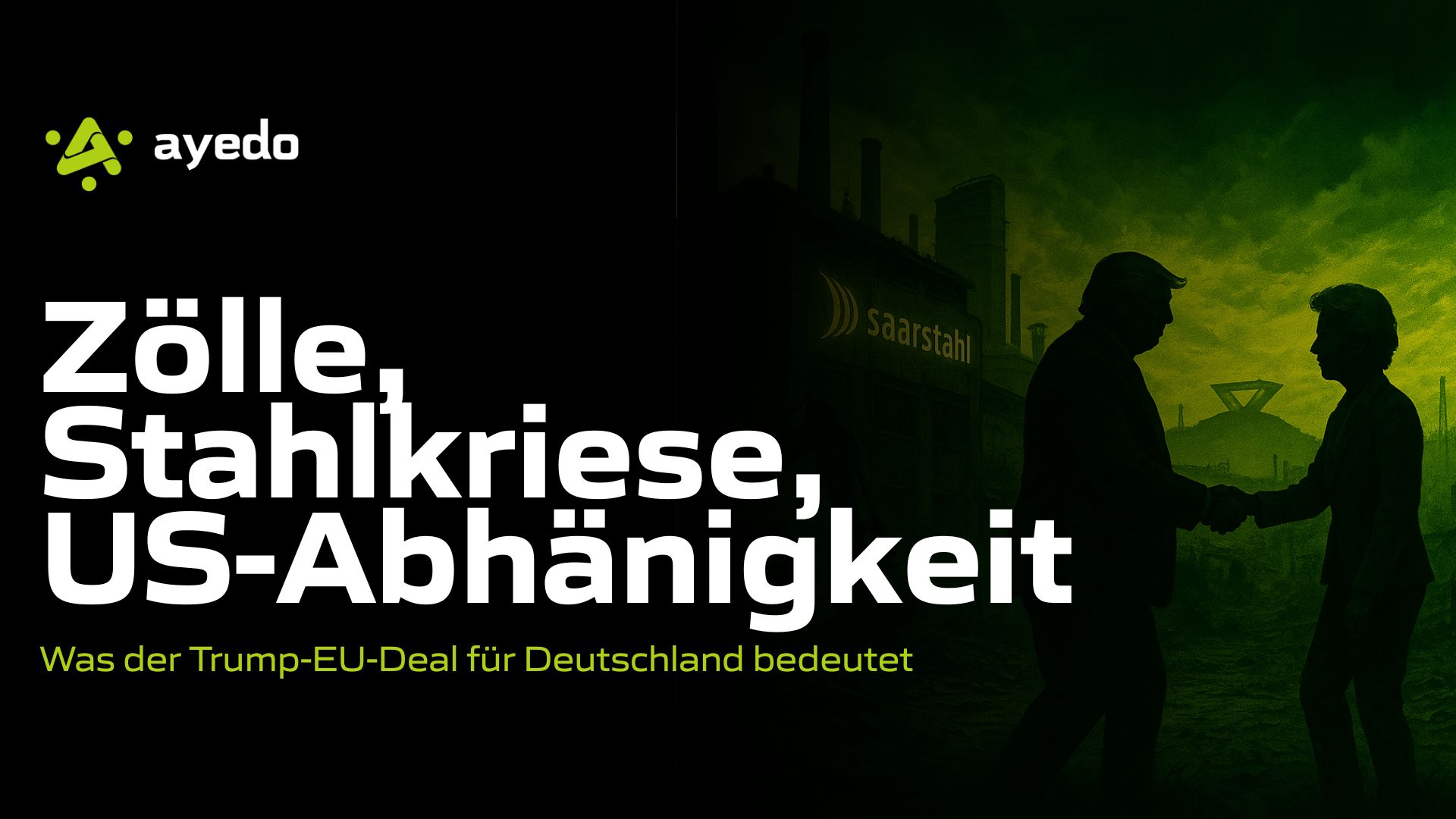
It was a long tug-of-war – now there’s a deal. The EU and the USA have reached a last-minute compromise in the tariff conflict. What initially appears to be a geopolitical breakthrough reveals, upon closer inspection, primarily one thing: Europe pays. A lot. And not just with money.
The new deal stipulates that the initially threatened 30% US tariffs on European products are averted. But this is not a victory – rather the price for something else. The EU now accepts a flat import tariff of 15% on the majority of its exports to the USA. For many goods – especially cars – this means a sixfold increase in the previous tariff rates. Meanwhile, access for US products to the European market remains largely tariff-free.
This asymmetry is not a detail. It is the result of political dependency and economic imbalances that have built up over years – and are becoming visible at this moment. The balance of transatlantic trade relations has taken a hit. Not with a bang, but in the sound of stark numbers.
What is additionally disconcerting: The EU commits to purchasing American energy worth 750 billion dollars by the end of Trump’s term – including liquefied gas, oil, and uranium. In parallel, 600 billion dollars in investments are to flow from Europe to the USA.
This can be seen as a strategic gesture. Or as the final farewell to the idea of strengthening economic power within Europe. While schools, bridges, and digital networks in Germany decay, while discussions about educational equity and infrastructure modernization have been ongoing for years, a massive capital flow shifts across the Atlantic. Not as an expression of sovereignty, but as a reaction to geopolitical pressure.
Germany, in particular, is under double pressure in this equation: The steel industry is permanently subjected to tariffs of 50%. A structurally challenged sector, already struggling for future investments, continues to lose competitiveness. The burden is not only borne by the industry – it spreads across jobs, value chains, and entire regions.
Instead of counteracting, public procurement follows a dangerous trend: investments in US technologies, even in security-critical areas. Platforms like Palantir, known for their proximity to intelligence services and questionable data handling, receive multi-million contracts. Cloud solutions from Amazon, Microsoft, and Google dominate the market for public IT infrastructure – often, even though European alternatives are available.
The signal is clear: We are not only buying American energy, we are also buying digital dependency. The decision is not made under duress. It is made in ministries and agencies, often with the argument of efficiency, sometimes simply out of convenience.
Officially, the EU sells the deal as a necessary step for stabilization. Security in uncertain times, so the formula goes. But it is a form of security based on sacrifice: on economic independence, on political bargaining power, on a clear commitment to one’s own industry.
The question remains: What will remain – when the next agreement comes, the next power imbalance, the next economic pressure? Will Europe then be ready again to pay a high price – not just in billions, but in strategic independence?
The recent deal may have averted uncertainties in the short term. But it has cemented something else: That we often articulate our interests too quietly, too cautiously, and too late.
🧠 Editorial: Cloud is political. Period. This issue focuses on a topic often wrapped in technical …
Editorial Digital sovereignty used to be a tech topic. In 2025, it’s power politics: Whoever …
Kubernetes Make or Buy – Considerations for Decision Makers In few other technology sectors is …