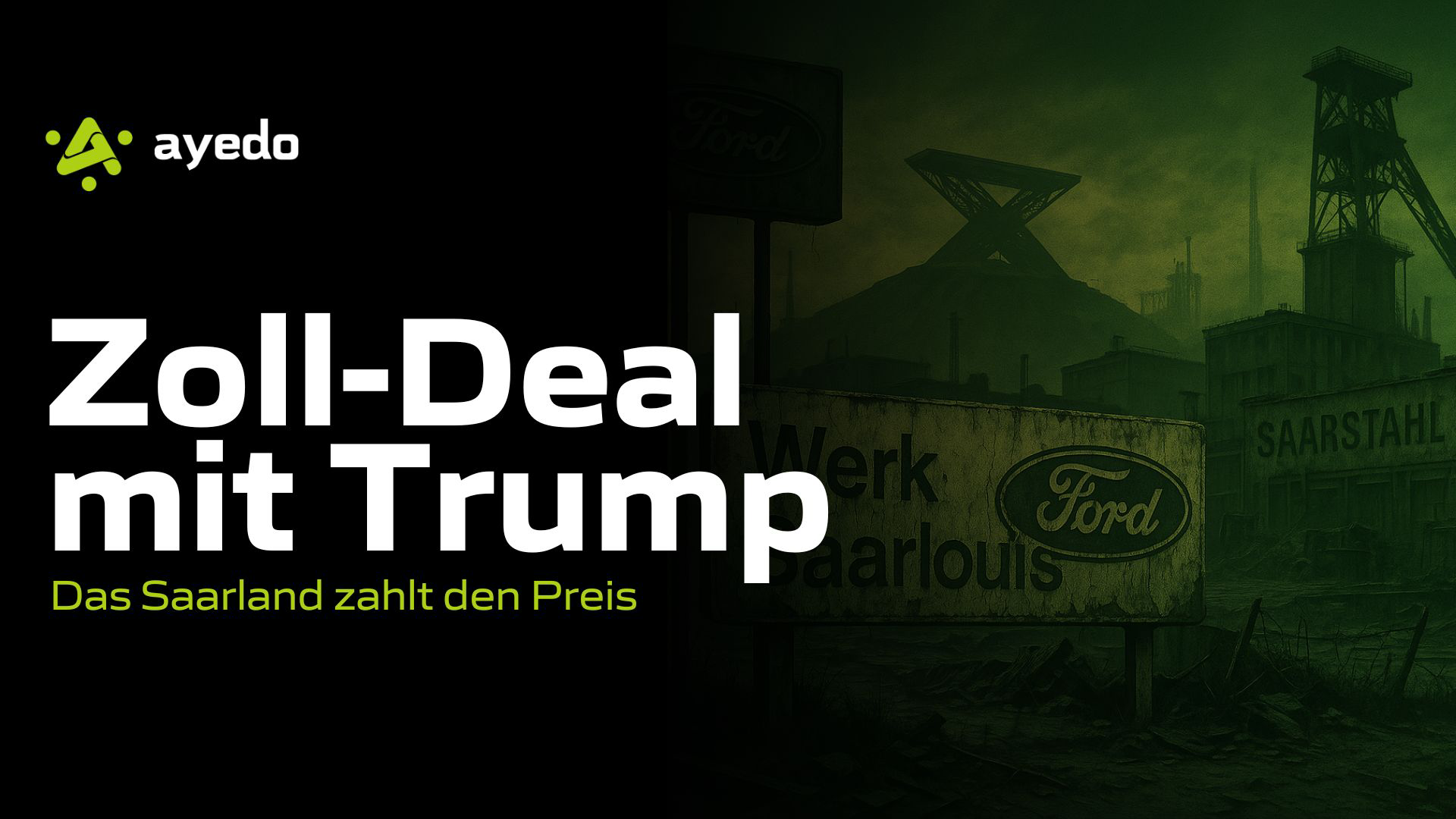
Tariff Deal with Trump: Saarland Pays the Price
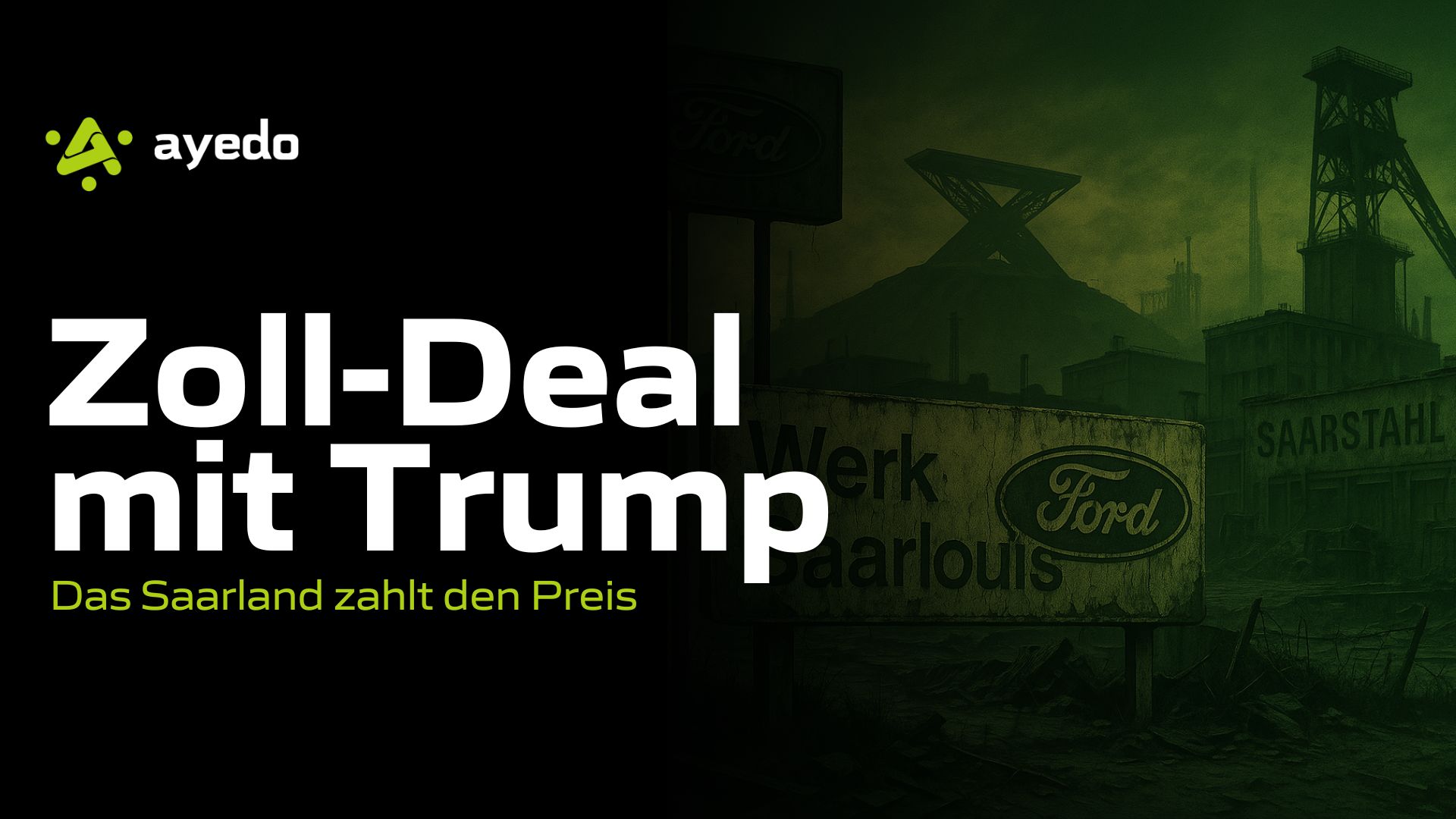
Sometimes a single sentence is enough to reveal the political reality in all its bitterness. In this case, it is: “The tariff deal with the USA is damage control – at a very high price.” This was recently commented on by Frank Thomé, CEO of the IHK Saarland. And this price? It could cost up to 17,000 jobs in Saarland.
What Was Actually Decided?
US President Donald Trump and EU Commission President Ursula von der Leyen reached an agreement at the end of July that, at first glance, seems like a breakthrough. Instead of 30% import tariffs on European products, there are now “only” 15% across the board. This sounds like relief – until you read the fine print.
For certain industries, particularly steel and aluminum, the existing punitive tariffs of 50% remain. These rates hit hardly any other federal state harder than Saarland, which is economically heavily reliant on steel, automotive supply, and mechanical engineering.
At the same time, the EU commits to purchasing $750 billion worth of US energy (LNG, oil, uranium) and investing another $600 billion in the US economy. Not a word about how to simultaneously strengthen European sovereignty or strategic independence. No protective mechanism against competitive distortions from cheap imports from China. No steel agreement to secure the industry in Europe.
The Situation in Saarland: Numbers with Faces
A recent study by htw saar and IHK Saarland shows how deeply the deal strikes: By the end of 2026, over 2,000 jobs are directly threatened – primarily due to rising export costs, lost orders, and supply chain issues. In the medium to long term, it could be up to 17,000 jobs. Not in abstract “sectors,” but in concrete businesses. In Völklingen, Dillingen, Neunkirchen. In the factory halls that have stood for industrial value creation in Germany for decades.
The economic effects are not only due to the tariff rate. Much more dangerous are the indirect consequences: rising costs for inputs, declining competitiveness, uncertainty in investments. What happens if a US customer simply replaces the supplier from Saarland – because it’s cheaper in Korea or Mexico? What happens if new trade routes emerge without us being part of them?
Political Reaction: Outrage in the Subjunctive
The response from politics? Saarland’s Prime Minister Anke Rehlinger (SPD) calls for an additional steel agreement with the USA. The appeal is correct – but comes too late. The federal government points to long-term strategic processes and international agreements that “need to be reviewed.” At the EU level, there is radio silence. Meanwhile, facts are being created – not in Berlin or Brussels, but in Washington.
The agreement with Trump shows above all one thing: Europe no longer negotiates on equal terms. It accepts conditions that are not partnership-based but one-sided. This digital and economic dependency is being systematically expanded. Deals are made out of fear of escalation that do not protect but harm. The EU buys “planning security” – at the cost of its own industrial substance.
A Structural Failure
That the USA protects its industry is legitimate. That Europe does not counter this is a political failure. The global economic order is in upheaval – but Germany acts as if it can continue playing by old rules.
There is a lack of industrial guidelines. There is a lack of a trade concept that puts European interests at the center. Instead, reliance is placed on “free markets” – even when the rest of the world no longer plays freely. While Trump uses his tariffs as an industrial policy tool, we discuss reporting obligations and ESG ratings.
And what does the EU do? It conducts foreign trade policy as if it were an NGO.
The Price of Subordination
The 17,000 jobs at risk in Saarland are not the result of a stroke of fate. They are an expression of the fact that we have systematically lost sight of European interests. Instead of promoting sovereign cloud infrastructures, we invest in US dependencies. That economic sovereignty is sacrificed – for short-term political calm.
A tariff agreement made in Scotland leads to shift workers in Burbach losing their future. Industries that have generated value for decades become collateral damage of an EU that has forgotten its role as an economic policy actor.
Conclusion: Not a Technical Error – A Political Decision
This development is not an operational accident. It is the result of a policy that believes geopolitical reality is negotiable. That sees every concession as a sign of stability – even if the price is job loss, deindustrialization, and dependency.
The deal with Trump is not a diplomatic success. It is a wake-up call. For Berlin, for Brussels, but above all for the industry in Germany – before 17,000 threatened jobs become a structural break with an announcement.