
Weekly Backlog Week 48/2025
Editorial This week, Europe once again loudly proclaimed ‘Digital Sovereignty!’—only to …
19.11.2025
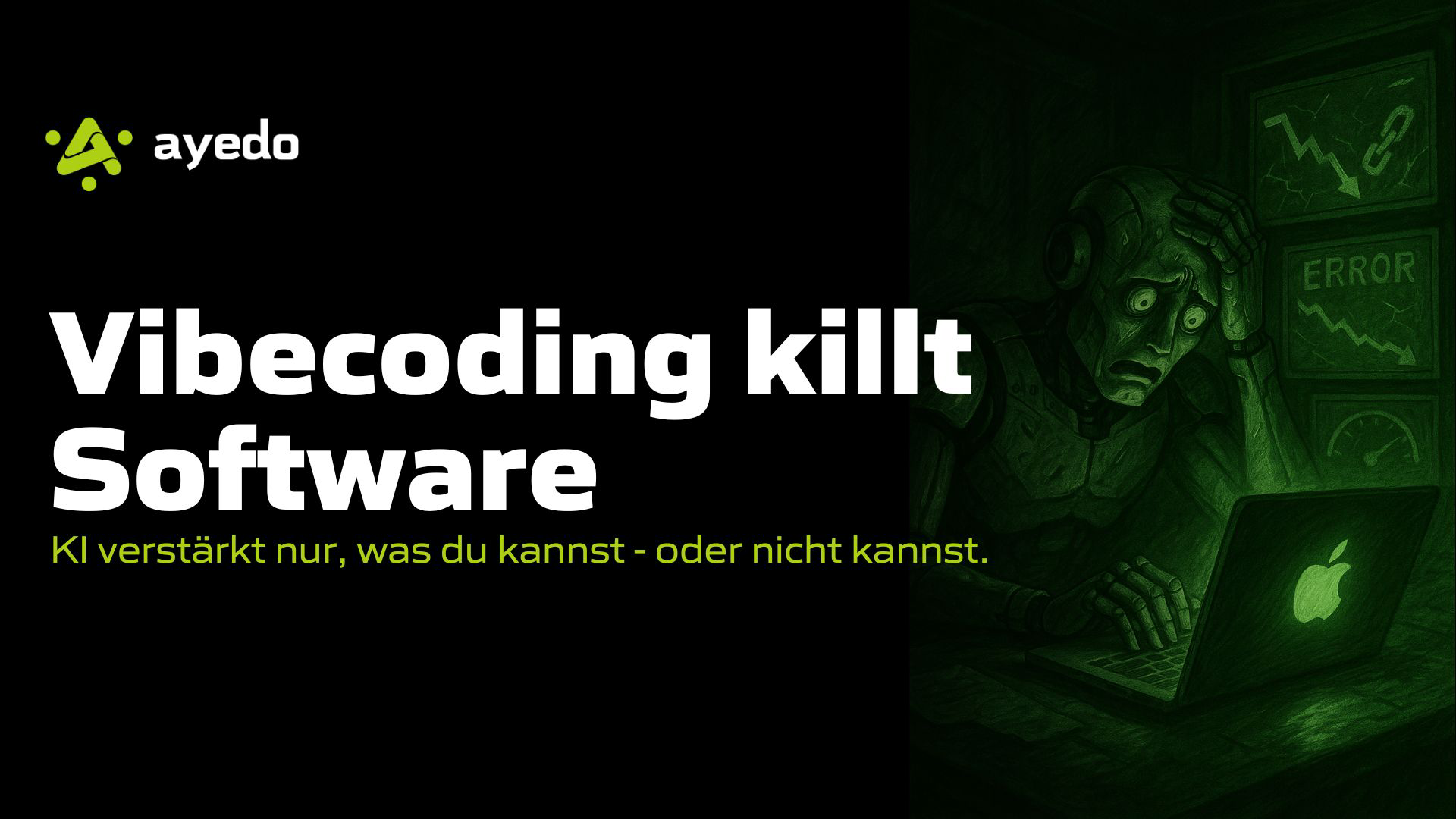
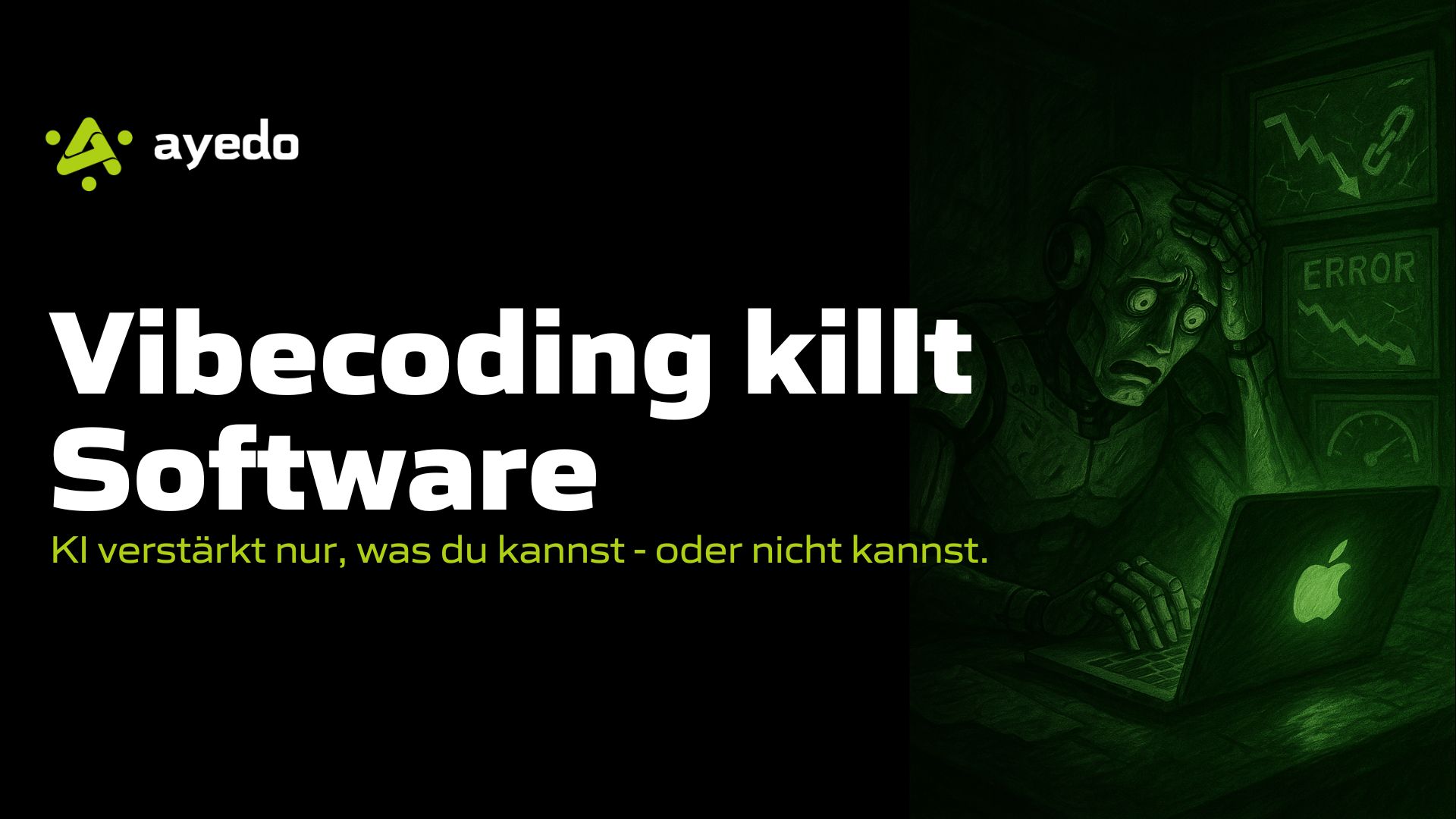
Everyone is writing software with AI now. Prompt in, code out. A few lines of Typescript here, a Dockerfile there, and somehow everything flies. People feel productive. Because they have output.
What no one asks: Do you actually understand what’s happening?
Because that’s the difference:
Experienced developers use AI like a precision tool.
Everyone else builds software with it that relies only on stack traces and hope.
AI can generate code. But it doesn’t know your system.
It doesn’t know what you’re building. It knows no legacy, no users, no processes.
It only knows words. Probabilities. Probably useful.
And that’s often how the output looks: Probably okay. Probably runs. Probably can be patched when it crashes.
But your product doesn’t run on probabilities.
Your product runs on responsibility.
Vibecoding means: You don’t read the code. You don’t test it. You rely on a gut feeling that what ChatGPT just spit out is somehow right.
This is how software is created that looks like software but isn’t.
This is not efficient. This is dangerous.
You’re building a pile of unreadable magic – without understanding, without documentation, without ownership.
And if the prompt is slightly different next time, it doesn’t work anymore. And no one knows why.
If you have no idea what you’re doing, AI doesn’t give you an advantage. It just gets you faster into a situation you can no longer control.
An experienced engineer uses AI to help automate repetitive tasks, pre-structure small modules, reduce boilerplate.
An inexperienced one clicks through Stack Overflow 2.0 – and doesn’t realize they haven’t learned anything.
No understanding of connections, no architecture, no debugging. Just output.
If you don’t know why something works, you won’t know when it stops.
It doesn’t review your code. It doesn’t understand your business.
It knows nothing about security, nothing about data ownership, nothing about architectural decisions you made two years ago for good reasons.
And yet people commit AI output as if it were sacred.
No test, no refactoring, no review. As long as the prompt was clever.
The problem is us.
Because we believe speed is the goal.
Because we think output equals progress.
Because we outsource our responsibility to a language model we don’t understand – with code we don’t control.
And if you’re thinking now: “It’s not that bad” – then scroll through your Git log. And ask yourself which commits you could really explain. Without copy-paste. Without AI.
Conclusion:
AI is not a developer. And you’re not one if you completely rely on it.
Vibecoding may look like work – but in the end, it kills software, teams, and trust.
Because it’s not the prompt that decides whether software is good. It’s whether there’s someone behind it who knows what they’re doing.
Those who want to develop sustainable software should rely on proven architecture principles and implement structured development processes. AI can support this – but never replace the fundamental foundations.
Editorial This week, Europe once again loudly proclaimed ‘Digital Sovereignty!’—only to …
The news is making waves: Several npm packages from CrowdStrike – a company known for security and …
The European debate on “sovereign AI” is often reduced to regulation, data protection, …