
EU Strengthens Digital Sovereignty: New Vulnerability Database as a Response to CVE Uncertainties
CVE shutdown averted – but Europe is charting its own course. With the new vulnerability database …
17.04.2025


The US funding for the CVE list has been stopped with immediate effect—potentially dramatic consequences for global IT security. Why Europe must now prove its digital sovereignty.
The Common Vulnerabilities and Exposures (CVE) list forms the backbone of coordinated IT security measures worldwide. It is not just a technical standard but a strategic tool for collective cyber defense. Now it faces an end—at least in its current form. The US government has halted funding for the project. And this with immediate effect.
What may initially seem like an American administrative issue has direct implications for companies, operators of critical infrastructures, and IT security leaders worldwide—including here in Europe.
Since 1999, the nonprofit MITRE Corporation has managed the CVE list on behalf of the US government. It contains uniquely referenceable identifiers for reported vulnerabilities in software, hardware, and IT services. CVEs enable:
In short, CVEs are the link between technical reality and organizational action capability in cybersecurity.
Funding from the US Department of Homeland Security (DHS) was not renewed. Specifically, the current contract—endowed with around 28 million US dollars—ends today, according to MITRE, although official US websites cite the coming Wednesday as the end date.
Consequences according to MITRE:
| Affected Parties | Possible Impacts |
|---|---|
| Companies & Authorities | No current risk assessment via official CVEs |
| Security Solution Providers | Disruptions in security feeds and threat databases |
| Security Researchers | No unified referencing of new vulnerabilities |
| Operators of Critical Infrastructures | Delays in vulnerability analysis and defense |
| European Regulatory Authorities | Problematic dependency on US services |
Europe’s dependency on US security structures is systemic and dangerous. If CVE and NVD collapse, it will directly affect European companies—not just operationally, but also in terms of compliance, such as under the NIS2 Directive or during TISAX/ISO27001 audits.
The question now arises: How sovereign is our digital security really?
1. Building Our Own Security Infrastructure Europe needs its own resilient ecosystem for vulnerability management. An EU-funded counterpart to the CVE/NVD infrastructure could be conceivable—ideally open, interoperable, and based on Open Source.
2. Stronger Support for European Initiatives Initiatives like the OpenSSF, OSV, or the European Union Agency for Cybersecurity (ENISA) Vulnerability Coordination Team must be strengthened—financially, organizationally, and politically.
3. Mandate for Redundancy in Security Operations Security leaders should no longer view CVE feeds as a Single Point of Truth. Alternative sources like OSV.dev, VulDB, Exploit-DB, or OpenCVE.io should be part of the toolbox.
4. Establishing Our Own CVE Numbering Authorities in Europe More European CVE Numbering Authorities (CNAs) are needed so that critical industries and research institutions can operate even in emergency mode.
The potential shutdown of the CVE infrastructure by the US government is more than a budget issue. It is a structural warning signal for anyone who not only consumes IT security but also is responsible for it. We must no longer outsource our security.
At ayedo, we are working to make digital sovereignty tangible—in IT modernization, vulnerability management, and security architecture. The current situation is an opportunity: for new, resilient, European approaches in cybersecurity.
CVE shutdown averted – but Europe is charting its own course. With the new vulnerability database …

A senior investigator of the International Criminal Court loses access to his emails – because a US …
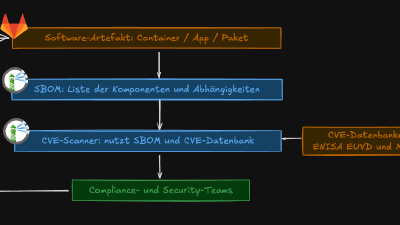
The security of software supply chains is one of the central topics in IT security today. Companies …