What Does "Digital Sovereignty" Actually Mean – In Concrete Terms?
Digital sovereignty refers to an organization’s ability to manage its digital systems, data …
11.06.2025
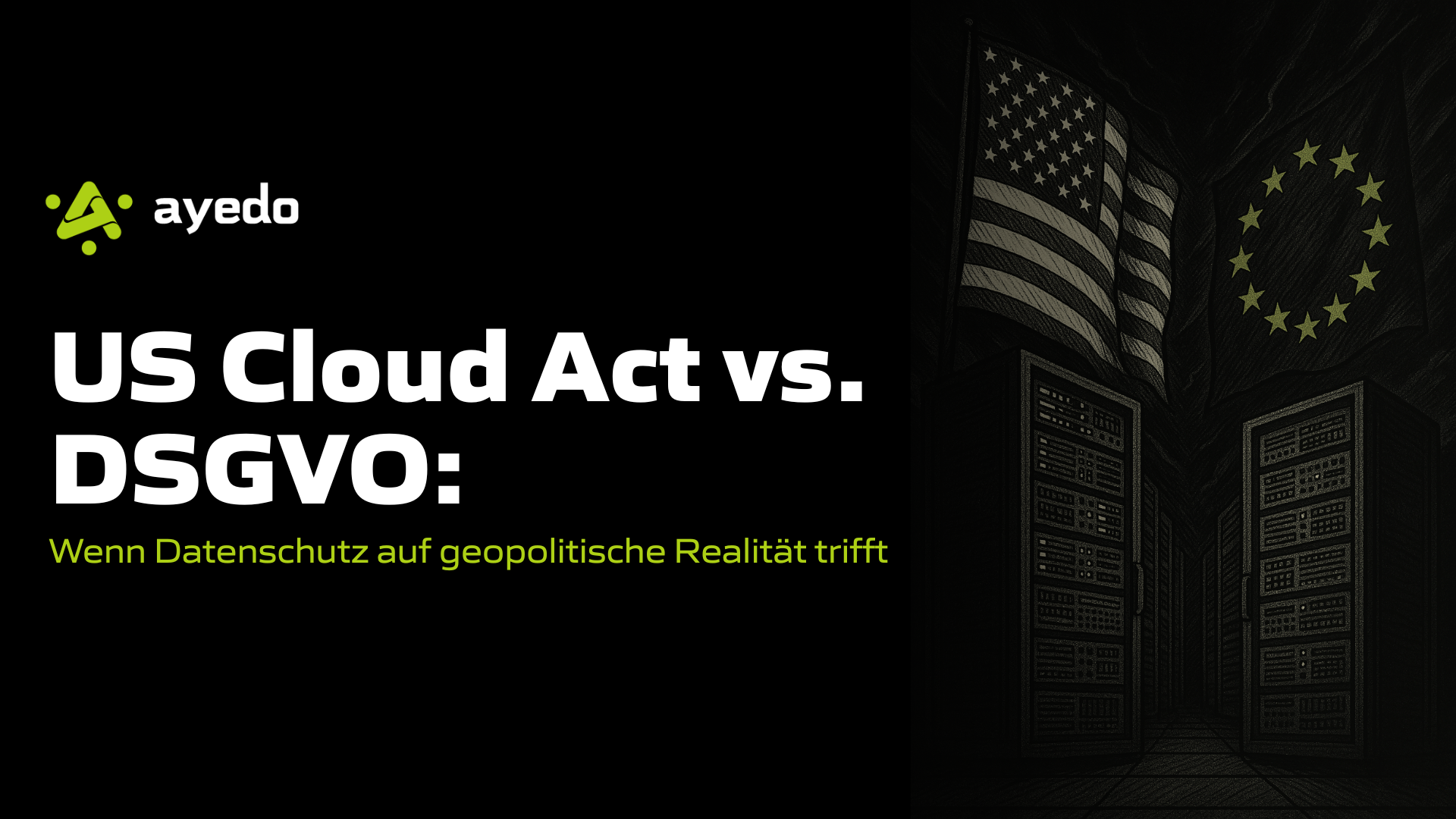
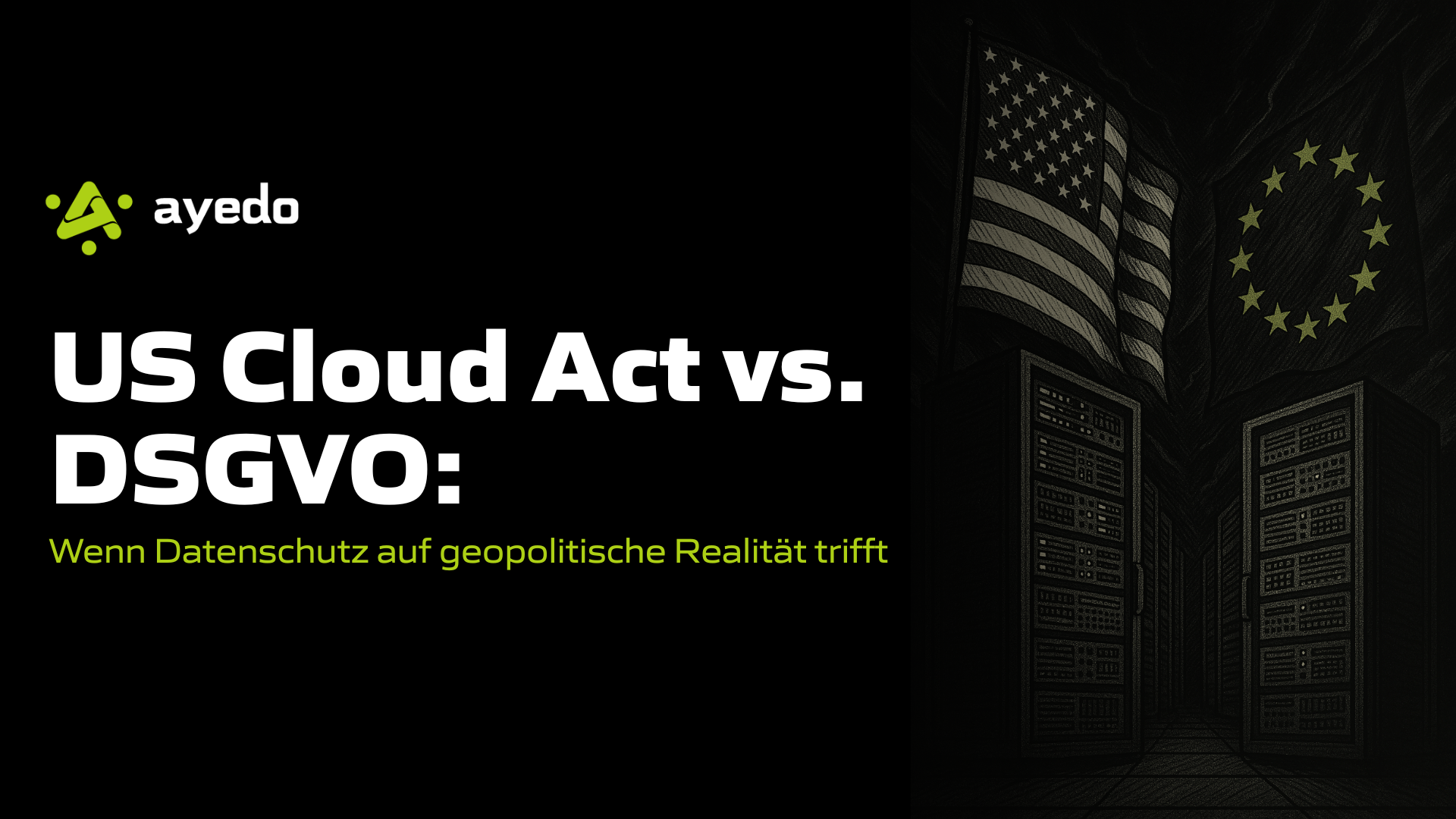
The US Cloud Act allows US authorities to access European servers—a clear conflict with the GDPR. Discover how companies can protect themselves and reclaim digital sovereignty.
Transatlantic data relations have never been simple, but with the US Cloud Act, it’s clear: companies working with US-based cloud providers must be aware that it’s not European law but American interests that may have the final say. This affects not only US servers but also data centers right in Germany if they are controlled by a US corporation.
While many IT decision-makers believe they are safe with a server location in Frankfurt, reality paints a different picture: The physical location does not protect—the corporate structure does.
The “Clarifying Lawful Overseas Use of Data Act,” or US Cloud Act, was enacted in the US in 2018. Its goal: US authorities can access data under certain conditions, even if stored outside the US—such as in a European data center. The only requirement: the cloud provider must be directly or indirectly under US control.
This means specifically:
This is where it gets tricky for European companies: the General Data Protection Regulation (GDPR) prohibits data transfers to third countries without an adequate legal basis (see Art. 48 GDPR). The Cloud Act simply ignores this requirement—resulting in companies using US providers facing a legal dilemma.
A violation of the GDPR can result in fines of up to 20 million euros or 4% of annual turnover. At the same time, you risk violating US law if you refuse to release data. A clear case of: Damned if you do, damned if you don’t.
To be on the safe side, choose providers that:
Germany is an ideal location here: strict data protection laws, technically advanced data centers, and a growing number of trustworthy providers with genuine data sovereignty in their portfolio.
But what if geopolitical circumstances change or a provider is acquired? This is where modern security concepts like Confidential Computing come into play.
This technology protects data not only during storage or transmission but also during processing—in isolated hardware security areas (Trusted Execution Environments).
Even with full access to the server infrastructure, the content remains unreadable. For many companies, this is a crucial step towards technological independence and compliance-secure cloud computing.
Those seeking transparency and reliability should rely on recognized standards. The Trusted Cloud Data Protection Profile (TCDP) or certifications according to ISO/IEC 27001 provide insights into how secure and GDPR-compliant a provider truly operates.
The narrative of the “global internet” is enticing—but in reality, the cloud has long become a stage for international interest politics. Companies that want to take responsibility for their data need more than just powerful technology. They need a strategic partner that combines legal certainty, transparency, and technical excellence.
As an experienced provider of modern IT infrastructures, secure cloud services, and European process digitization, we support companies in pragmatically and sustainably implementing complex compliance requirements. Our solutions are based on open-source technologies, German data centers, and a clear commitment to digital independence.
We believe: Those who work in the cloud shouldn’t have to accept everything. And those who value data protection shouldn’t have to choose between GDPR and business success.
Let’s shape the path to a sovereign, secure, and future-proof IT together.
Digital sovereignty refers to an organization’s ability to manage its digital systems, data …
The CLOUD Act allows US authorities to access European data, conflicting with the GDPR. Learn how …
In most discussions about the Cloud Act, the focus is solely on data location. Data center in …