Microsoft Eliminates Traditional Volume Licenses
Starting November 1, 2025, Microsoft will eliminate traditional volume licenses. Specifically …
20.08.2025
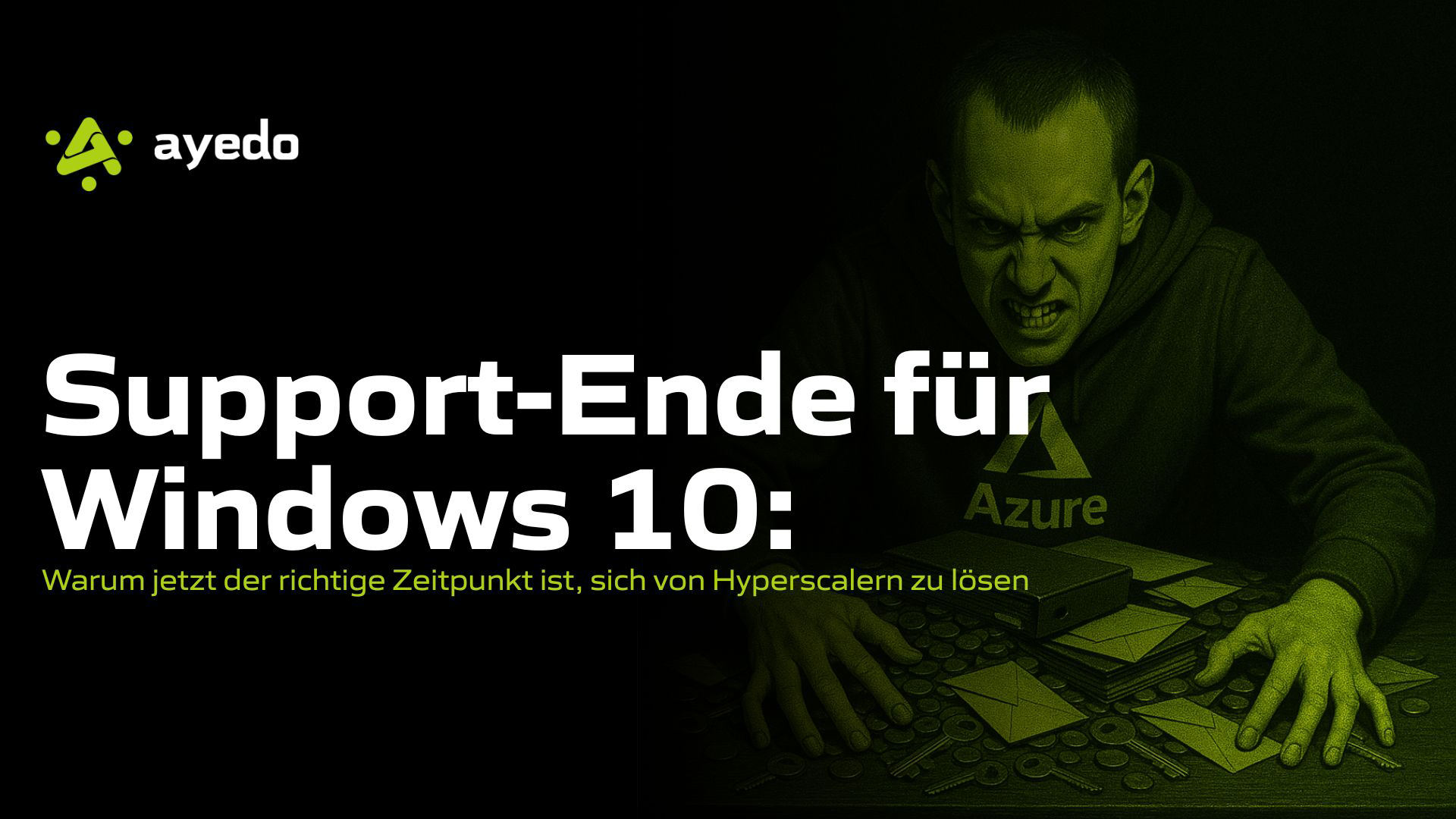
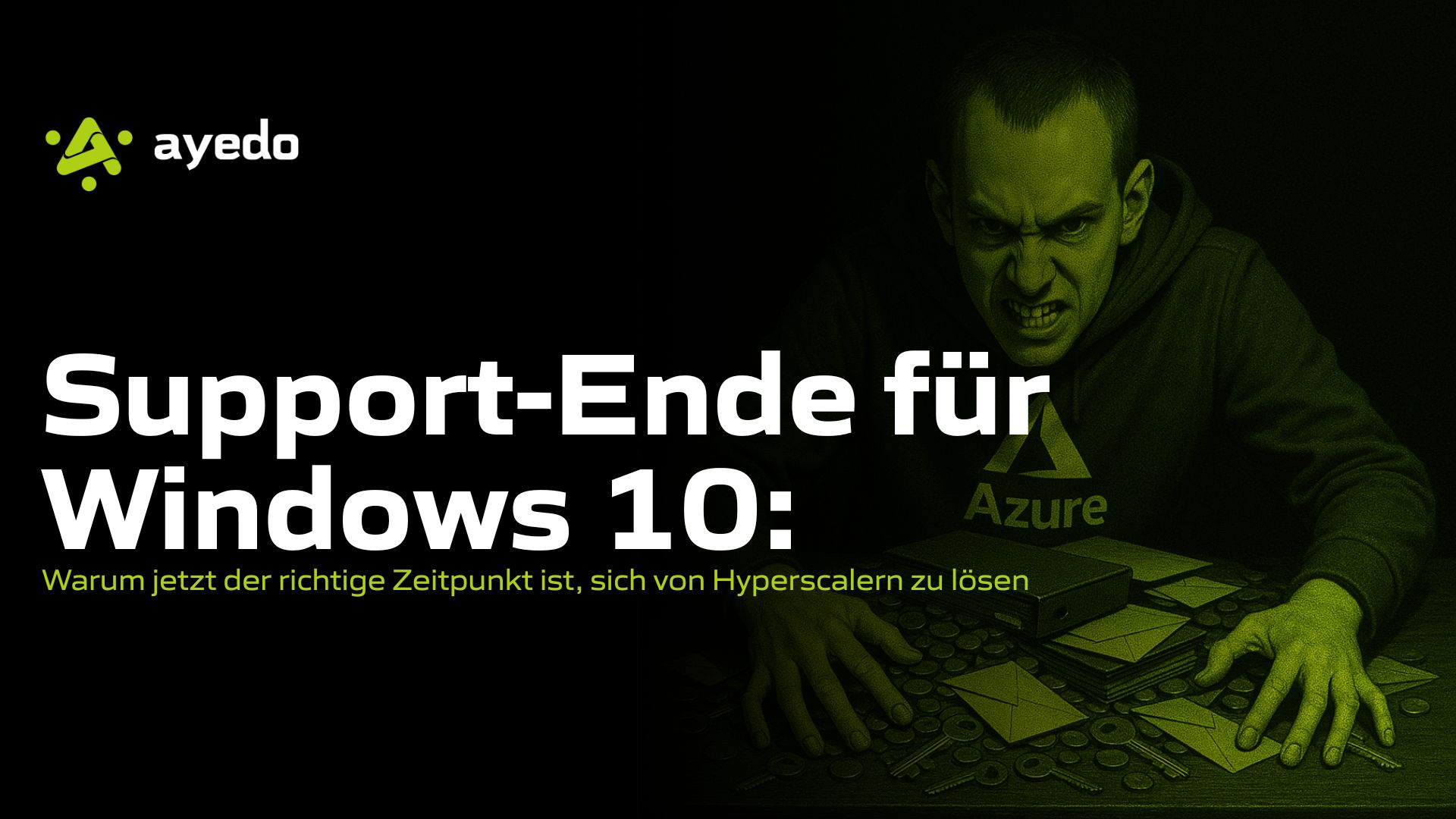
On October 14, 2025, regular support for Windows 10 will end. What initially appears to many IT departments as a manageable maintenance date reveals itself upon closer inspection as a strategic turning point. Although Microsoft offers a one-year “Extended Security Updates” phase (ESU), the conditions reveal much about the underlying dynamics and prompt a fundamental question for companies: How dependent do we really want to be?
With the ESU model, Microsoft promises to provide security-critical updates for Windows 10 even after support ends. Private users have three options to participate:
What initially sounds like a fair offer is, in truth, a model that ties IT security to consent for data usage, customer loyalty, or payment behavior. Companies do receive extended access to updates through volume licenses – but only for hefty fees.
At this point, the question should be allowed: Why do we have to pay for basic security – or transmit data? And what does this say about the control dynamics?
The “Windows 10 ESU” case is not an isolated incident. It symbolizes the fundamental problem of many IT landscapes in Germany: excessive dependence on a few international providers whose business models are geared towards long-term commitment and maximum data flow.
Meanwhile, the technological setup in many companies is quite stable and manageable: An Active Directory, a few virtual machines, a SQL database, an ERP system, and an email infrastructure – often reliably in use for years. There is no need for a highly scalable serverless architecture, no global load balancing, no AI-optimized multi-region Cloud. What is needed is reliability. Predictability. Control.
And that is increasingly being lost.
The end of support for Windows 10 is an opportunity. A chance to free oneself from dependencies that have been established over the years – often out of convenience, sometimes out of fear of alternatives. But these alternatives have long existed.
Especially in Germany and Europe, powerful IT service providers and hosting providers are ready, offering modern infrastructures based on open standards, European legal norms, and transparent business models. Systems operated in compliance with GDPR. Platforms where access by foreign authorities – such as through the US CLOUD Act – is not simply waved through. Solutions that rely not on license binding, but on technological responsibility.
As an ISO 9001 and ISO/IEC 27001-certified IT service provider, we assist companies in taking this exact step: out of the comfort zone of Hyperscalers, into an infrastructure that fits the need – not the business model of an international corporation.
We help to:
This is not about ideology. It’s about technical realities, economic sustainability, and legal assurance.
Those who rely on the ESU extension for Windows 10 today are merely postponing a structural problem by twelve months – nothing more. Those who act now lay the foundation for a sovereign, controllable, and economically viable IT future. It’s time to seize this opportunity. Not out of defiance. But out of conviction.
The Windows 10 end of support is just a symptom of the Hyperscaler mania in Germany, which contributes to Vendor Lock-in and the digital sellout of Europe. It is high time to break these dependencies and not only demand digital sovereignty but to live it.
Starting November 1, 2025, Microsoft will eliminate traditional volume licenses. Specifically …

The promise of the cloud has always been flexibility. Yet, the reality in many IT departments is …

Cloud Brokering for True Sovereignty The discussion about digital sovereignty in Europe is old, but …