Kubernetes 1.33: Volume Populator Now Generally Available – What This Means for You!
Kubernetes Volume Populators are now generally available (GA)! With the AnyVolumeDataSource feature, …
11.05.2025
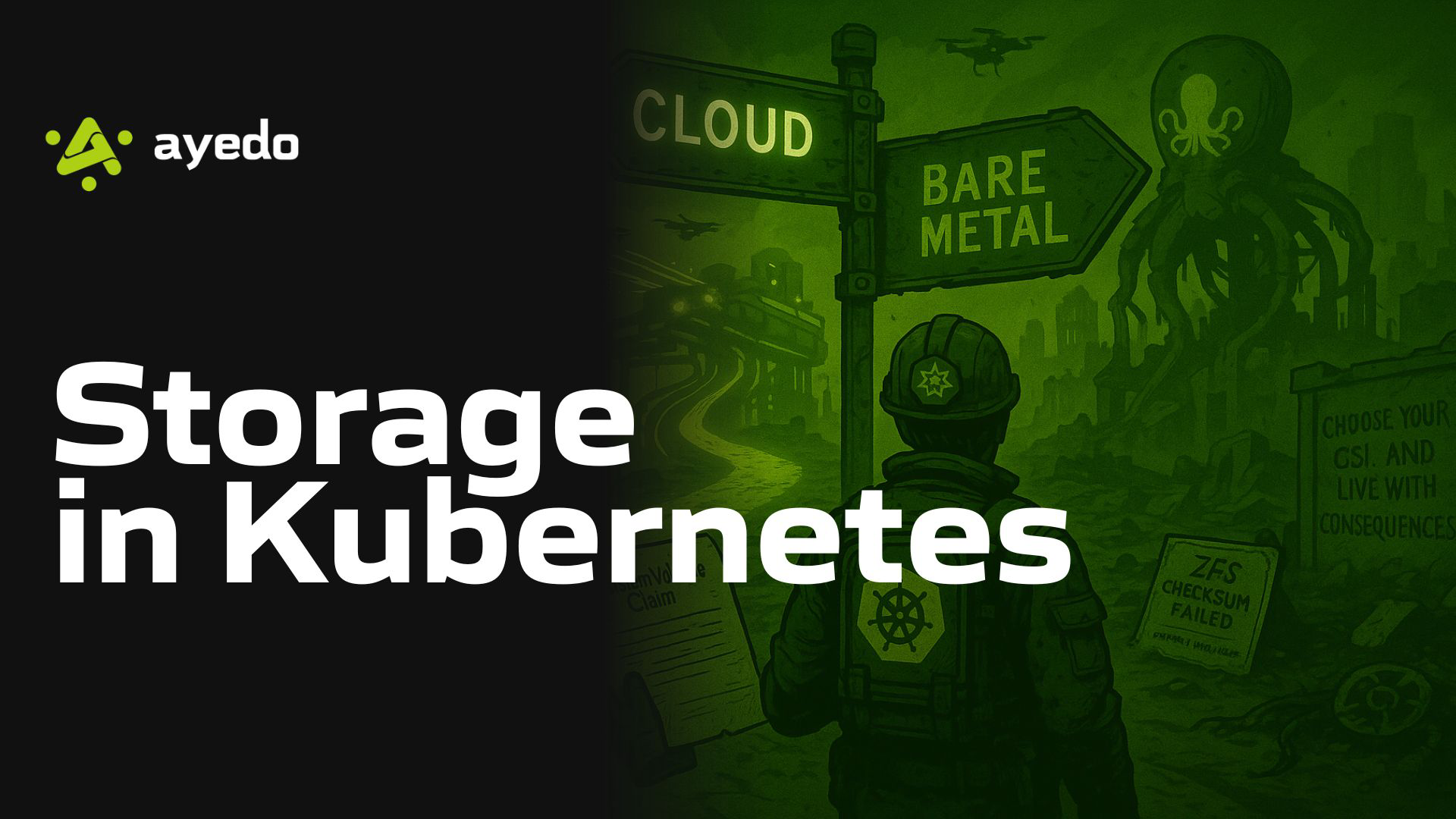
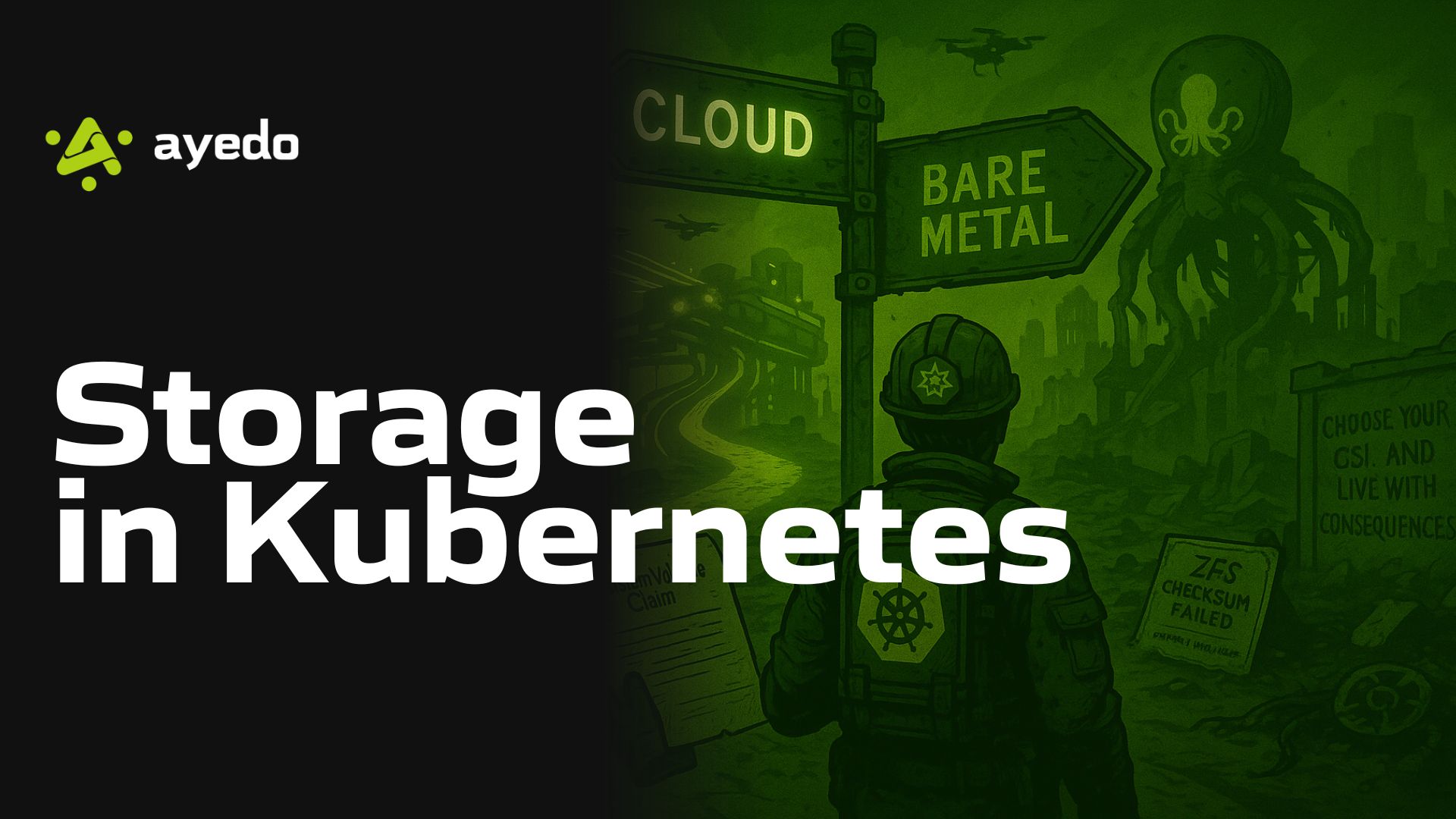
Storage in Kubernetes is by no means trivial. Stateful workloads impose the highest demands on stability, performance, and availability—handling persistent data is thus one of the most complex tasks in the Cloud-Native environment. This article provides a comprehensive overview: from CSI, Cloud vs. On-Premise CSI, Longhorn, Ceph, and another solution, to Cloud-Controller-Manager, costs, scaling, redundancy, security, and the challenges of local storage landscapes.
CSI, the Container Storage Interface, is a standard interface (API specification) that allows Kubernetes or other container orchestrations to work with any storage solutions (block or file) without changes to the Kubernetes core code. This enables external storage providers to develop CSI drivers and deploy them independently of the Kubernetes release cycle. The architecture typically includes two components: a Controller Plugin (for provisioning, attachment, etc.) and a Node Plugin (for mounting).
Advantages of CSI:
Kubernetes initially manages ephemeral storage via volumes that are tied to the lifecycle of pods. For persistence, we use:
Under the surface, Kubernetes performs the following for a PVC:
In the background, block devices can be created, encrypted, buffered, or replicated—depending on the CSI driver.
Longhorn is a Cloud-Native, distributed block storage developed by Rancher Labs. It runs lightweight, is easy to deploy via Helm, and offers replication, snapshots, restoration, high availability on standard hardware.
Advantages:
Disadvantages:
Ceph is an established, distributed storage system that unites block (RBD), file (CephFS), and object storage (RGW) in one system. It offers high scalability, fault tolerance, self-healing, snapshotting, high data integrity, and is widely used in large production systems (e.g., CERN, OVH).
Advantages:
Disadvantages:
OpenEBS ZFS LocalPV uses local ZFS drives per node, combined with Kubernetes StorageClasses via CSI. Many operators appreciate checksum protection (bitrot prevention), snapshots, CoW advantages—and combined with Longhorn, it results in a flexible, high-performance bare-metal solution.
Advantages:
Disadvantages:
| Solution | Scalability | Complexity | Features |
|---|---|---|---|
| Longhorn | Medium (bare-metal) | Low | Snapshots, replication, HA, UI |
| Ceph (RookCeph) | Very high | High | Block, file, object, RGW, self-heal |
| OpenEBS ZFS LocalPV | Medium (local) | Medium | ZFS snapshots, checksums, quotas |
In cloud environments, CSPs (Cloud Service Providers) take over many tasks:
The Cloud-Controller-Manager (CCM) takes on tasks such as:
The Cloud-Controller-Manager decouples cloud-specific logic from the core Kubernetes. It takes on tasks such as:
The CCM ensures that storage operations (e.g., EBS attachment) are orchestrated and respond to node failure.
Advantages:
Disadvantages:
Advantages:
Disadvantages:
Persistent storage in Kubernetes is no trivial task. The introduction of CSI has opened the path to modularity—both in the cloud and on-premise. Cloud-CSI offers convenience, while On-Premise CSI solutions like Longhorn, Ceph, and OpenEBS ZFS LocalPV provide control and performance.
The choice critically depends on use-case, expertise, budget, and operational focus:
Kubernetes demands a high level of strategic thinking in storage—from hardware to software, APIs, automation, cost control to compliance. In the end, it’s not just about technology, but also operational maturity.
Kubernetes Volume Populators are now generally available (GA)! With the AnyVolumeDataSource feature, …
Image Volumes were introduced as an alpha feature in Kubernetes version v1.31 and have now been …
TL;DR Storage in Kubernetes is often a nightmare of complexity (Ceph) or vendor lock-in (AWS EBS). …