
Weekly Backlog Week 46/2025
Editorial Digital sovereignty used to be a tech topic. In 2025, it’s power politics: Whoever …
10.11.2025
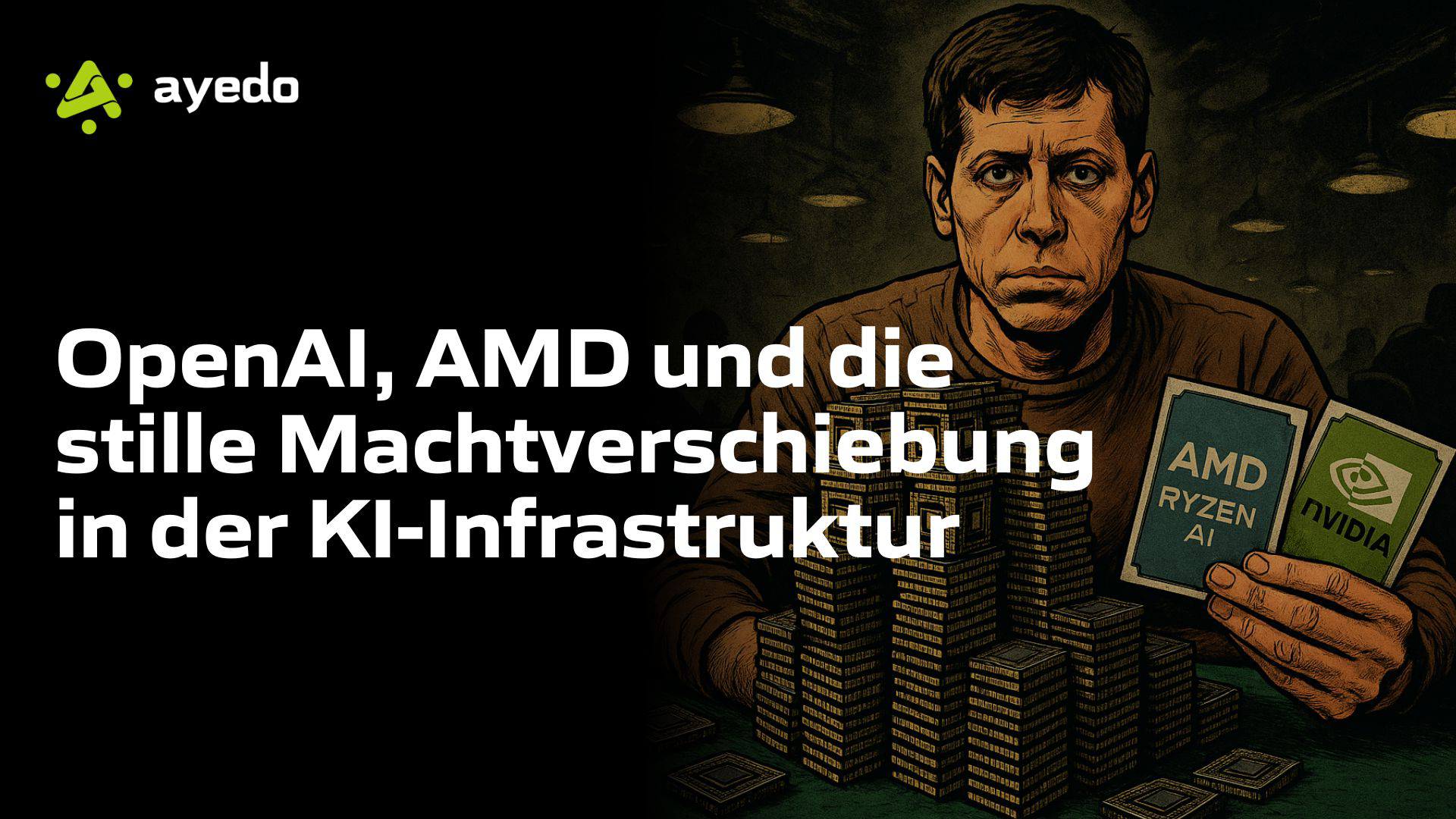
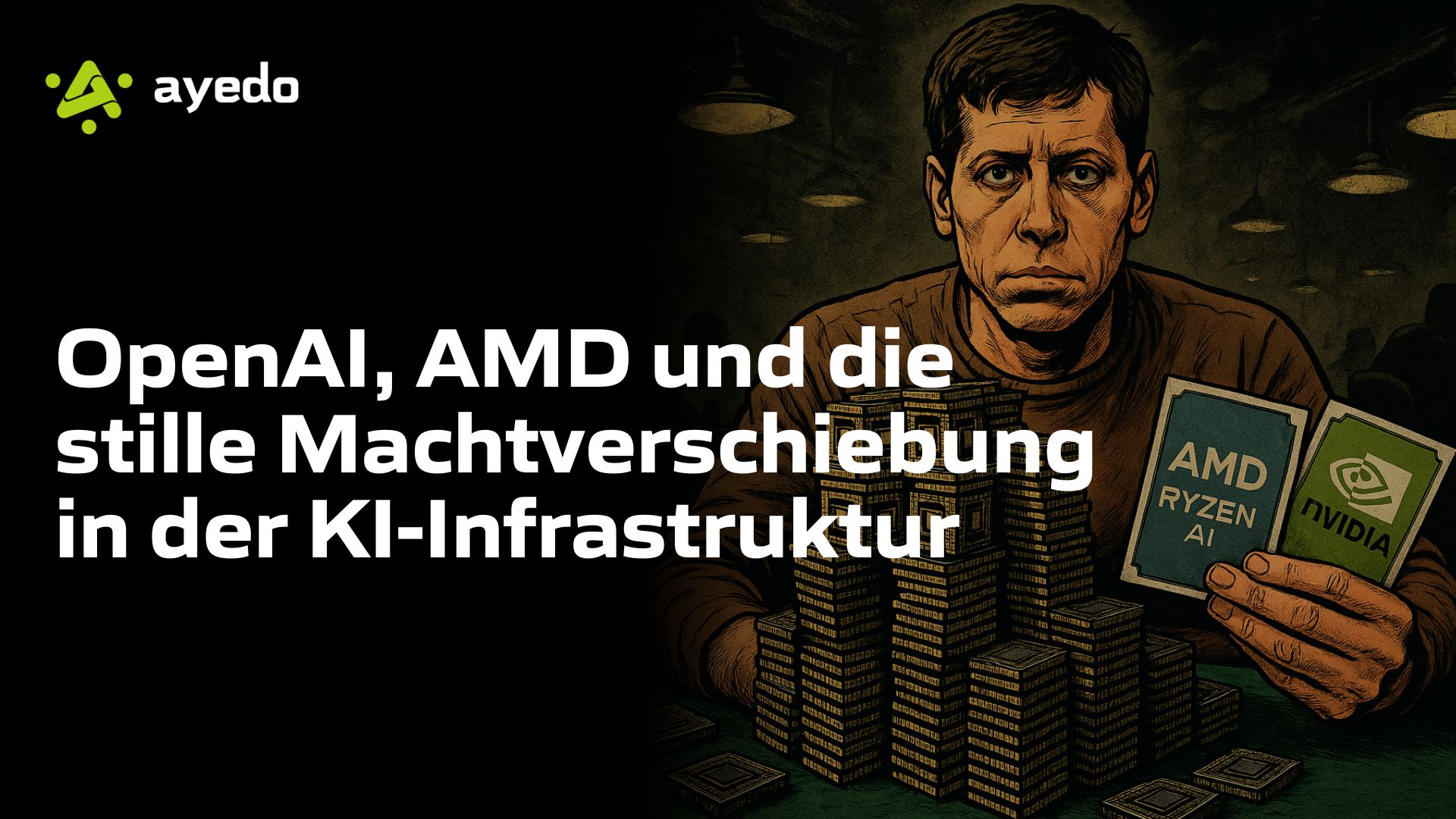
The announcement initially sounded like just another technical partnership in the era of generative AI: OpenAI and AMD have agreed on six gigawatts of GPU capacity to support future AI infrastructures. But a closer look reveals that this partnership is more than just a deal between supplier and buyer. It marks the next level of escalation in a rapidly evolving power structure—not only in high-performance computing but also in the architecture of a digital global economy increasingly built around proprietary models, closed supply chains, and strategic investments.
Starting in the second half of 2026, OpenAI will initially deploy one gigawatt of computing power based on the new AMD Instinct™ MI450 GPUs. That’s the operational side. The structural significance, however, is revealed in the fine print: The agreement not only includes a long-term technical collaboration but also an equity stake. AMD grants OpenAI a warrant for up to 160 million of its own shares—with staggered payouts depending on specific milestones in implementation, sales volume, and stock performance.
This mechanism is not an isolated case. OpenAI had already closely aligned with Nvidia, publicly initiated joint initiatives with Broadcom, and recently fueled rumors about its own chip developments. The AMD partnership is thus another building block of a deliberate strategy: The technical foundation of its own AI models is broadly diversified, dependency on individual suppliers is reduced, and linked to the long-term success dynamics through equity stakes.
What initially seems smart and forward-thinking—diversification, supply security, strategic redundancy—raises significant questions upon closer inspection. Because as technical partnerships come with financial entanglements, the decision-making basis for technologies, standards, and infrastructures also changes.
When hardware decisions are no longer made solely based on performance, efficiency, or energy consumption but are tied to stock options, the market loses technical neutrality. When competitors become stakeholders, competition becomes a facade. When customers, investors, and suppliers meet in changing roles, not only do role models blur, but so do control instances.
This type of structural entanglement is not new. But with the speed and force with which it is spreading in the AI sector, it reaches a new quality. What used to be common in long-term OEM contracts is now made public on a quarterly basis—underpinned by billion-dollar valuations, equity mechanisms, and strategic roadmaps.
It’s no longer just about data centers or chips. It’s about who builds the operating systems of the future—not at the software level, but in the deeper machine room of infrastructure. It’s about who gets access to compute time, training data, and energy. And it’s about markets where technology is controlled not by openness but by access.
OpenAI is not going this route alone. Microsoft, Google, Amazon, and other big players have long been structuring their hardware landscapes along strategic investments and exclusive partnerships. But the speed at which OpenAI has deeply embedded itself with several suppliers in such a short time is remarkable. Within a few months, Nvidia, Broadcom, and AMD were integrated into a network that can hardly be read as purely operational technology deployment.
The long-term consequences are not yet foreseeable. But it is clear: With each new partnership that links capital with technology, the ground for real competition becomes narrower. And with each new deal that intertwines equity and procurement, new dependencies arise—not less dangerous, just better distributed.
This development cannot be explained by economic calculus alone. It is an expression of a new operating system in the AI economy. One where resources are not just bought but traded like influence. One where scaling is not just a goal but also a power tool. And one where technical excellence is increasingly replaced by strategic proximity.
What this means for smaller providers, open standards, or independent research institutes remains to be seen. What is certain is that the AI infrastructure of the future is not emerging in the free market—it is emerging in equity structures. Those who do not find a place in it will be left out not only technologically but also economically.
Editorial Digital sovereignty used to be a tech topic. In 2025, it’s power politics: Whoever …

Title: OpenAI for Germany – Digital Sovereignty with Azure as the Foundation? Markdown-Content: On …
Title: OpenAI and Nvidia: $100 Billion for the AI Arms Race Markdown-Content: The Reuters report is …