Guardrails in Action: Policy-Based Deployment Validation with Kyverno
TL;DR Guardrails are automated guidelines around your deployments: They prevent typical …
03.11.2025
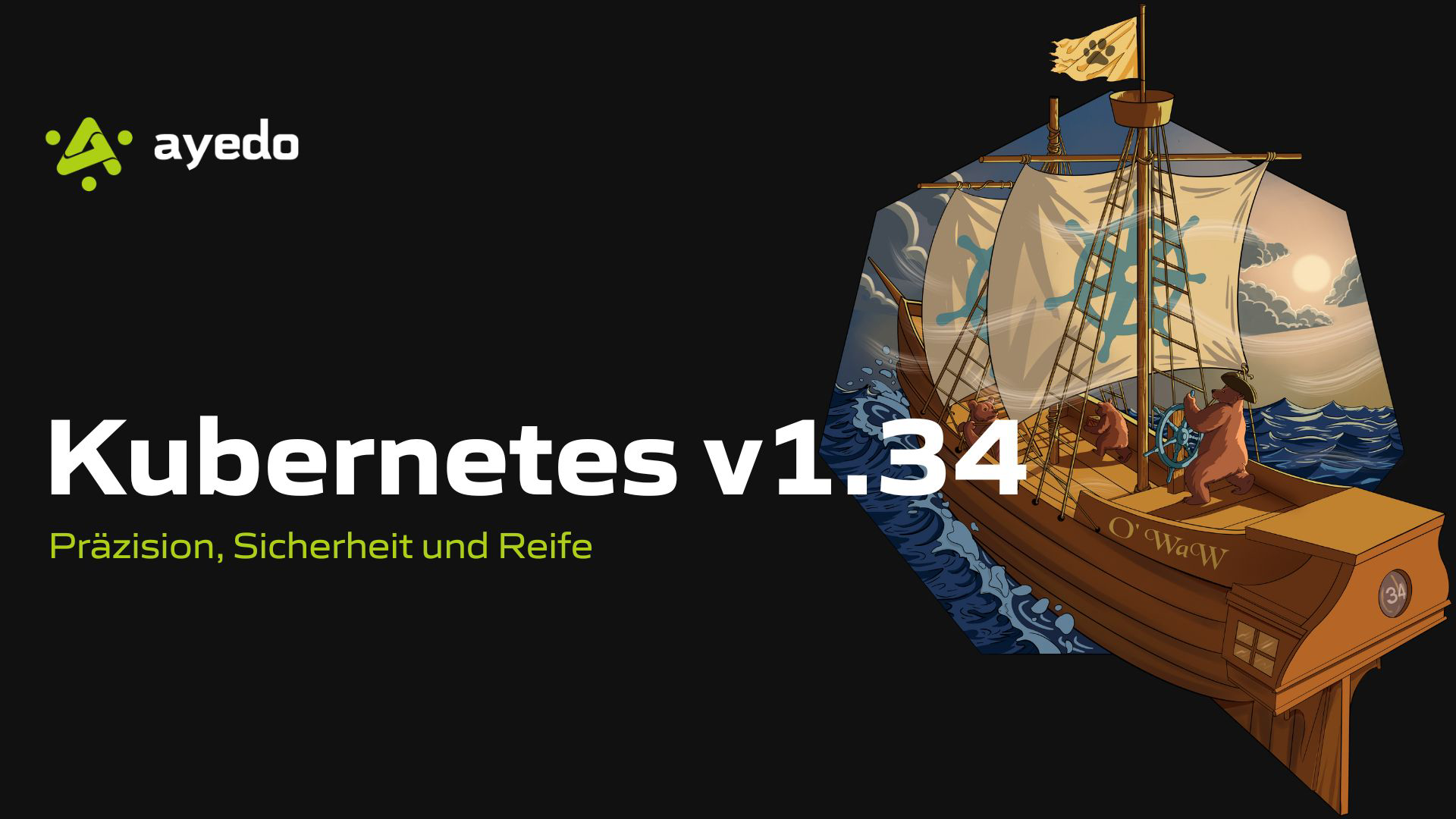
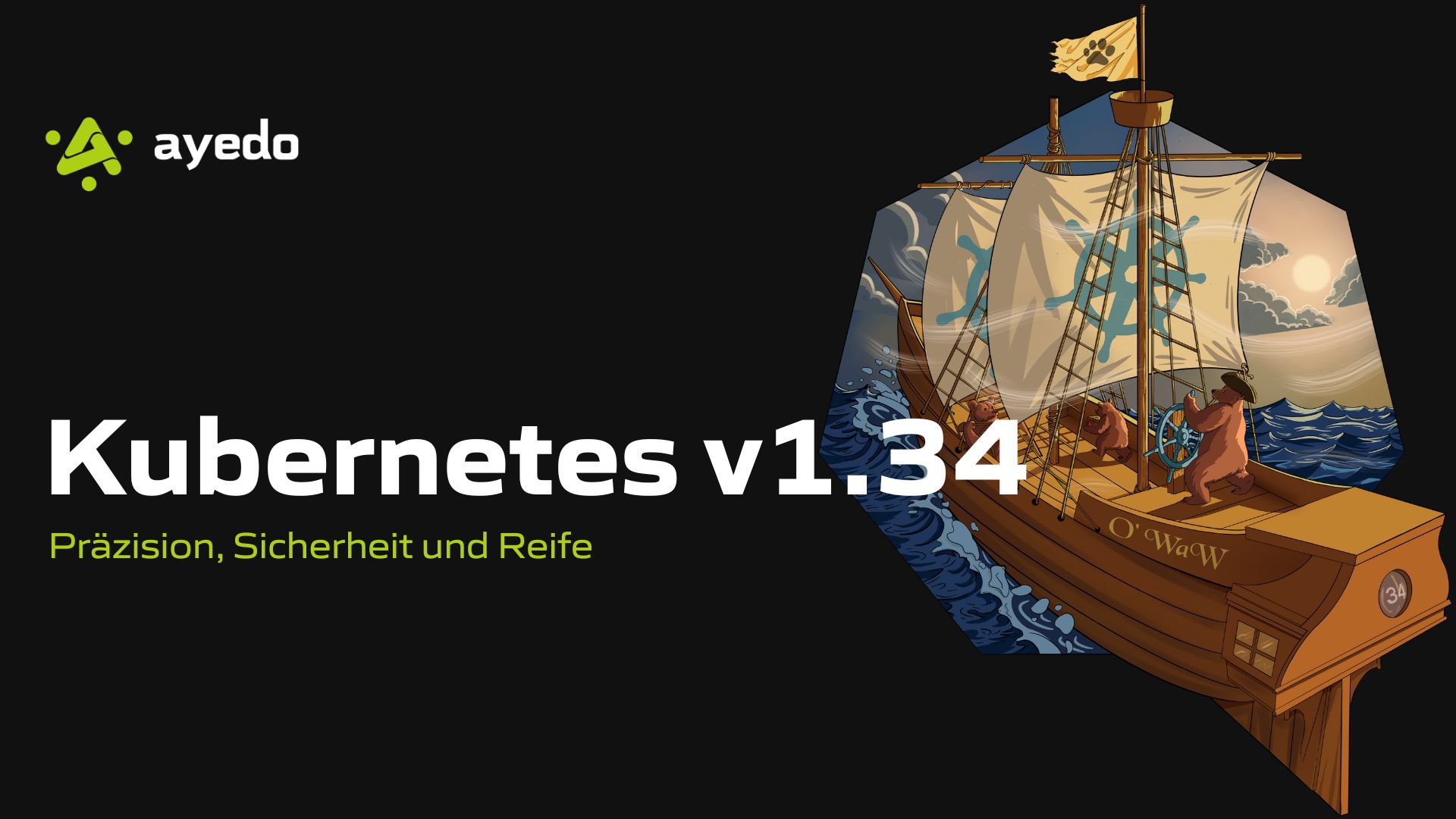
Kubernetes continues to grow – with version 1.34, the next major release is here. The cycle includes 58 new features: 23 are stable, 22 are Beta, and 13 are newly Alpha. Numbers alone don’t say much. What’s interesting is how Kubernetes is developing technically – and where it’s headed.
A key advancement is the now stable Dynamic Resource Allocation (DRA). It allows GPUs, TPUs, network cards, and other specialized resources to be flexibly claimed within the cluster. This makes managing parallel workloads, AI training, and HPC scenarios significantly easier.
DRA follows the principle of declarative claims – similar to dynamic storage provisioning. Through new API types like ResourceClaim, ResourceClaimTemplate, or ResourceSlice, devices can be bound to Pods in a structured and reproducible manner. For operators, this means no more static device mappings, but rather clean scheduling and higher utilization.
Another topic is securing image pulls. Previously, Kubelet’s credential providers relied on long-lived Secrets – an unnecessary risk, especially in productive multi-tenant environments.
With v1.34, Kubelet can now use short-lived, audience-bound ServiceAccount tokens for accessing container registries. Authentication thus occurs at the Pod level and rotates automatically. Attack surfaces shrink, and credential management becomes significantly easier.
Anyone who has worked with YAML in Kubernetes for a while knows the problems: whitespace, implicit type conversions, missing comments in JSON. With KYAML, there is now a dedicated YAML subset developed specifically for Kubernetes.
KYAML reduces ambiguity, prevents unexpected type errors, and still allows compatibility. From now on, kubectl can output KYAML (-o kyaml) once the feature is enabled. For teams building CI/CD pipelines on YAML objects, this is more than just cosmetic – it’s a step towards more reliable workflows.
Aside from the big headlines, v1.34 has improved many details that are crucial in practice:
These “small” features make the difference in productive environments – fewer bugs, less overhead, more robustness.
In the Beta phase, there are several changes that will noticeably change working with Kubernetes in the medium term. These include Pod-Level Resource Requests, which simplify resource planning for multi-container Pods. Equally exciting are mutating admission policies, which could replace the previous sprawl of admission webhooks with a declarative, in-process variant.
Kubernetes 1.34 clearly shows that the project is maturing. The major innovations are no longer in spectacular new additions but in the precision, standardization, and securing of existing mechanisms.
Dynamic Resource Allocation, secure tokens for image pulls, and KYAML are just three examples of the course: fewer workarounds, more clarity. Kubernetes thus remains not only functionally powerful but is increasingly viable in highly sensitive, regulated environments. For companies relying on Cloud-native technologies, this means more stability and security in critical production environments.
👉 For those who want to dive into the details: The full changelog can be found here: Kubernetes v1.34 Release Notes
TL;DR Guardrails are automated guidelines around your deployments: They prevent typical …
Kubernetes has become the de facto standard for operating cloud-native applications. However, with …
Developer Platforms by ayedo: Tailored, Flexible, and Future-Oriented At its core, Developer …