
Inclusion in Tech: The DHHWG and Its Importance for Kubernetes
Introduction In the context of Deaf Awareness Month, the CNCF Deaf and Hard-of-Hearing Working Group …
24.09.2024
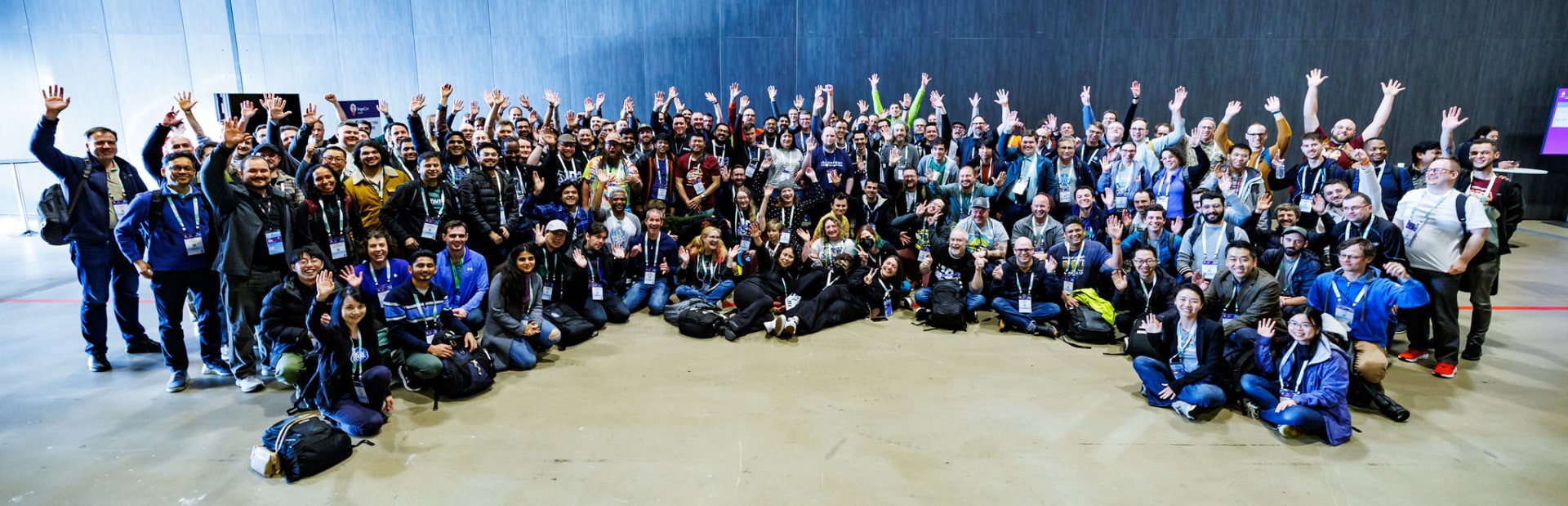
Ten years ago, on June 6, 2014, the first commit of Kubernetes was published on GitHub. This initial commit, comprising 250 files and 47,501 lines of Go, Bash, and Markdown, marked the beginning of the project we know today. Who would have thought back then that Kubernetes would grow into one of the largest open-source projects with over 88,000 contributors from more than 8,000 companies across 44 countries a decade later?

This milestone is significant not only for Kubernetes but also for the Cloud-Native ecosystem that has emerged from it. Within the CNCF, nearly 200 projects exist, with contributions from over 240,000 individual contributors and many more in the extended community. Kubernetes would not be where it is today without this community, which includes over 7 million developers and an even larger user base, all of whom have helped shape the ecosystem we know today.
The ideas underlying Kubernetes began long before the first commit or even the first prototype (which emerged in 2013). In the early 2000s, Moore’s Law was in full swing. Computing hardware was becoming increasingly powerful, and applications were growing more complex. This combination of hardware commodification and application complexity pointed to the need to further abstract software from hardware, and solutions began to emerge.
Like many companies at the time, Google was scaling rapidly, and engineers were interested in creating a form of isolation in the Linux kernel. Google engineer Rohit Seth described the concept in an email in 2006:
We use the term container to denote a structure against which we account and track resource usage such as memory, tasks, etc., for a workload.

In March 2013, a 5-minute lightning talk titled “The Future of Linux Containers,” presented by Solomon Hykes at PyCon, introduced an upcoming open-source tool called “Docker” that facilitated the creation and use of Linux containers. Docker brought ease of use to Linux containers, making them accessible to more users than ever before, and the popularity of Docker, and thus Linux containers, skyrocketed. Docker made the abstraction of Linux containers accessible to everyone, and running applications in a much more portable and repeatable manner suddenly became possible, yet the question of scale remained.
Google’s Borg system for managing application orchestration at scale had adopted Linux containers when they were developed in the mid-2000s. Since then, the company had also been working on a new version of the system called “Omega.” Engineers at Google familiar with the Borg and Omega systems recognized the popularity of containerization driven by Docker. They saw not only the need for an open-source container orchestration system but also its “inevitability,” as Brendan Burns described in this blog post. This realization in the fall of 2013 inspired…
Source: Kubernetes Blog
Introduction In the context of Deaf Awareness Month, the CNCF Deaf and Hard-of-Hearing Working Group …
Introduction Have you ever thought about creating your own cloud? Maybe you’ve even tried it! …
In our series on building your own cloud with the Kubernetes ecosystem, we continue our journey …