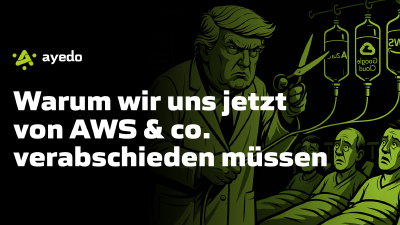
Why We Must Say Goodbye to AWS, Azure & Google Cloud Now
Digital transformation is no longer a thing of the future – it is a reality. It affects not only …
09.05.2025
Cloud infrastructure has its justification. Scalability, automation, and globalization of IT resources are now standard. Technically, the major platform providers — AWS, Google Cloud, Azure — undoubtedly deliver stable base technology.
But the problem begins when customers believe they are only purchasing infrastructure. In reality, they are buying business models. With our Enterprise Cloud and Private Cloud, we offer alternatives that give you full control over your infrastructure.
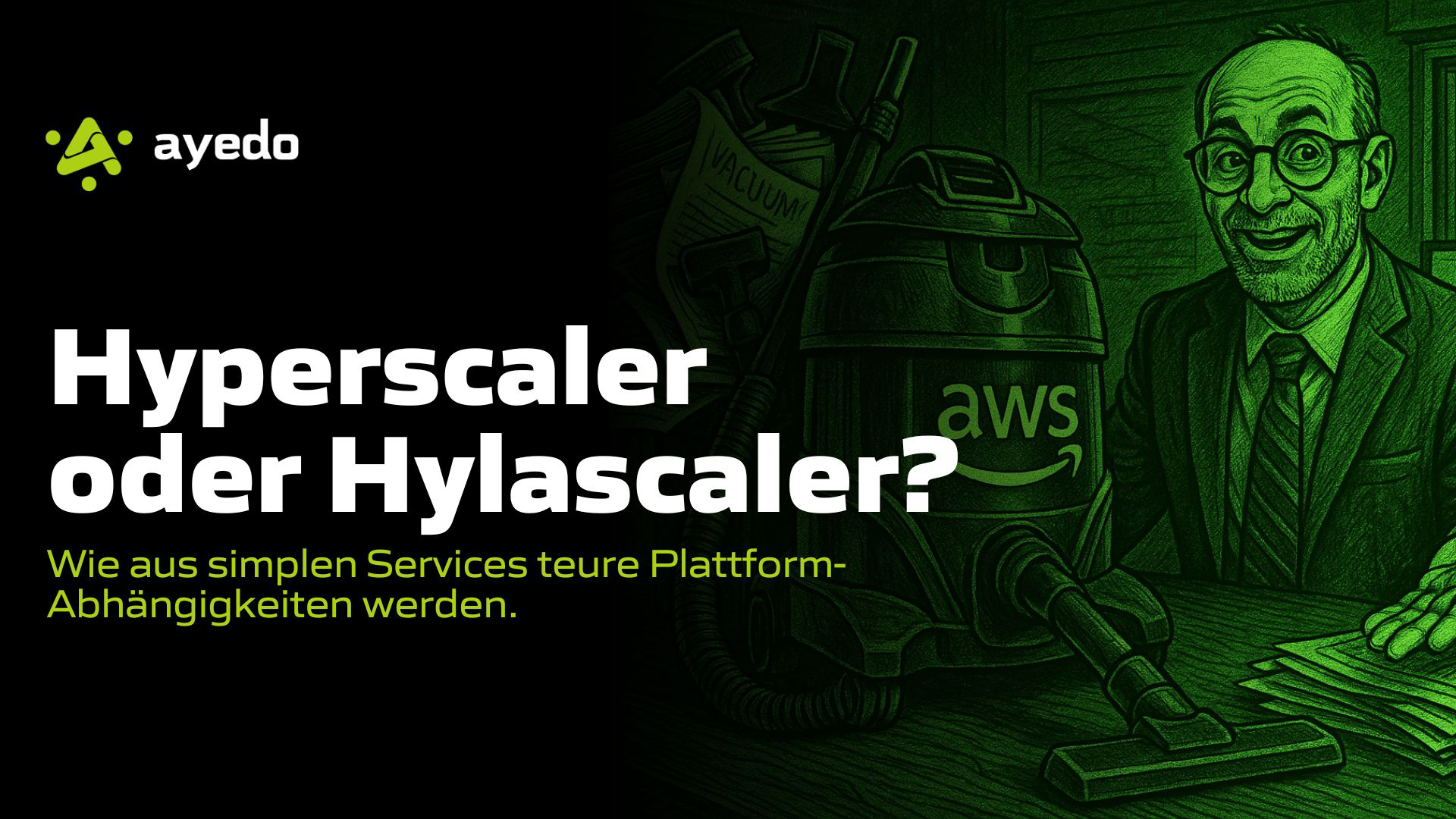
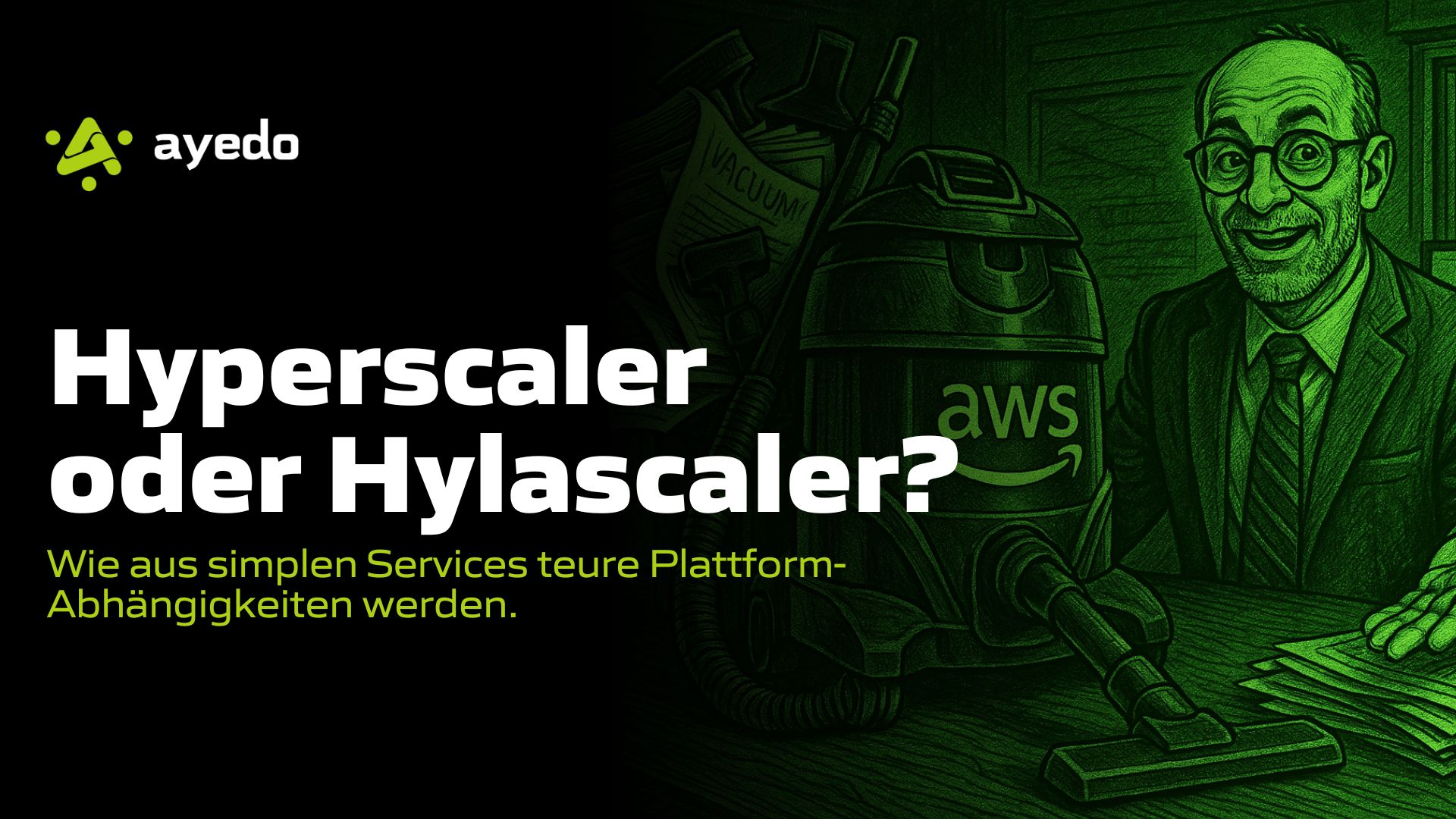
The hyperscaler doesn’t sell what the customer actually needs. The customer wants a vacuum cleaner. The hyperscaler sells the entire ecosystem around it: water filtration system, humidifier, allergy certificates, lifetime service contract, training programs, service inspections.
At first, it all sounds reasonable. In the end, the customer is tied to a system that is expensive, complex, and hardly replaceable.
That’s exactly how it works in the cloud.
An application needs messaging. No rocket science. Short queues, messages in, messages out, acknowledge, done. Redis Streams could easily handle this: minimal overhead, stable, performant, easy to operate.
But the hyperscaler offers SQS. Sounds clean, sounds lean, sounds managed. And suddenly you’re in the middle of a complete service ecosystem: visibility timeouts, dead letter queues, redrive policies, IAM roles, API quotas, complex pricing per 1M requests, traffic costs, multi-region replication, vendor-specific SDKs, monitoring integrations.
What is sold as a “managed service” is no longer a simple queue. It is a complete platform dependency. Every additional service that is docked further cements the architecture into the AWS model.
Technically, Redis could have solved this use case within minutes. Transparent, self-manageable, without platform binding, without hidden additional costs. But the decision for SQS is convenient. And that’s exactly what the hyperscaler’s sales model is built on.
Databases are an even clearer example. Almost every application needs a relational database. PostgreSQL, MariaDB, MySQL — all stable, proven, performant, open-source-based, and operable by countless providers for years.
Instead, many blindly opt for Amazon RDS. Again: sounds comfortable, managed, highly available, scalable. And again, the same pattern applies: parameter groups, backup policies, licensing models, IOPS pricing, storage tiers, multi-AZ failover, monitoring dependencies, proprietary API extensions.
What is technically a standard product is drawn into a vendor lock-in through the operating model, from which it becomes very expensive to break free later. Any admin who has had to migrate RDS productively knows how deep these dependencies run.
Technically, AWS & Co. deliver solid platforms. But the business model of the hyperscalers is not based on technology — it is based on platform binding.
The entry is cheap. The exit is expensive. The API is convenient. The architecture becomes inflexible. The operation is comfortable. The responsibility shifts entirely to the provider.
The point is not that these services should not be used. It’s about knowing exactly when you need them — and when you are maneuvering into a path out of sheer convenience that will massively restrict your independence in the long term.
Cloud is not an infrastructure topic. Cloud is a business model.
The question is never whether Redis beats SQS, or whether PostgreSQL performs better than RDS. The question is: Who controls the system?
With our Enterprise Cloud and Kubernetes platform, we offer you the opportunity to retain this control. Hyperscalers sell complete business models, not infrastructure components. And anyone who, as a software provider, SaaS operator, or system architect, does not clearly separate where platform services are needed and where they are not, will pay dearly for it later.
Technically, many problems can be solved without cloud package deals. But then without the vacuum cleaner salesman who also slips in the lifetime maintenance contract on the side.
Digital transformation is no longer a thing of the future – it is a reality. It affects not only …
The fact that the Bundeswehr will store its data in the Google Cloud is not an IT project. It is a …
Starting November 1, 2025, Microsoft will eliminate traditional volume licenses. Specifically …