
Sovereign AI for Europe – The Supply Chain Problem
The European debate on “sovereign AI” is often reduced to regulation, data protection, …
31.08.2025
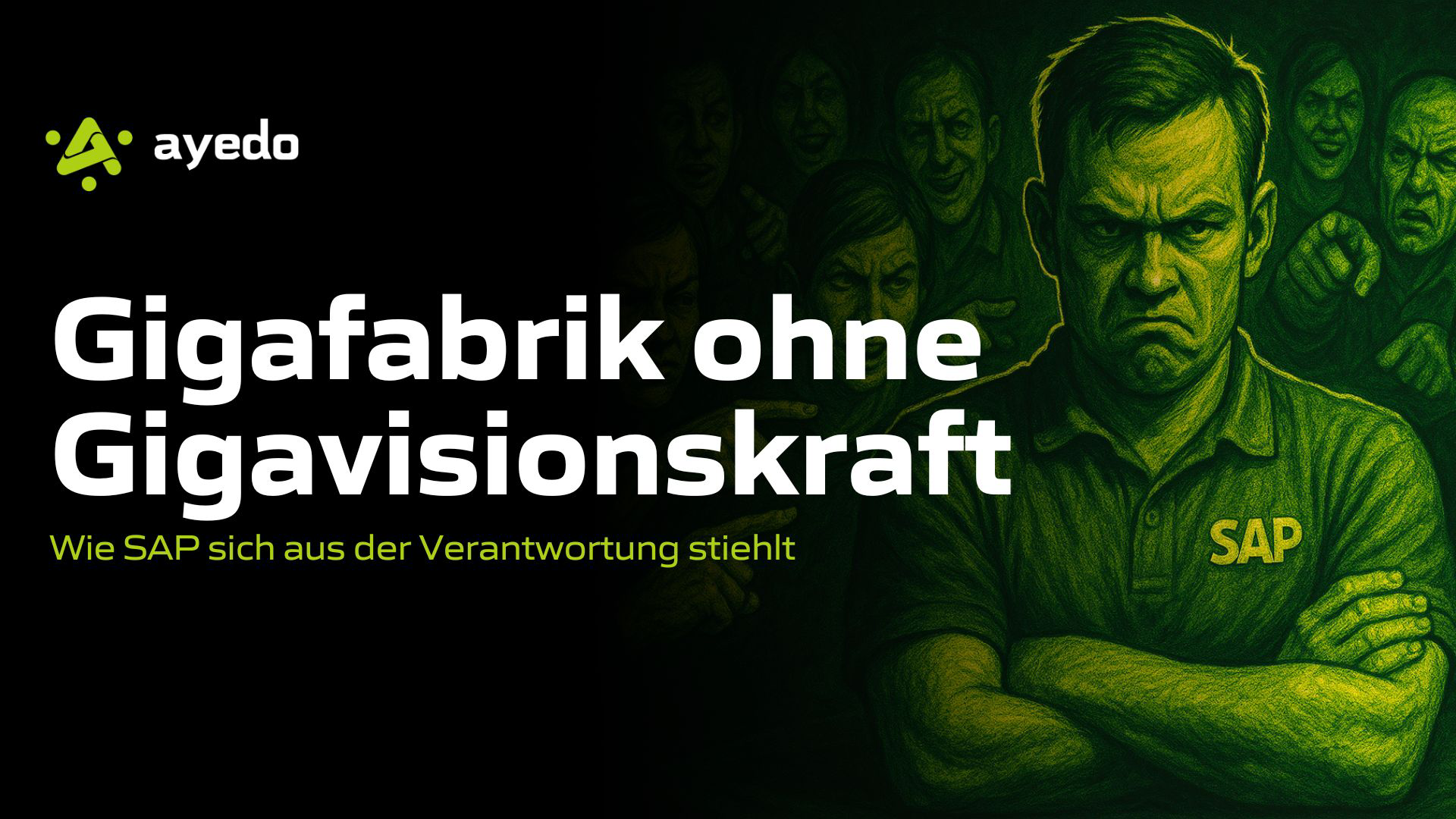
How SAP Evades Responsibility – and What It Reveals About the State of the German Tech Industry
On June 21, 2025, the Tagesspiegel published an article titled “German Corporations Divided – No Joint Bid for AI Gigafactory”. It describes an initiative by the EU Commission that could actually be a cause for optimism: Up to six so-called “AI Gigafactories” are to be established – powerful data centers where European models for Artificial Intelligence can be trained in the future. One of these factories is to be located in Germany. And the EU is being generous: Up to 35 percent of the billion-euro costs are to be publicly funded.
“Artificial Intelligence is the key to making Europe more competitive, secure, and technologically sovereign,” EU Digital Commissioner Henna Virkkunen is quoted in the article. In plain language: This is not just about server capacity. It’s about the strategic foundation for Europe’s digital independence – comparable to infrastructure projects from past industrial revolutions.
Several major German companies wanted to apply for the construction of such a gigafactory. Among them: Deutsche Telekom, IONOS (the cloud subsidiary of United Internet), and the IT subsidiary of the Schwarz Group (Lidl/Kaufland). What is striking: These corporations are not acting together – but in competition. The deadline for expressing interest expires today, June 21.
But the truly shocking part is in the last third of the article. It states succinctly:
“The software company SAP will not participate in the project. ‘We are initially staying out of the expression of interest,’ said an SAP spokeswoman. They primarily see themselves as a software supplier, and SAP also has no great need for the use of the AI factory.”
No interest. No commitment. No willingness to co-shape. SAP – once the beacon of hope for European IT – is simply withdrawing from a strategic future project. And this at a time when Europe is desperately seeking technological sovereignty.
What is happening here is not a trivial matter. It is a prime example of why Europe is falling behind in digitalization. The EU has understood what is at stake – and is delivering. Infrastructure, funding, political will. Yet Germany’s largest software company says: No need.
This is more than a missed opportunity. It is a slap in the face to all those who have been fighting for more digital independence for years.
SAP could have played a central role – especially with its market power, expertise, and proximity to industry. As a platform, as an integrator, as a pace-setter. Instead, they are ducking out. And not out of technical necessity, but out of strategic disinterest.
What does this say about the state of our tech industry? About self-image, responsibility, and long-term ambition?
Europe doesn’t need lip service to digital sovereignty. Europe needs players who are willing to participate in the digital infrastructure of the future. Not just through demands – but through actions.
SAP could have been part of the solution. Now it is part of the problem. While other European companies like IONOS are advancing true digital sovereignty and relying on European cloud infrastructure, SAP misses the chance to take responsibility.
The European debate on “sovereign AI” is often reduced to regulation, data protection, …
AI in the Classroom: Opportunities and Challenges for the Future of Education The debate around the …

Germany discusses data sovereignty but remains technologically dependent. How this relates to our …