Vendor Lock-in in the AI Era:
Why Dependencies Are Becoming More Dangerous Cloud lock-in is not a new topic. For years, companies …
09.03.2026
Digital sovereignty has become one of the central topics in European technology policy. In political strategies, economic committees, and IT departments, there is increasing discussion on how Europe can make its digital infrastructure more independent.
A frequently mentioned argument in many discussions is that there are simply no European alternatives for many technologies.
However, those who delve deeper into the European tech ecosystem quickly realize that this statement only describes part of the reality. In many areas, powerful providers from Europe already exist—from cloud infrastructure to collaboration software to cybersecurity or AI platforms.
The real problem is often not a lack of technology but a lack of visibility.
This is exactly where the European Tech Map comes in.
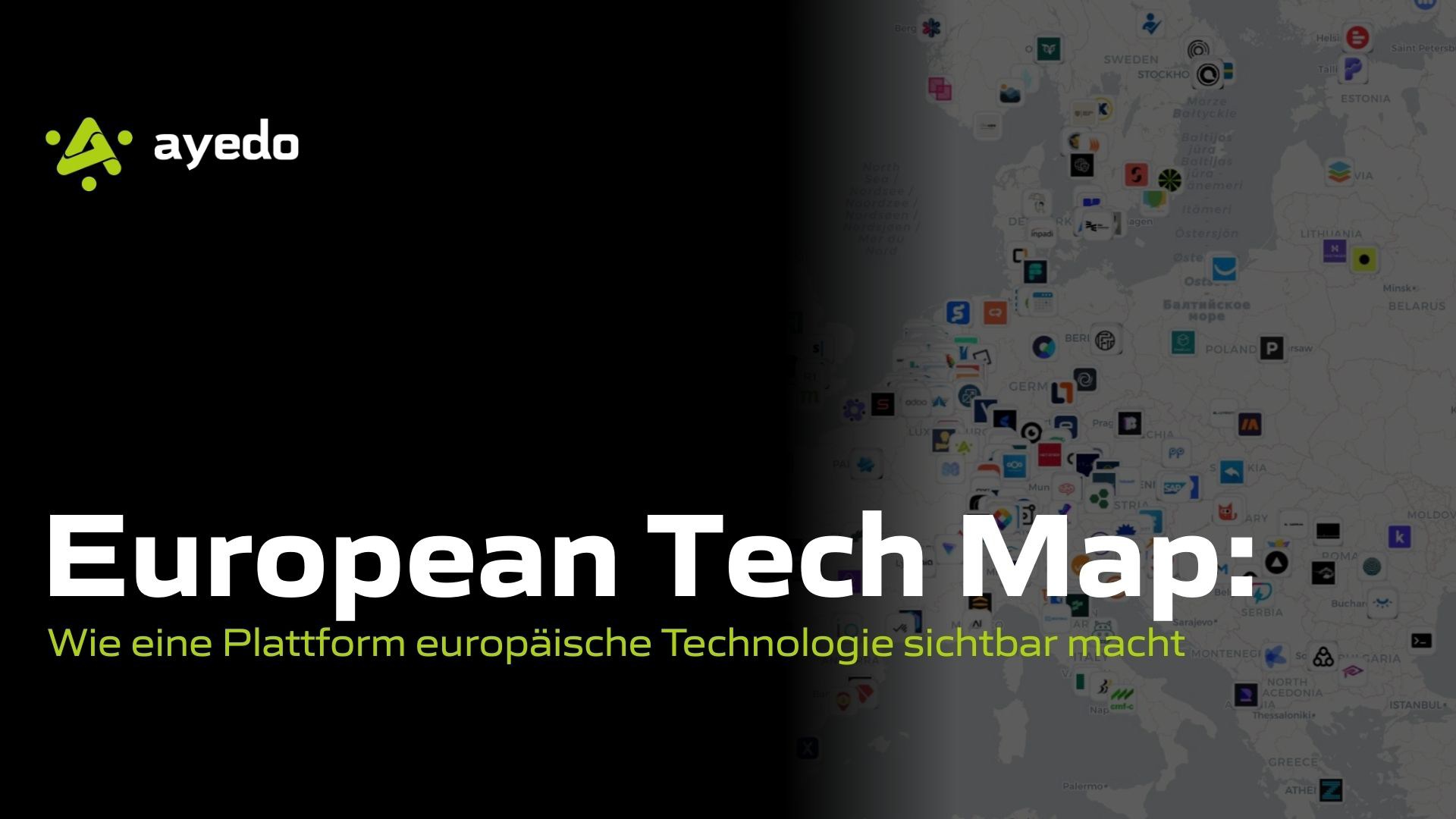
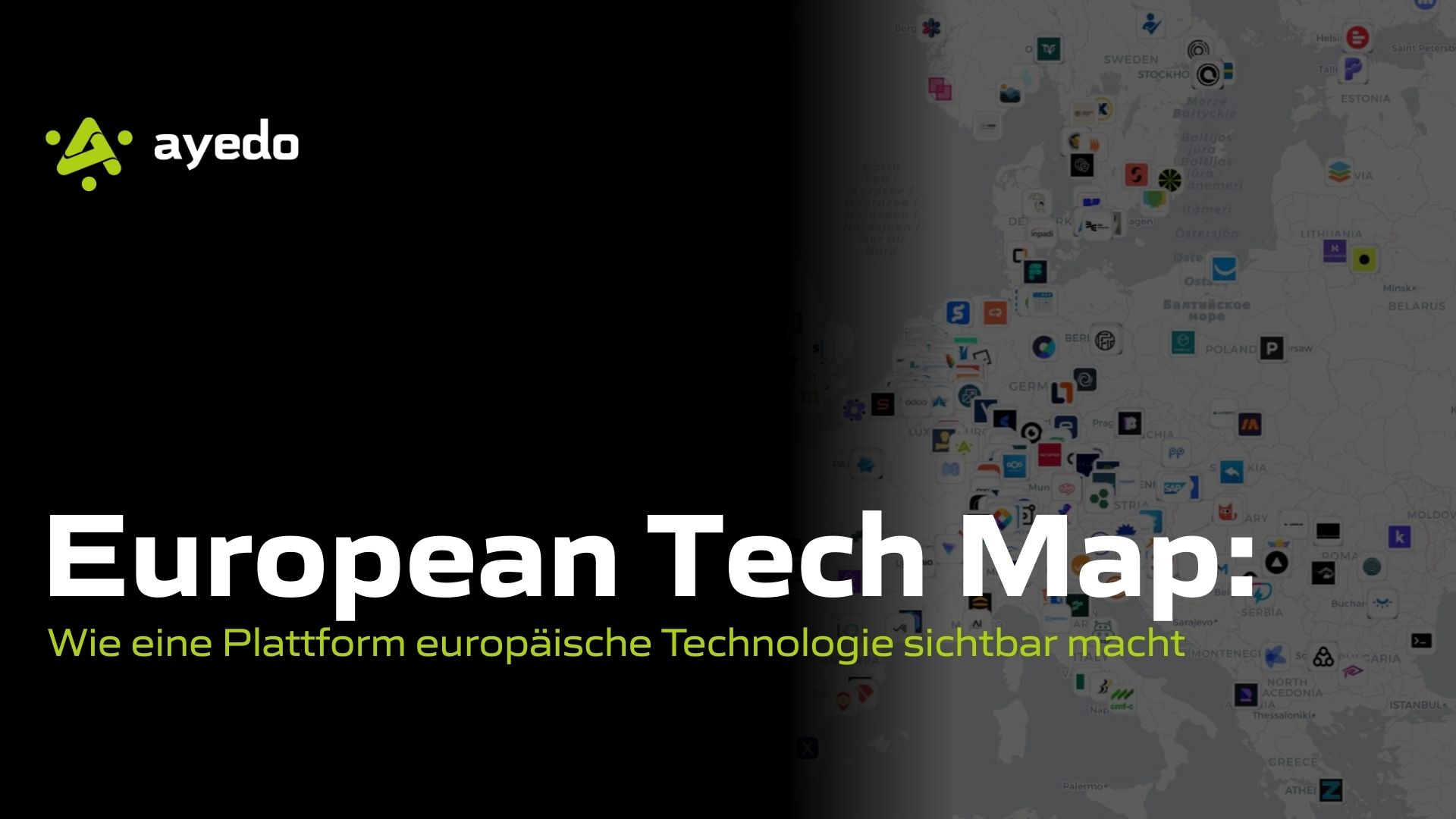
The European Tech Map is a directory of European technology companies with a clear goal: to make European software, cloud services, and digital infrastructure visible.
The platform follows a simple but effective approach. It systematically collects European providers in a central database and categorizes them by categories, countries, and specific alternatives to established products.
According to its own statements, the directory now includes:
This creates an increasingly detailed picture of the European technology ecosystem.
The perspective of alternatives is particularly helpful. The platform, for example, shows European providers for areas such as:
For companies or public institutions, it becomes much easier to recognize which European options exist for well-known platforms like Slack, Zoom, AWS, Google Workspace, or Notion.
The motivation behind the European Tech Map is closely linked to the geopolitical developments of recent years.
Digital infrastructure is no longer just a technical issue. It has become a strategic factor for economic stability, political independence, and societal resilience.
Technology companies today operate critical infrastructure: communication platforms, cloud storage, development environments, or data analysis systems. Decisions about this infrastructure have immediate impacts on companies, authorities, and entire economies.
At the same time, many of the dominant platforms operate under legal frameworks outside of Europe.
Laws like the US CLOUD Act illustrate how far-reaching such legal frameworks can be. Under certain circumstances, US authorities can demand access to data, even if it is physically stored outside the USA—as long as it is controlled by a US company.
This situation leads to a fundamental question: How dependent is Europe on technology controlled outside its own legal jurisdiction?
The European Tech Map sees itself as a contribution to making this question more transparent.
The founder of the platform, Dante Emilio Grassi, clearly articulates the motivation behind the project:
Digital sovereignty begins with choices. And choices require that alternatives are visible.
Europe has a large number of technology companies, startups, and infrastructure providers. Many of these companies develop solutions that are internationally competitive.
Nevertheless, companies and organizations often automatically resort to well-known global platforms. This is not only due to their technical maturity or market penetration but also due to their high visibility.
Products that are not known rarely become part of strategic technology decisions.
A directory like the European Tech Map provides an important foundation here: It makes visible which providers exist and in which areas Europe has already developed its own solutions.
To ensure the platform is more than just a loose collection of company profiles, it works with clearly defined criteria for listed companies.
In principle, only providers that meet certain requirements are included.
These include, among others:
European Anchoring
Companies must have their headquarters in Europe. This includes EU member states, EEA countries like Norway or Iceland, as well as other European countries like Switzerland or the United Kingdom.
The location is not the only important factor, but also the legal structure. A company registered in the USA cannot be listed as a European provider—even if founders or employees are from Europe.
B2B Focus
The platform focuses on providers whose products are primarily developed for businesses. Pure consumer applications are not the focus.
Transparency About Data and Infrastructure
A central criterion is transparency about where data is stored and processed. Providers must clearly document whether data is hosted in the EU or outside the EU and on which infrastructure their services run.
It is also considered whether services are operated on hyperscalers like AWS, Azure, or Google Cloud. Such infrastructure is not fundamentally excluded but must be transparently documented.
Clear Ownership Structures
Another important criterion concerns ownership structure. Companies with majority stakes outside Europe can be listed but must clearly indicate this.
The goal is to create transparency about who controls a company and under which legal frameworks it operates.
In addition to the basic listing criteria, the platform offers a Verified Status for companies.
This does not mean that a product is recommended or qualitatively evaluated. Instead, it confirms that certain information has been verified.
These include, for example:
The platform explicitly emphasizes that this status does not guarantee service quality or regulatory compliance. Companies should continue to conduct their own due diligence.
The Verified Status is primarily intended to create transparency and make basic information reliably available.
A look at the platform’s data shows how diverse the European tech ecosystem has become.
The largest categories of listed companies currently are:
Geographically, the technological landscape is also widely distributed across Europe.
Most companies currently come from:
This distribution shows that innovation in the European technology sector is no longer limited to individual hubs.
The technological structure of the listed providers is also interesting.
The majority of platforms are operated as EU SaaS offerings. At the same time, there is a growing number of solutions with Self-Hosting or On-Premise Options, which are particularly relevant for organizations with high data protection requirements.
Open Source Projects also play an important role in the European ecosystem. Although they are numerically smaller than proprietary offerings, they have high strategic importance in many areas.
Especially in the context of digital sovereignty, Open Source is often seen as a key technology, as it allows long-term control over software and infrastructure.
Another remarkable aspect of the European Tech Map is its origin.
The platform is not an initiative of a large technology company nor an official EU project. It was built as an independent, bootstrapped initiative.
Companies can propose their organization themselves or update their entries. At the same time, the community can also submit hints about missing providers or corrections.
This model ensures that the platform continuously grows and increasingly fully represents the European technology ecosystem.
Europe is currently investing heavily in programs to strengthen digital sovereignty. Initiatives like Gaia-X, European cloud infrastructures, or new funding programs for deep-tech companies show that the topic is taken seriously strategically.
But political programs alone are not enough.
Digital sovereignty ultimately arises from concrete technology decisions. Companies, authorities, and organizations need to know what options are available to them.
This is exactly where platforms like the European Tech Map unfold their impact.
They provide orientation in a complex market and help to discover European technologies more easily.
ayedo is also now part of this directory.
For us, being included on the European Tech Map is primarily a sign that we are part of a growing European technology ecosystem.
At the same time, we are happy to support the idea behind the platform. The more visible European providers become, the easier it is for companies and organizations to make informed technological decisions.
Initiatives like these make an important contribution to a stronger and more resilient European tech ecosystem.
Europe has excellent research, innovative companies, and a growing number of technological platforms.
What is often missing is a shared visibility of this strength.
The European Tech Map shows how large and diverse the European technology ecosystem already is today. It makes alternatives visible, creates transparency, and supports companies in making informed decisions about their digital infrastructure.
Especially in a time when technology is increasingly becoming a geopolitical factor, such initiatives are more important than ever.
Europe has the talent. Europe has the technology.
The next step is to make these strengths visible—and to consistently utilize them.
Why Dependencies Are Becoming More Dangerous Cloud lock-in is not a new topic. For years, companies …
🧠 Editorial: Cloud is political. Period. This issue focuses on a topic often wrapped in technical …
Why Germany’s Digital Sovereignty Has Become a Security Issue Digital sovereignty is no …