Sovereign Tracking: Server-Side Google Tag Manager in Your Own Container
In modern e-commerce, data is the foundation for every growth decision. However, traditional …
27.03.2026
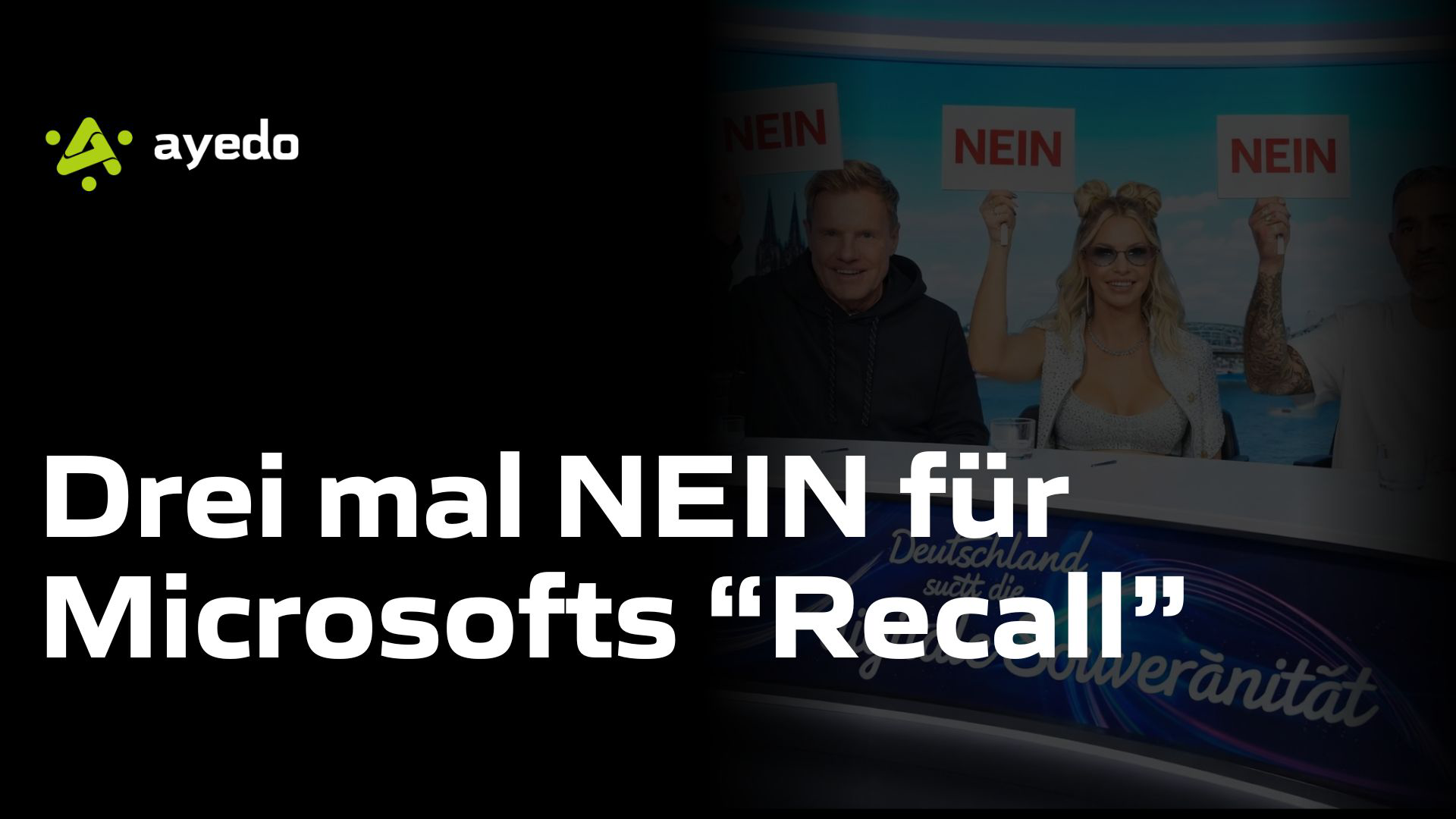
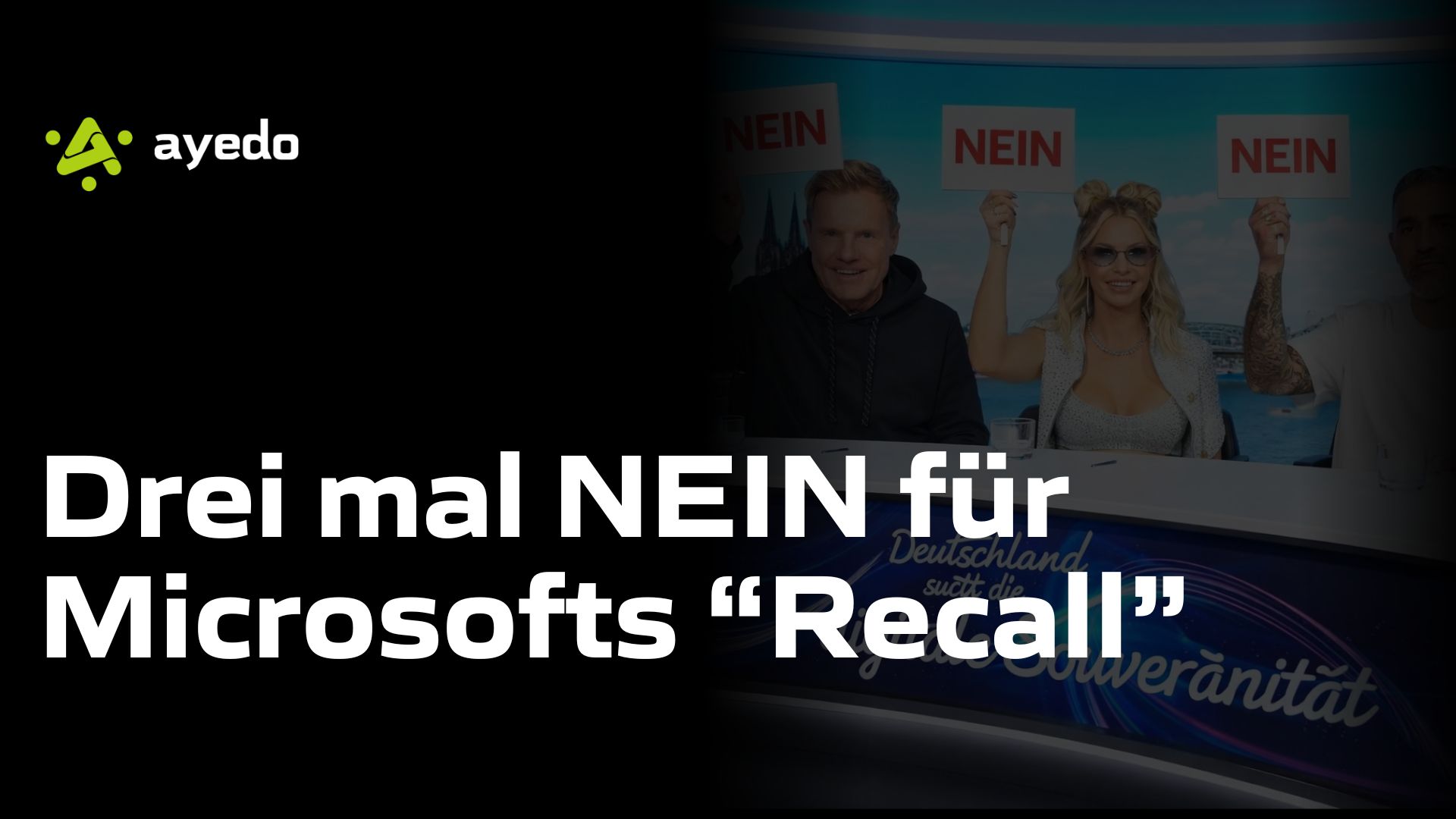
With ‘Recall’, Microsoft integrates a feature into Windows 11 that takes screenshots of all open applications at short intervals, analyzes their content using AI, and stores them permanently for searchability. Documents, emails, chats, health, or bank data can thus become part of a comprehensive usage log. What is marketed as a productivity gain is technically a new level of system surveillance: the operating system itself becomes a permanent logging instance.
Microsoft emphasizes that Recall is by default disabled in the EU and is intended only for certain device classes. However, the feature is part of the system. As long as the code is integrated, it remains potentially activatable. Independent, publicly accessible audit reports are lacking. The source code is proprietary. Whether a disabled Recall is truly inactive cannot be verified externally. Trust replaces technical verifiability here.
Moreover, the promised filtering of sensitive content is technically limited. Tests show that passwords or bank data are stored if they are not clearly marked as such. An AI only recognizes what it can classify as sensitive. Private information is initially captured before it is possibly redacted. This contradicts the principle of data minimization. The GDPR requires purpose limitation and confidentiality—not subsequent corrections of total capture.
Particularly problematic is the access level. Anyone with access to an unlocked device can reconstruct months of activities. For victims of domestic violence, journalists, or administrative staff with sensitive files, this is not a theoretical scenario. A central data pool is created, which offers maximum evaluability in the event of an attack. Security risks are aggregated.
Surveillance features of this kind must not be part of an operating system that is widely used in the European Union.
Recall is an expression of a business model in which data are strategic resources. Those who can capture, structure, and evaluate complete usage histories possess a power instrument. Data are economically exploitable, but they are also politically sensitive. They affect communication relationships, research behavior, institutional processes. In authorities, hospitals, and critical infrastructures, highly sensitive contexts arise.
In 2024 alone, the federal government, states, and municipalities paid around one billion euros to Microsoft for licenses. This dependency is structural. When functions are integrated into such an infrastructure that allow comprehensive activity logs, it is not about comfort but about state integrity.
In a phase of geopolitical tensions, significantly shaped by Donald Trump and his demonstrative closeness to tech billionaires, the concentration of digital power is not an abstract problem. When political leadership and platform economy move closer together, axes of influence shift. Digital infrastructure becomes a lever of strategic interests. Europe must not permanently place central information systems in such dependency.
Even if Recall is deactivatable, the architecture remains. Even if data protection authorities are “in dialogue,” this does not replace clear enforcement. Responsibility must not be shifted to users who have to regularly check whether updates have changed settings. Data protection is not an optional configuration feature.
The consequence is structural: We need a serious expansion of European, open-source alternatives. Every euro of license fee that flows into proprietary dependency is missing in the development of digital sovereignty. Open systems enable transparency, independent security audits, and democratic control. They reduce power asymmetries instead of reinforcing them.
Digital fundamental rights are non-negotiable. They must be reflected in the technical architecture. Microsoft will not rebuild its products in compliance with fundamental rights on its own initiative.
In modern e-commerce, data is the foundation for every growth decision. However, traditional …

The Cloud-Native transformation is in full swing, yet the reality in German data centers often …

And what this figure means for Europe’s digital capability. The federal administration spent …