Microsoft, Monocultures, and Power:
Why Digital Sovereignty Without Competition Remains an Illusion The debate on digital sovereignty …
16.02.2026
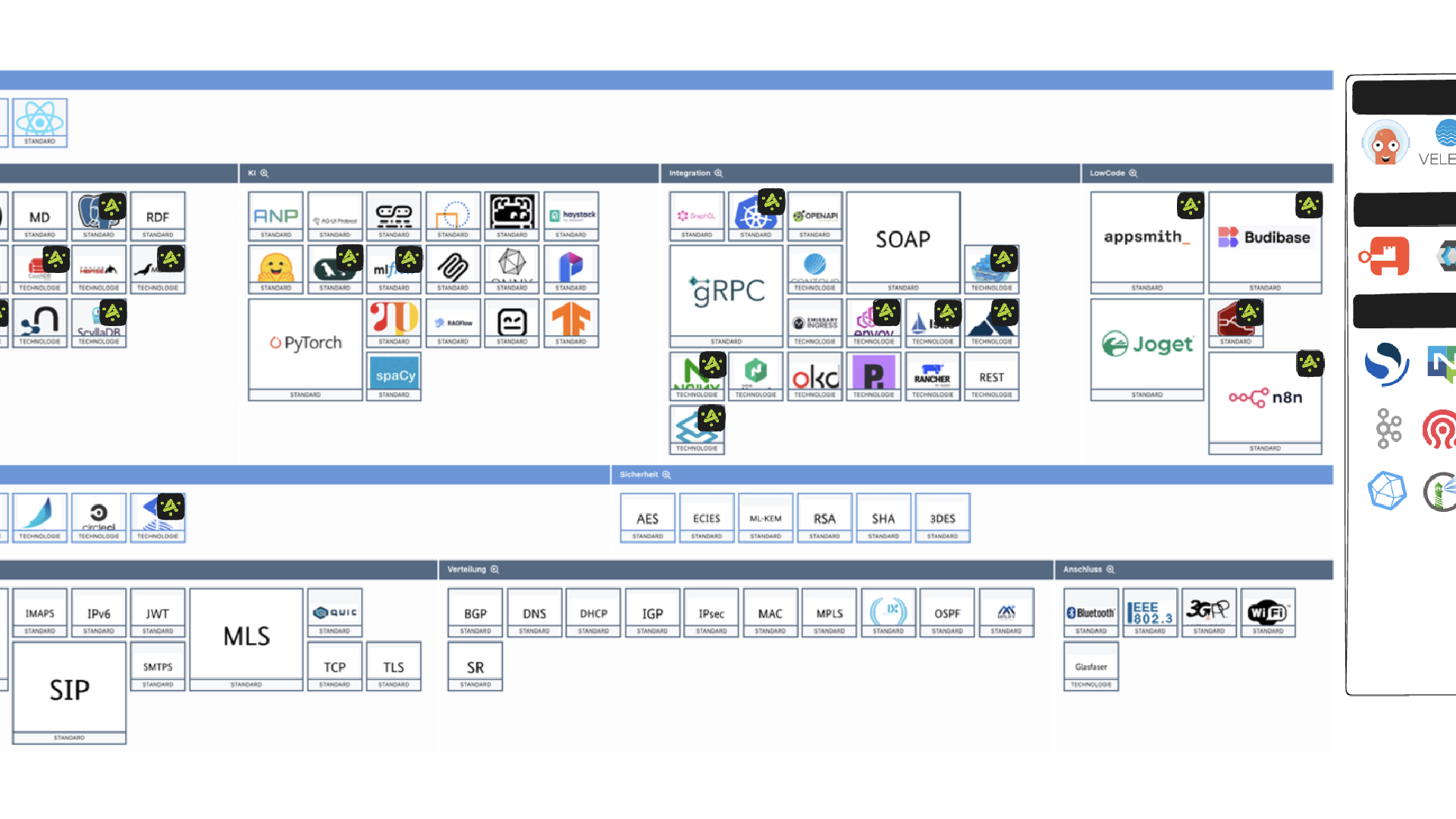
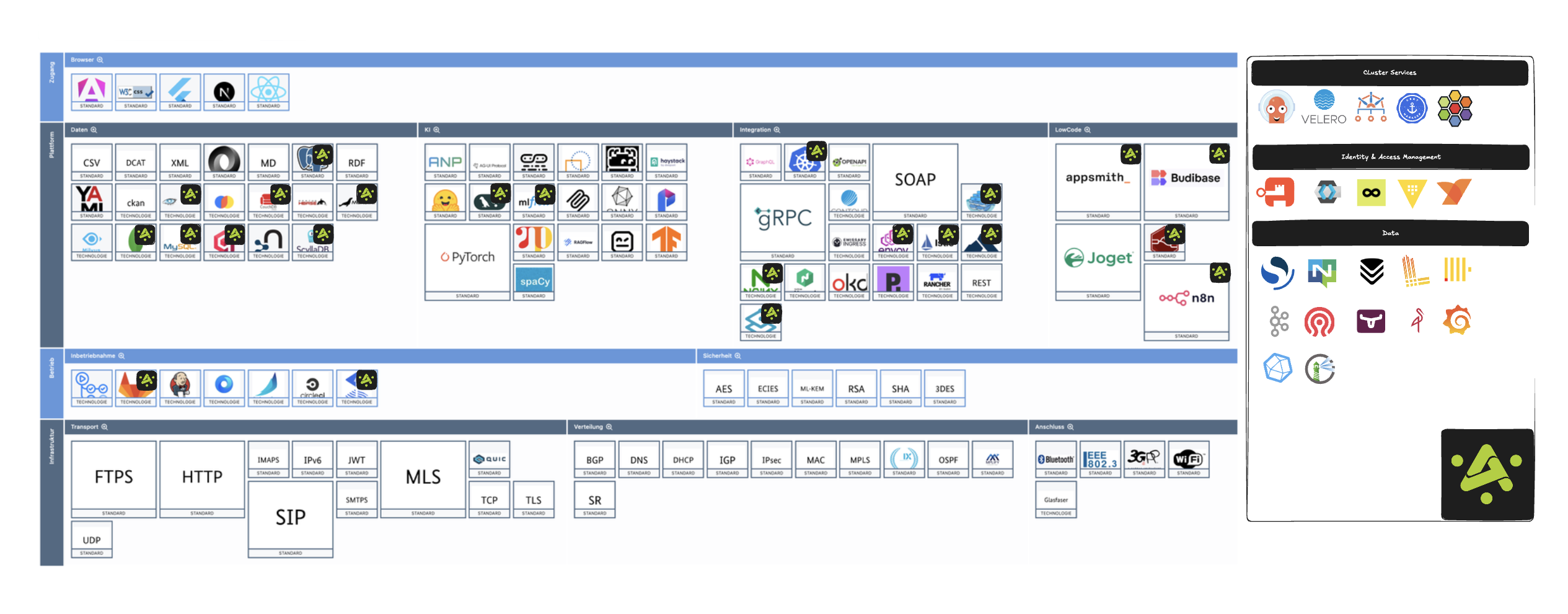
Digitization is no longer a buzzword – it is a foundation, a competitive advantage, and a geopolitical factor all at once. Europe has understood this. And with the Germany Stack, a reference architecture initiated by the Federal Ministry for Digital and State Modernization, an open, validated, and interoperable technology stack for software development in administration and business is being created for the first time.
The goal: A unified, secure, and sovereign IT foundation for modern applications – free from proprietary dependencies, based on open standards, and fully cloud-compatible.
This is a milestone. And it is long overdue.
However, anyone who works daily with Cloud-Native environments, multi-cluster deployments, and Infrastructure-as-Code knows: An architecture is not an end in itself. It thrives on the tools that make it usable.
And this is where ayedo comes into play.
The Germany Stack is more than a diagram – it is a catalog of technical standards and technologies designed to enable the development of modern, interoperable software solutions.
In the official stack representation, familiar components can be found:
A well-thought-out foundation focused on openness, verifiability, and stability – and thus an important step towards digital sovereignty. What this stack shows is remarkable:
Germany’s public IT architecture is finally moving away from proprietary single solutions towards modular, standardized components.
That alone is already a breakthrough. However, between reference and reality lies the production environment.
ayedo has been operating productive Cloud-Native infrastructures for companies, authorities, and research institutions in Europe for years.
It’s not just about “hosting,” but about fully managed, sovereign platforms that integrate both cloud and on-premises environments.
Many of the technologies that the Germany Stack outlines as a future vision are already part of ayedo’s everyday practice:
Thus, ayedo already covers a large portion of the “official” stack components – and does so multi-cloud-capable, standards-compliant, and GDPR-consistent. But the real strength lies in what goes beyond the stack.
A tech stack, no matter how solid it may be on paper, only unfolds its impact through the right tools in daily operations.
In reality, the Germany Stack still lacks some essential components without which Cloud-Native software development can neither be efficient nor secure.
ayedo fills these gaps – with a fully integrated, European managed service ecosystem.
Here are the key extensions that ayedo offers beyond the official stack:
➡️ Result: Complete automation and policy-driven governance of infrastructure and applications.
➡️ Result: Unified, European IAM system without cloud lock-in.
➡️ Result: Complete transparency over infrastructure, services, and data flows – on European soil.
➡️ Result: Full control over data and storage layers – without proprietary silos.
Many confuse open source with sovereignty. Both belong together – but one does not automatically guarantee the other.
Digital sovereignty does not mean “hosting everything yourself.” It means: retaining control over technology, data, and operational models.
ayedo enables exactly that: Companies, administrations, and research institutions can operate, manage, and audit every component – from the Kubernetes cluster to the IAM policy – in European data centers.
Open source here is not just a licensing model, but a principle of trust. Everything ayedo operates is transparent, documented, and verifiable. This is lived digital autonomy – not just proclaimed.
The reality in many organizations looks like this: Even if the technology stack is defined, there is a lack of know-how, resources, and operational processes to operate it securely and efficiently.
This is understandable – the operation of distributed systems, service meshes, and security layers is highly complex.
What ayedo provides here is a Managed Cloud Native Stack as a Service – a fully operable, modular stack that works on any European cloud (e.g., IONOS, OVH, Scaleway, Exoscale, plus sovereign on-prem infrastructures).
Companies receive:
All operated, maintained, and supported – 100% in European regions.
Hosting is infrastructure. Operation is responsibility. Sovereignty is an attitude.
What ayedo does is not classic hosting. It is architectural consulting, automation, and sovereignty enablement in one. The goal: Empowering customers to operate their own systems – independently, securely, transparently.
Unlike global hyperscalers, where lock-ins and data transfers are hardly avoidable, ayedo offers:
And all with a focus on European values and legal frameworks.
The Germany Stack is an excellent step in the right direction. It defines what modern, secure, and interoperable IT should be – open, modular, transparent. But architecture alone is not enough. It requires operational experience, integrated tools, and European providers who implement these principles in production environments.
ayedo is positioned precisely there. With managed services that:
Digital sovereignty is achievable. But it requires consistency: in technology selection, architecture, and operation.
The Germany Stack shows the way. ayedo is already on it – with partners, customers, and communities across Europe.
The future of European cloud infrastructure is not born out of competition with hyperscalers, but in collaboration, openness, and operational excellence. And those who are ready today to rely on open standards, auditable systems, and resilient architectures will gain a real strategic advantage tomorrow.
ayedo is actively working with organizations, ministries, and companies to bring the Germany Stack from architectural model to productive operation – sovereign, secure, and cloud-native.
Digital sovereignty does not begin with regulations. It begins with the decision to truly understand and master technology.
Why Digital Sovereignty Without Competition Remains an Illusion The debate on digital sovereignty …
🧠 Editorial – New Year’s Eve with Residual Logfiles December 31, 2025. While many tech …
Nextcloud stands for digital independence, European data protection standards, and an open, …