Docker Here, Docker There – I'm Going Back to the Old Ways
Docker Here, Docker There – I’m Going Back to the Old Ways You hear it more and more often, …
06.11.2025
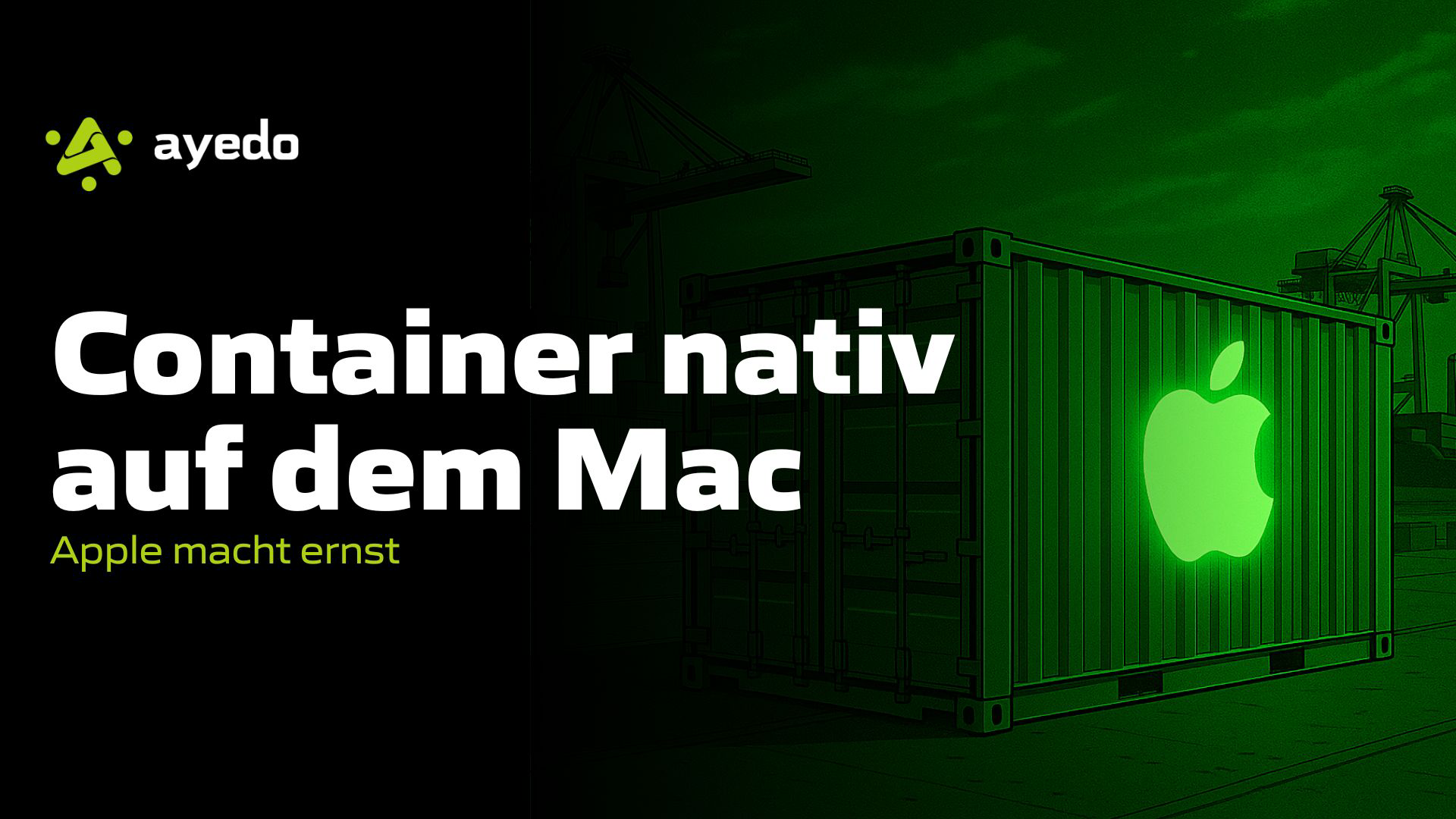
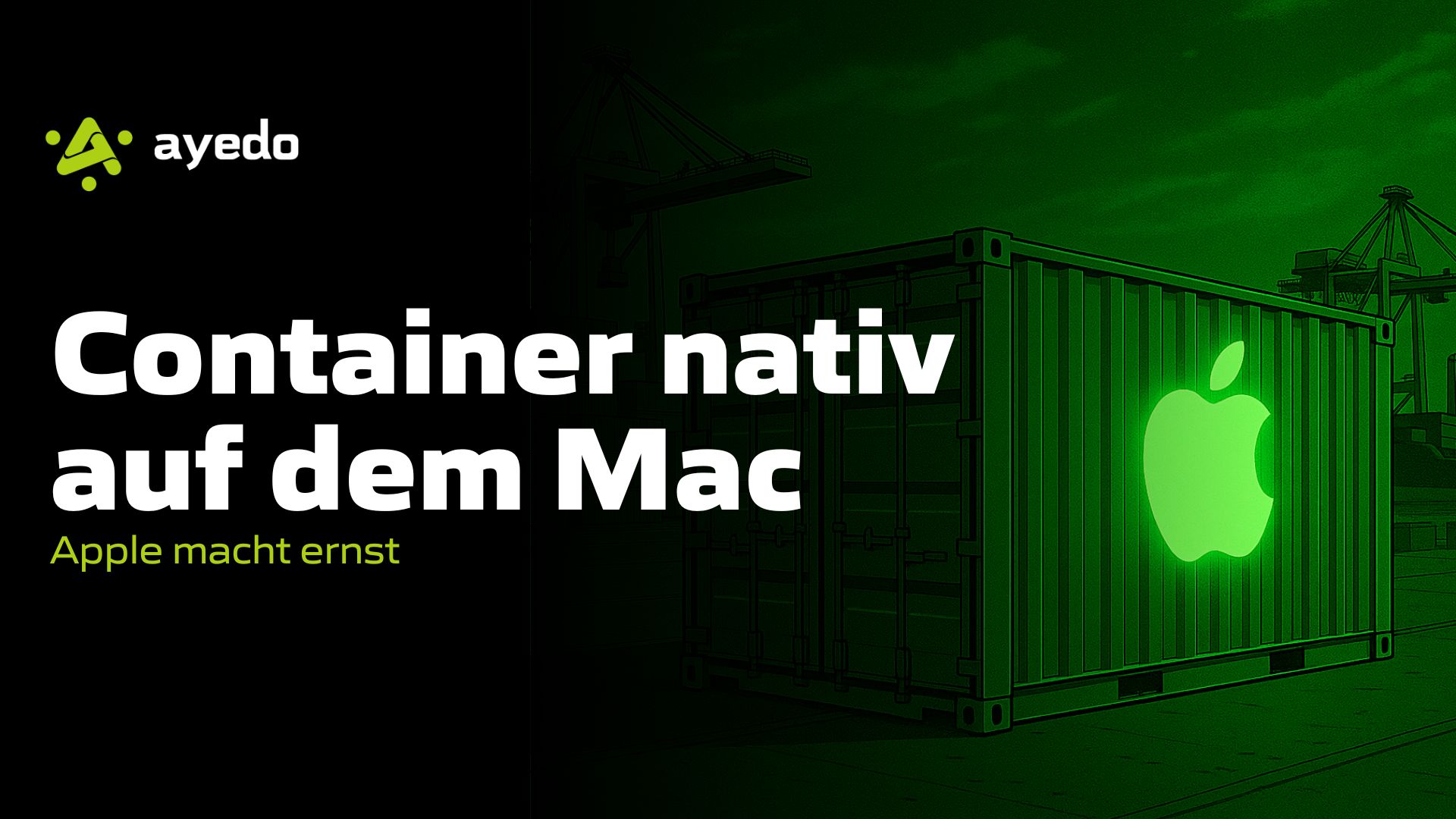
With the announcement of macOS 26 (“Tahoe”), Apple quietly but fundamentally reshuffles the cards in the DevOps landscape. For the first time, the operating system offers native support for Linux containers—without Docker, without Orbstack, without additional dependencies. A move that not only reduces technical friction but also has the potential to reposition the Mac: as a fully-fledged, system-level development environment for cloud-native workflows.
Apple integrates its own containerization framework directly into macOS 26. It is based on an open-source foundation, specifically optimized for Apple Silicon, and allows the execution of OCI-compliant Linux containers—directly via the terminal. The solution uses a lightweight VM in the background, is securely isolated, and operates without the Docker Engine or comparable layers.
This means in practice:
Until now, the Mac was often a second choice in DevOps setups: too many workarounds, too many tools, too many incompatibilities. Orbstack improved much of this but remains a wrapper—with all the limitations that an external layer brings.
The new framework is Apple’s strategic response: the development environment should not only be more elegant but also more powerful, standards-compliant, and deeply integrated. Those developing, testing, or simulating cloud infrastructure will get an environment closer to production behavior—without the overhead of traditional virtualization.
Of course, this is just the first step. Answers to important questions are still missing:
Some of these points have already been hinted at—others depend on feedback from the developer community. But the mere fact that Apple is going open source here is remarkable. It shows: this infrastructure is not just an internal tool but a serious offer to the DevOps ecosystem.
The most important insight: the Mac is back in the game—as a serious option for cloud-native development. Those onboarding developers in heterogeneous environments, taking remote work seriously, or relying on Apple hardware will get a powerful, open, and future-proof foundation with macOS 26.
For decision-makers, this means: toolchains can become leaner, more robust, and closer to the system. The Mac loses its special role and becomes part of the mainstream—not through adaptation, but through integration.
Conclusion:
What Apple delivers here is more than a feature. It is a strategic shift towards developer experience—technically solid, open-minded, and with great potential for new workflows in cloud engineering.
If you’re considering how to set up your toolchain for the coming years: take macOS 26 seriously. It brings more autonomy, less friction—and an environment closer to “real” operation than ever before. Especially in combination with modern Kubernetes platforms and container registry solutions, new possibilities arise for sovereign development environments.
Docker Here, Docker There – I’m Going Back to the Old Ways You hear it more and more often, …

Kubernetes Make or Buy – Considerations for Decision Makers In few other technology sectors is …

Docker Swarm is Not Kubernetes for Beginners When discussing container orchestration today, two …