
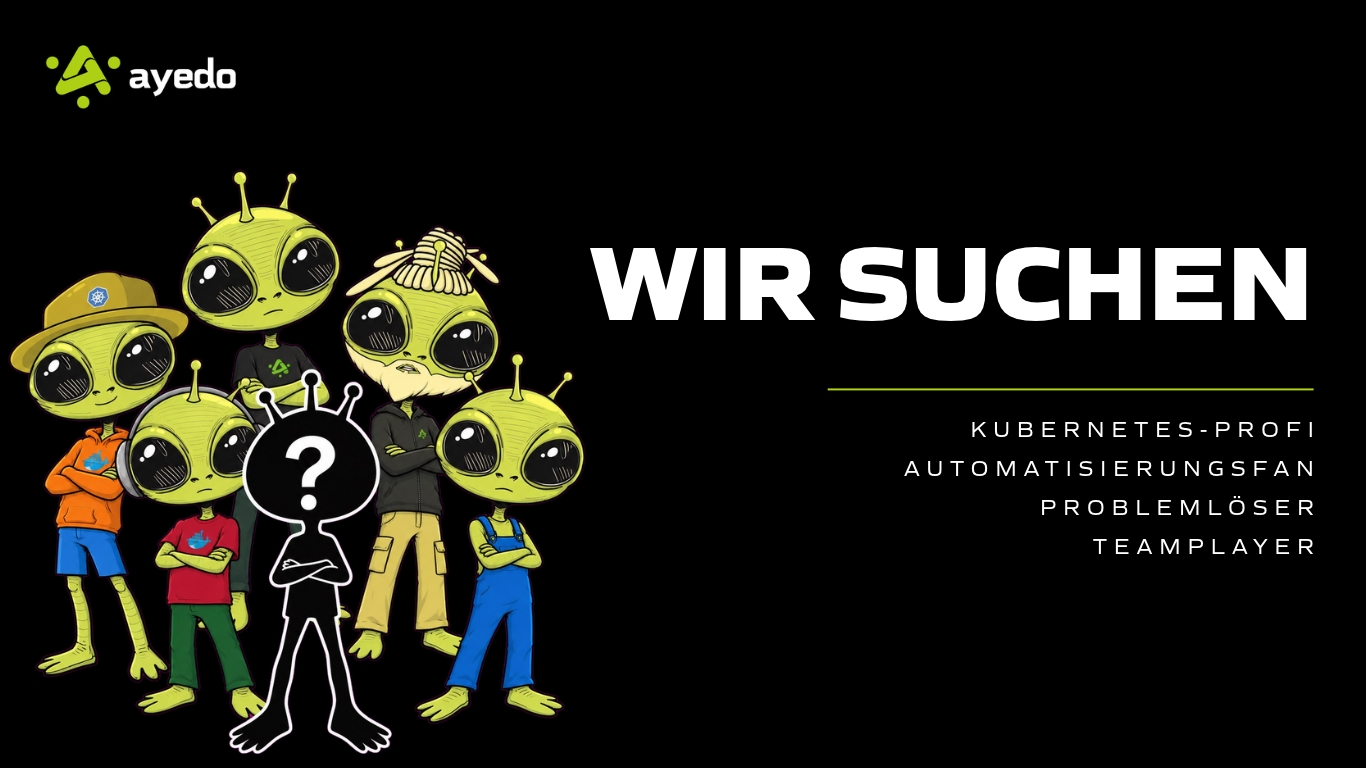
We are looking for reinforcements for our CloudOps team.
Are Kubernetes, Linux, automation and the reliable operation of modern IT infrastructures exactly your thing? Then we should get to know each other.
At ayedo, we are looking for an experienced CloudOps Engineer (m/f/d) who takes responsibility, solves technical challenges in a structured way and actively helps shape our platforms.
Your main areas of focus:
- Building, operating and developing Kubernetes platforms
- Automation with GitOps, CI/CD and Infrastructure as Code
- Monitoring, logging and securing production systems
- Planning and implementing sustainable infrastructure and operations solutions
We offer varied projects, modern cloud-native technologies and a team where personal responsibility, sharing expertise and working together as equals are part of everyday life.
Your workplace: 100% remote or on site in 66773 Schwalbach, Germany. Flexible working hours included.
Our team is not complete yet. Maybe you are the person we are missing.
Do you have solid experience with Kubernetes and Linux and want to take on technical responsibility?
Then we look forward to getting to know you.
Apply now: https://lnkd.in/eC9e2ZUh
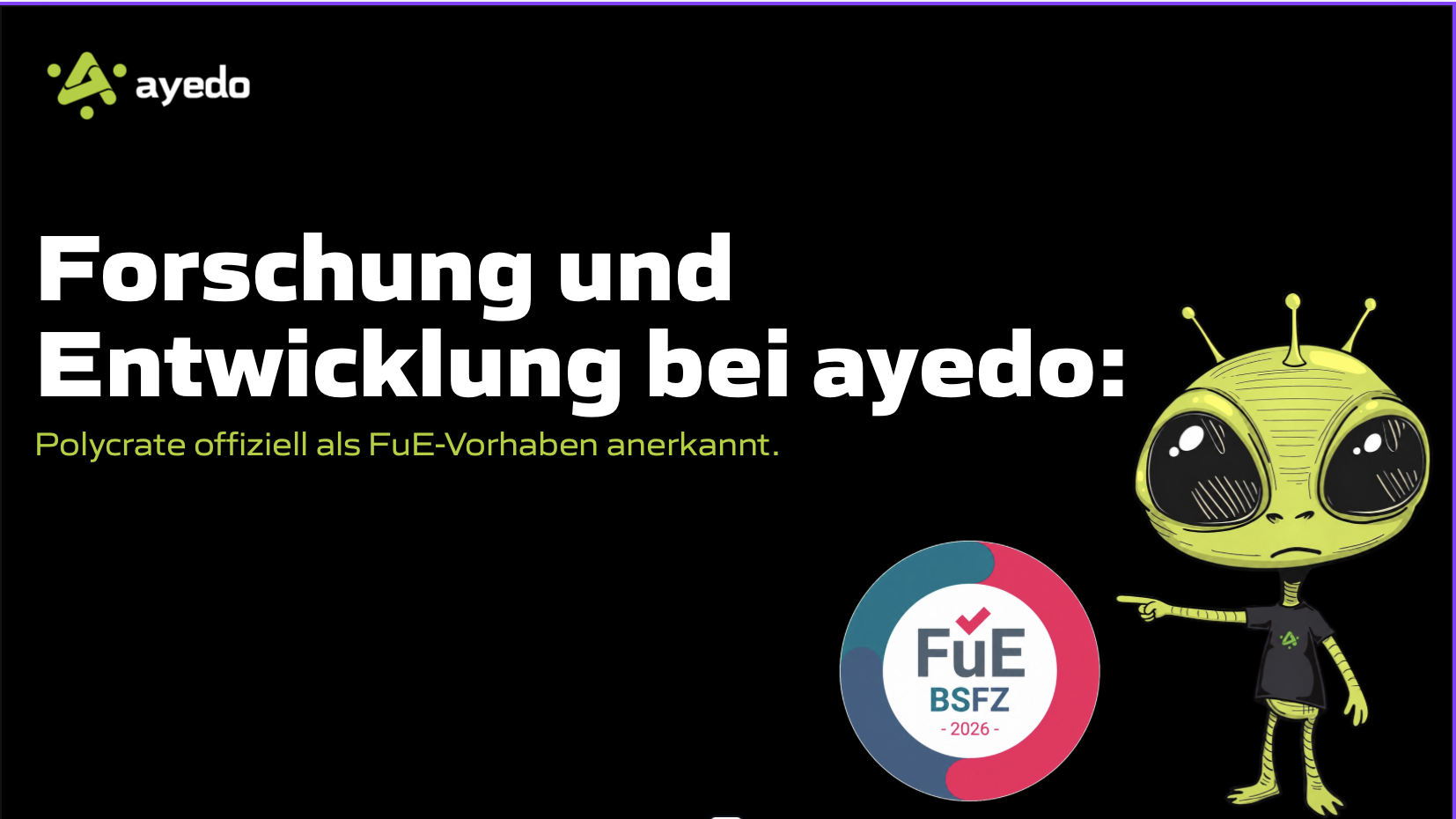
Research and development at ayedo: Polycrate officially recognised as an R&D project.
The German Certification Office for Research Allowance (BSFZ) has recognised the development of Polycrate as a research and development project within the meaning of the German Research Allowance Act. We have received the red BSFZ seal for our in-house research and development work.
We are delighted. Especially because Polycrate involves a great deal of development work that is not necessarily visible from the outside.
What is Polycrate about?
Automating IT infrastructures is far from a new topic. Tools such as Ansible have been around for years and handle many tasks reliably.
Things become difficult when different automations need to work together, dependencies arise and configurations need to remain consistent across different environments.
This is exactly where our development comes in.
With Polycrate, we have developed our own approach that connects reusable infrastructure components, known as Blocks, with Workspaces, versioned dependencies and Secrets. Execution takes place in defined environments so that automations remain reproducible.
The aim is not to replace existing tools. It is to structure their use more effectively and solve problems that arise when provisioning and managing complex infrastructures in a repeatable way.
Why does this recognition matter to us?
Because software development does not automatically qualify as research and development.
The BSFZ checks whether a project meets the statutory criteria for research and development. These include technical novelty, uncertainties during implementation and a systematic approach.
Having our work on Polycrate recognised as such a project confirms the technical development achievements of our team.
We continue to develop Polycrate because, in our daily work with IT infrastructures, we encounter problems for which we believe existing approaches do not offer a sufficiently good solution.
We are very pleased that this work has now also been officially recognised as research and development.
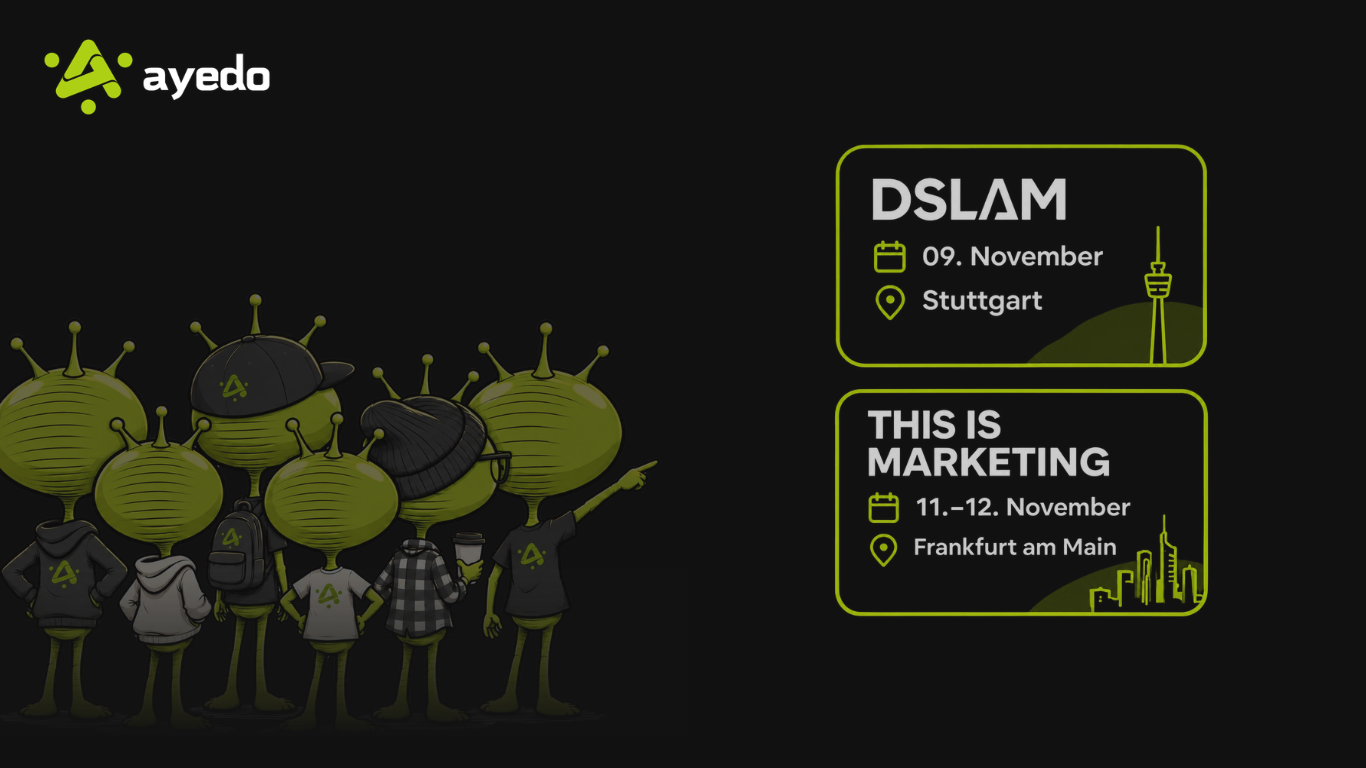
Our November event review: Two events, two different impressions
In November, we attended two events: DSLAM in Stuttgart and THIS IS MARKETING in Frankfurt am Main. Both promised exciting insights, fresh ideas and interesting encounters. Our conclusions, however, are very different.
9 November | DSLAM – Stuttgart
An all-round successful event that we are happy to recommend!
We really enjoyed DSLAM. Instead of a traditional conference atmosphere, there were entertaining talks, exciting IT topics and plenty of opportunities for informal conversations.
We particularly liked the mix of expert input, humour and a pleasantly relaxed atmosphere. You can tell that the event is organised with a passion for the IT community.
For us, one thing is clear: DSLAM is definitely worth a visit! If the event takes place near us again, we will certainly be back.
Learn more: https://dslam.info/
11–12 November | THIS IS MARKETING – Frankfurt am Main
A big stage, big promises – but unfortunately not our event.
We had been looking forward to exciting insights into digital marketing, innovative ideas and valuable conversations at THIS IS MARKETING.
Unfortunately, the event did not meet our expectations.
Our personal impression: Rather than an event centred on professional exchange and new insights, it felt more like a very large-scale marketing campaign by Onpage.
Of course, self-promotion is part of events like this. For us, however, the balance between staging, self-promotion and actual value was not right.
Our conclusion is therefore considerably more restrained: For us, the visit was not worthwhile, and we will not be attending again next year.
Learn more: https://event.thisismarketing.de/
Our conclusion: Size does not make a good event
Two events, two completely different experiences.
DSLAM showed that a successful event does not necessarily need huge stages or elaborate productions. Good content, authentic people and an open atmosphere can achieve much more.
THIS IS MARKETING, on the other hand, reminded us that a large event does not automatically offer great value.
What matters to us is real conversations, relevant content and new perspectives.
That is exactly why we are already looking forward to the next DSLAM and to other events where personal and professional exchange takes centre stage.

ayedo Edge Cloud: Because availability should not be left to chance.
An application can be brilliantly developed, the infrastructure extremely powerful and the Kubernetes cluster perfectly stable. If users cannot reliably reach your application, none of that helps much.
This is exactly where our ayedo Edge Cloud comes in.
It keeps your applications reliably accessible, distributes requests intelligently and intercepts unwanted traffic as early as possible. All on sovereign infrastructure in the EU.
High availability starts before the cluster
Many companies invest considerable time and money in highly available compute infrastructure. Redundant nodes, multiple availability zones and automated failover have long been standard.
But what happens if access to these systems fails?
A highly available application offers little benefit if it cannot be reached from the outside.
That is precisely where our Edge Cloud comes in.
Using multi-homed connectivity, Anycast DNS and intelligent load balancing, we distribute traffic across multiple edge locations. If one location fails, others can take over.
The result: less dependence on individual locations and significantly more robust access to your applications.
Short distances, fast responses
Not every request needs to travel across Europe.
With geo-optimised routing, our Edge Cloud directs requests to an edge location as close as possible. This reduces unnecessary latency and provides the foundation for stable connections to your backends.
It does not matter whether your applications run in our Compute Cloud or on another infrastructure.
Edge and compute are deliberately kept separate.
You decide where your workloads run. We make sure they remain reliably accessible.
Security starts at the edge
Ideally, attacks on applications should be intercepted before they ever reach your actual infrastructure.
That is why our Edge Cloud offers more than DNS and load balancing.
With an integrated Web Application Firewall (WAF) and optional security assessments, we provide an additional layer of protection directly at the ingress.
This allows HTTP(S) applications to be protected without having to operate and manage your own perimeter appliances.
It does not replace a well-designed security architecture within your clusters, but complements it exactly where it makes sense.
Less infrastructure to manage, more time for your applications
DNS zones, load balancers, routing and monitoring are important parts of modern infrastructure. At the same time, they are topics that development teams want to spend as little time as possible dealing with day to day.
That is why we also focus on automation with our Edge Cloud.
DNS zones can be managed through APIs and integrated into existing Infrastructure-as-Code, CI/CD and GitOps processes.
Load balancers distribute traffic across your backends, while integrated endpoint monitoring helps you keep track of their availability.
And if you want to bring your own IP prefixes, you can integrate them into the Edge Cloud using our Bring Your Own IP feature.
Our goal: less operational effort and more control over your infrastructure.
Digital sovereignty is not a marketing promise for us
Especially for central infrastructure components such as DNS, routing and ingress, the question arises of who controls your data and traffic paths.
Our answer is clear.
The ayedo Edge Cloud runs on our own edge infrastructure in the EU. This creates a sovereign alternative to the major international cloud providers.
With a focus on data protection, transparent infrastructure and European requirements.
Because we believe: If you take digital sovereignty seriously, you should not start only at the Kubernetes cluster.
Our conclusion: The best infrastructure is the one you can rely on.
With the ayedo Edge Cloud, we combine highly available access, intelligent routing and protection at the network edge into a solution that integrates seamlessly into modern cloud architectures.
Whether you already use Kubernetes, distribute your infrastructure across multiple locations or simply want to make your applications more reliably and securely accessible:
We take care of the route to your applications. So you can focus on what happens inside them.
Would you like to know how the ayedo Edge Cloud fits into your existing infrastructure?
Get in touch. We will show you the options and how you can use our Edge Cloud to protect your applications and make them highly available.
Made in Germany. Sovereign in Europe. Ready for your applications.