Weekly Backlog Week 11/2026
🧠 Editorial Schleswig-Holstein. The real North. is kicking Microsoft out of administration. …
05.03.2026


This week was a fever dream. From Localmind to Aleph Alpha, from SonicWall to GitHub – the same pattern everywhere: big promises, thin architecture, and a deep misunderstanding of what control really means. If we continue to believe that security is created through marketing, and if US companies continue to believe that trust is a subscription model - then 2025 will be a year of disenchantment.
Heise reports on an incident so absurd it could almost be satire: The Austrian company Localmind, which markets itself as a “secure AI platform,” exposed its entire infrastructure - not through an attack, but through incompetence.
A security researcher found admin accesses, plaintext passwords, and open customer systems. Among them were banks, municipal utilities, and energy suppliers. The cause: elementary security errors. So, anyone who advertises with “local AI” but names their root password “whatTheHell123$$$” has not built sovereignty but a caricature.
The case exemplifies a European misstep: “GDPR-compliant” does not replace a security architecture. And launching a Llama model on bare metal does not replace competence. Those who demand sovereignty must prove it. Technically, operationally, structurally.
The second embarrassment of the week: SonicWall reports that all cloud backups of all firewalls have been compromised – that’s 100 percent, not the initially communicated five.
A disaster for a provider that sells trust. The stolen backups contain sensitive network configurations and access data. Attacks by groups like Akira are already underway.
The pattern is well-known: Cloud-first, Security-second. Convenience replaces architecture, and centralized portals create the greatest possible single point of failure. Security in the cloud is not a service feature but a design question. And SonicWall has answered it incorrectly.
GitHub is migrating its entire infrastructure to Microsoft Azure. According to The New Stack, product development is being slowed down for this. Feature plans are put on hold, migration takes priority.
What is sold as a scaling measure is primarily a strategic step towards full integration into the Microsoft corporation. With the departure of CEO Thomas Dohmke and closer integration into the Azure structure, GitHub becomes definitively Redmond’s cloud department.
Technically, this means: complex MySQL migrations, potential outages, and growing vendor lock-in. Politically, it means: GitHub loses neutrality. Those who host there will effectively be hosting with Microsoft in the future – whether they want to or not.
🔗 To the report by The New Stack
Donald Trump wants to restrict the export of “critical software.” A step that further escalates relations with China. Software is finally being defined as a geopolitical instrument.
This should make it clear to all of us: Those who use US technology use American power. Europe should not see this as a threat, but as a lesson: As long as our platforms are in US hands, “digital sovereignty” remains a footnote.
🔗 Heise: Trump plans export control for software
Jonas Andrulis leaves the CEO chair at Aleph Alpha - and with him, Europe loses its most credible vision of technical independence.
The change comes quietly, but symbolically loud. No statement, no farewell, no words. According to Handelsblatt, Reto Spörri and Ilhan Scheer are taking over, flanked by the growing influence of the Schwarz Group (Lidl, Kaufland). What began as a partnership ends as a corporate integration.
Aleph Alpha, once launched as a bulwark against US AI, becomes a corporate stake. And this is more than a personnel change – it is the litmus test for Europe’s tech policy: We promote ethics, but not excellence. We talk about sovereignty, but build no infrastructure.
With Andrulis goes not a visionary, but a warning voice - and the realization that Europe still sees power as a moral problem.
🔗 Read the Handelsblatt report
The Dutch government has taken control of the semiconductor manufacturer Nexperia – officially for security reasons, unofficially as a sign of geopolitical self-assertion.
The move shows that Europe is beginning to understand industrial policy as security policy. China reacts indignantly, Washington applauds, and Europe stands: between the chairs.
The message is clear: Technology is not a market good, but a question of sovereignty. The era of free markets is giving way to a strategy economy - those who control technology control the future.
GitLab managed by ayedo – Kubernetes -native, without lock-in, fully managed, certified, and portable across any cloud or on-prem.
For those who not only preach independence but practice it. 🔗 To the blog post on ayedo.de
CloudFest 2026 – the world’s largest festival for internet infrastructure – returns:
From March 23 to 26, 2026, the Europa-Park in Rust will once again transform into the epicenter of the cloud industry. Over 10,000 participants, 250 speakers, and 150 partners from more than 80 countries make the event the place where the global cloud community meets, celebrates, and renegotiates its future.
What makes CloudFest special? It is not a congress, but a festival. Between keynotes, masterclasses, and hands-on sessions, you meet founders, CTOs, architects, hyperscalers, start-ups, and security teams - literally between roller coasters and themed hotels.
It’s about more than just panels: CloudFest is networking, deal flow, and reality check in one - those who have been here know which trends will arrive in practice in twelve months.
Whether storage, AI, security, SaaS, or DevOps - those who work in the cloud belong here.
Date: March 23–26, 2026 Location: Europa-Park Rust, Germany Participants: 10,000+ from over 80 countries
🔗 More information & registration on cloudfest.com
Felix Becker: “Social media is digital hazardous material.”
An honest, reflective post about the dark sides of corporate influencing. Felix Becker describes how LinkedIn links attention and dopamine – and why you can lose yourself in the process. A necessary reality check in an industry that often confuses self-presentation with impact.
Anniversary episode with maximum density: In the 500th episode of the Doppelgänger Tech Podcast, the duo Philipp Glöckler and Philipp Klöckner once again dissect the global tech madness - from Aleph Alpha’s leadership change to Musk’s billion-dollar plans to the question of whether AI investments artificially inflate GDP.
The topics range from xAI’s $20 billion funding to OpenAI’s data center race to China’s export controls for rare earths - showing how closely technology, capital, and geopolitics are now intertwined. Also: Oracle’s chip fiasco, JPMorgan’s AI-driven debt mountain, Europe’s attempt to redefine “trustworthy AI” - and a quantum Nobel Prize that grounds it all.
🔗 Listen to Doppelgänger Tech Podcast #500 on Spotify
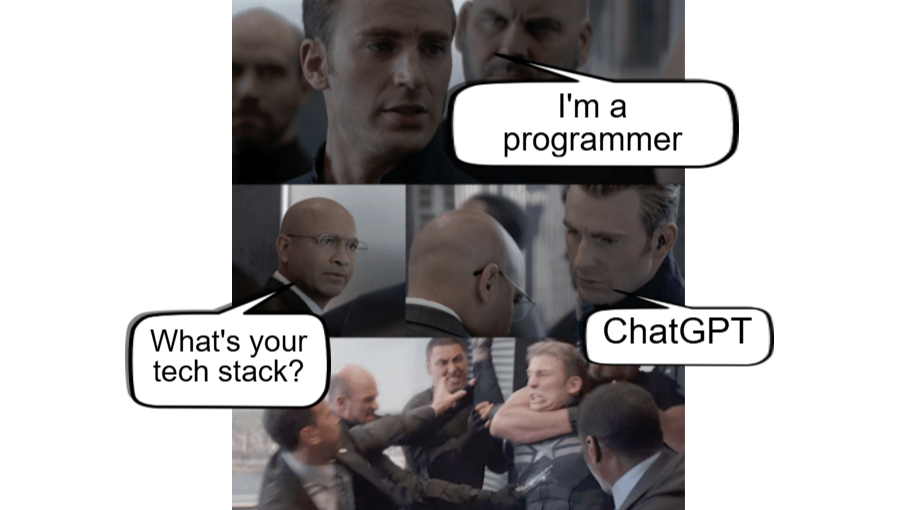
If this week also felt like a fever dream to you, there’s only one remedy: “The Hitchhiker’s Guide to the Galaxy” - the ultimate answer to everything is and remains: 42.
If you enjoyed the Weekly Backlog: subscribe, spread the word, comment - or write to me about what absolutely must not be missing in the next issue.
Algorithms love interaction, I love smart objections.
🧠 Editorial Schleswig-Holstein. The real North. is kicking Microsoft out of administration. …
🧠 Editorial: Cloud is political. Period. This issue focuses on a topic often wrapped in technical …
🧠 Editorial: The Week of Sovereignty Simulations This week had it all: operating systems wanting to …