Weekly Backlog Week 11/2026
🧠 Editorial Schleswig-Holstein. The real North. is kicking Microsoft out of administration. …
05.03.2026
Sovereignty vs. Market Logic
This week, a common theme is hard to miss: “Sovereignty” is being invoked everywhere. In the cloud, in AI, in networks. But as soon as you look closer, everything crumbles. Sometimes the German “state AI” is dependent on Azure. Sometimes Nvidia pumps 100 billion into OpenAI to secure its monopoly position. And sometimes Brussels is drafting a Digital Networks Act that aims to reorder the basic rules of the net. Uncertainties between fair-share demands and net neutrality dangers.
In short: It’s not just about technology, but about who really sets the rules in digital Europe. And who ultimately foots the bill.
Welt.de calls it “Sovereignty-Washing” – and hits the nail on the head. SAP announces plans to build a “sovereign AI” for the German government in collaboration with OpenAI and Microsoft. It sounds like digital independence, but on closer inspection, it’s little more than a label.
SAP manager Philipp Herzig tries to sell this with a licensing construct as an “independent company” in Germany. But: as long as the base technology isn’t developed here, it remains a chimera. Ionos CEO Achim Weiss sums it up: “If the Americans want access to the data, they’ll get it.”
Politically understandable, strategically dangerous. Because as soon as export controls kick in or access is cut, Germany’s supposed sovereignty stands naked within days. What’s missing? The will for our own base models, infrastructures, and standards.
👉 Conclusion: “Made in Germany” is at best a sticker on an Azure cluster.
Reuters reports: Nvidia plans to pump up to $100 billion into OpenAI. No typo: 100. Billion. Dollars. Part of the deal:
This isn’t a classic investment; it’s a closed-loop system: money goes out, chips go in, money comes back. Genius for Nvidia. Existential for OpenAI. For everyone else: bitter.
Regulators will need to scrutinize this closely: it smells like market foreclosure. When provider, customer, and investor are all the same circle, how much real competition is left?
👉 Conclusion: The AI arms race is already consuming energy on a gigawatt scale – and taking the rest of the market with it.
The Handelsblatt reports on the plans of Silo, a new AI lab for the defense sector. Goal: AI applications for military scenarios. From cyber defense to decision support.
What’s interesting: While civilian AI in Germany is suffocating in “sovereignty-washing,” defense projects are moving forward remarkably purposefully. Apparently, where national security is concerned, there’s also budget.
👉 Comment: The irony could hardly be greater – there’s supposedly no money for chatbots, but for AI in the command post, things move very quickly.
🔗 Read the article in Handelsblatt
Europe is drafting its digital constitution – but it’s still unclear who will pay for it in the end. With the Digital Networks Act (DNA), the EU aims to fundamentally reorganize its telecommunications market. Goal: a unified, robust, and sovereign digital single market.
At the center is the debate over the fair-share model: Should platform giants like Netflix, Meta, or Google shoulder part of the infrastructure costs? Telecommunications providers say yes, as their networks bear the main load. Critics, however, warn of the end of net neutrality, higher costs for users, and a two-tier internet.
The DNA attempts to balance investment security and openness. It is thus not only technology law but also a political litmus test: Can Europe shape its digital future without sacrificing the open internet?
👉 Conclusion: The DNA is not a sideshow but a pivotal moment for digital Europe.
🔗 Read the article on netzpolitik.org
The Tagesschau reports: Trump wants to finally ban TikTok in the USA – this time not (only) because of “espionage,” but because he sees the platform as an uncontrollable media power. 🔗Tagesschau-Link
This fits with his second step: special tariffs on foreign films and series. Officially to “protect Hollywood,” in reality to bring the media market under nationalistic control. 🔗Tagesschau-Link
👉 My impression: This smells suspiciously like a digital Volksempfänger 2.0. First ban the platforms, then own and control the content – and soon politics determines which voices can be loud.
Doppelgänger Tech Talk #495 – Nvidia 🔄 OpenAI | Media Oligarchs: Philipp Glöckler and Philipp Klöckner discuss Nvidia/OpenAI, TikTok, Meta scandals, and European regulation. A comprehensive roundup of tech news, with their usual sharp commentary. 🔗 Listen to the podcast on Spotify
German Unity Day 2025: Official events, stage programs, and citizens’ festival for the national holiday. A look at how Germany celebrates its unity – and which digital topics (hopefully) find their place. 🔗 Visit the website
Manuel Honkhase Atug on ZDF heute journal about drone defense: “Too slow, too little.” He discusses who in Germany is actually responsible for critical infrastructure – and why the issue is still not taken seriously enough.
🔗 LinkedIn post by Manuel Atug 🔗 ZDF Mediathek, from minute 3:21
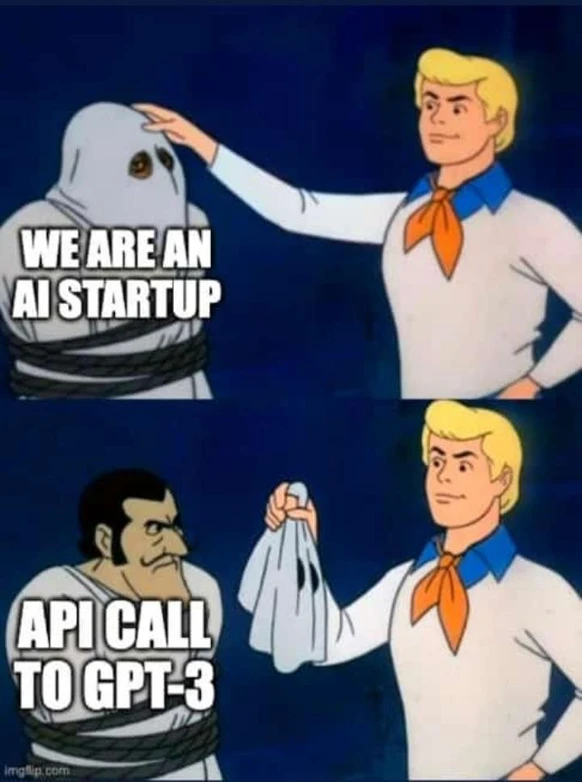
AI Startup or Just a GPT-3 Wrapper?
🧠 Editorial Schleswig-Holstein. The real North. is kicking Microsoft out of administration. …
🧠 Editorial: Cloud is political. Period. This issue focuses on a topic often wrapped in technical …
🧠 Editorial: The Week of Sovereignty Simulations This week had it all: operating systems wanting to …