Editorial
This week feels like a reality check for multiple narratives at once.
AI is suddenly not just innovation, but a cost issue. Digital sovereignty is not just a strategy, but a contradiction within one's own operations. And Open Source is not an ideology, but a question of convenience.
In short: The beautiful concepts meet operational reality.
🚨 The Tech News of the Week
The End of OpenAI?
OpenAI has shut down its video AI "Sora" without warning.
What was considered a potential revolution for film and content production ends abruptly. Instead of access, there is only an error message. Sam Altman confirmed the shutdown in a brief statement. Official reason: "strategic realignment on AGI safety."
The more likely reasons are obvious:
- Costs: Sora was extremely computationally intensive. High-resolution video generation consumes enormous resources. With already high losses, this quickly becomes a problem.
- Copyright: Lawsuits from studios and unions could have exerted massive pressure – including potential claims for damages.
- Technical Limits: The physical consistency fell short of expectations, while competing products became more efficient.
Particularly critical: Agencies and freelancers have built their workflows around Sora. The sudden shutdown without a transition period hits them directly.
Additionally, there is the announcement that all data will be deleted within 30 days. No export, no local use.
👉 The real issue is less about Sora itself, but more about the reliability of AI-as-a-Service as a foundation for business models.
🔗 https://www.heise.de/news/OpenAI-schliesst-Video-KI-Sora-voellig-ueberraschend-11223320.html
Cyberattack on EU Commission: AWS Account Affected
The EU Commission was the target of a cyberattack. Officially affected is a website on europa.eu, internal systems are said not to have been compromised.
However, this portrayal is already being questioned.
A suspected attacker claims about 350 GB of data, including databases. Screenshots are said to even show access to a mail server. This is currently unverified – but contradicts previous communication.
Confirmed seems: The attack involved an AWS account of the EU Commission.
And this is where the actual contradiction lies.
The EU has been promoting digital sovereignty for years – with initiatives like NIS2, DORA, and the AI Act. At the same time, its own infrastructure runs on a US hyperscaler.
This creates a clear picture:
- Regulation outward
- Dependency inward
👉 Those who define sovereignty as a guideline should at least not systematically undermine it in their own operations.
Fork Instead of Innovation? Why the Criticism of Euro-Office is Ridiculous
Nextcloud and IONOS are developing an open-source office suite "Euro-Office" based on an OnlyOffice fork.
The criticism follows predictably: Too little innovation, just a fork.
This criticism overlooks the actual point.
The market has been demanding integrated all-in-one solutions for years. Not because it is technically necessary – but because hardly anyone is willing to build their own open-source stack.
- Building blocks exist
- Opportunities are there
- Implementation often fails due to effort
Instead, a call is made for a European hyperscaler – as a finished product.
Euro-Office is therefore less a technological breakthrough than a concession to exactly this expectation.
👉 The uncomfortable reality: Convenience plays a large part in why the current dependency has even arisen.
And yes – the approach is not perfect. But it follows exactly the mechanisms that the big providers have been using for years.

Advertisement
🔍 Blogpost Recommendations:
Kubernetes Platforms for Cloud Independence via Polycrate
Cloud independence sounds good, but often fails in the reality of fragmented multi-cloud setups.
The article clearly shows: Kubernetes alone does not solve the problem.
Multi-cloud often leads to:
- different identity models
- inconsistent policies
- fragmented security
- increasing operational costs
The crucial point is the overarching architecture.
Polycrate addresses exactly this – as an abstraction and governance layer that decouples deployments, policies, and observability from the cloud provider.
👉 Sovereignty does not arise from more clusters, but from control over the platform above them.
🔗
👉 Friendly Reminder:
Yesterday was World Backup Day – a good occasion for the duty: Not only to create backups but to check whether recovery actually works – or not.
Because only in an emergency does it become clear without a doubt: A backup is only as good as its last successful restore part.
💬 Opinion of the Week
EuroStack Fails in the Reality of Companies
EuroStack misjudges the real problem: It is not hyperscalers that slow down Europe, but the reality in companies.
The reasons are pragmatic:
- high migration costs
- scarce resources
- lack of clear business cases
As long as a change is not economically worthwhile, digital sovereignty remains a theoretical concept.
👉 Companies do not decide ideologically, but based on costs, risks, and benefits.
🔗 https://www.cloudahead.de/the-demand-fallacy-of-eurostack-and-how-to-solve-it
🧪 LinkedIn Post of the Week
The Explosive Power of .docx
A LinkedIn post by Christoph Meißner shows how quickly a file format can become a fundamental debate.
ODF obligation vs. Microsoft dependency. Open standards vs. pragmatic everyday life.
The comments quickly develop into a culture war – and show how emotional and entrenched this discussion has become.
👉 Anyone who wants to see how much explosive power is in a .docx should take a look here.

Advertisement
🟢 Good News
German Government Slows Down Palantir
The German government is foregoing the use of Palantir at the BKA for now and is instead opting for a modular, own approach.
This is more than a detail decision:
- less dependency on opaque systems
- more control over architecture and data
- more room for European solutions
The approach is not yet concretely worked out, but the direction is clear.
👉 Sovereignty does not arise from purchasing finished systems, but from controllable architectures.
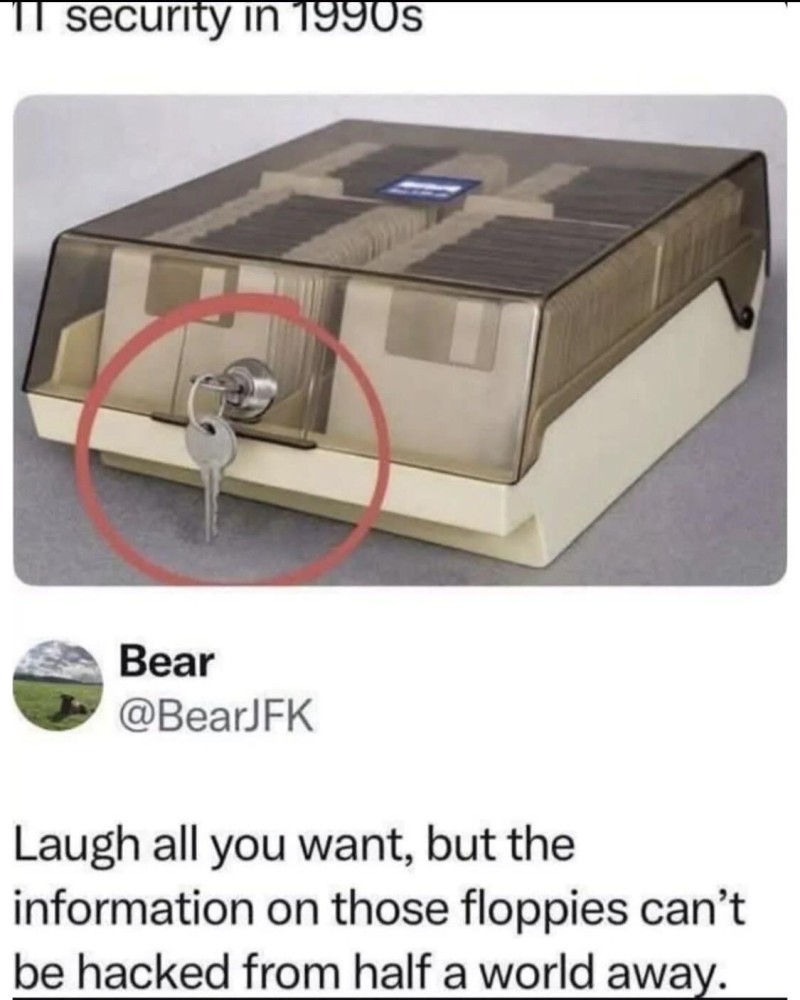
😄 Meme of the Week: